
The Enduring Friendsip of the ‘YaYa Sisters’

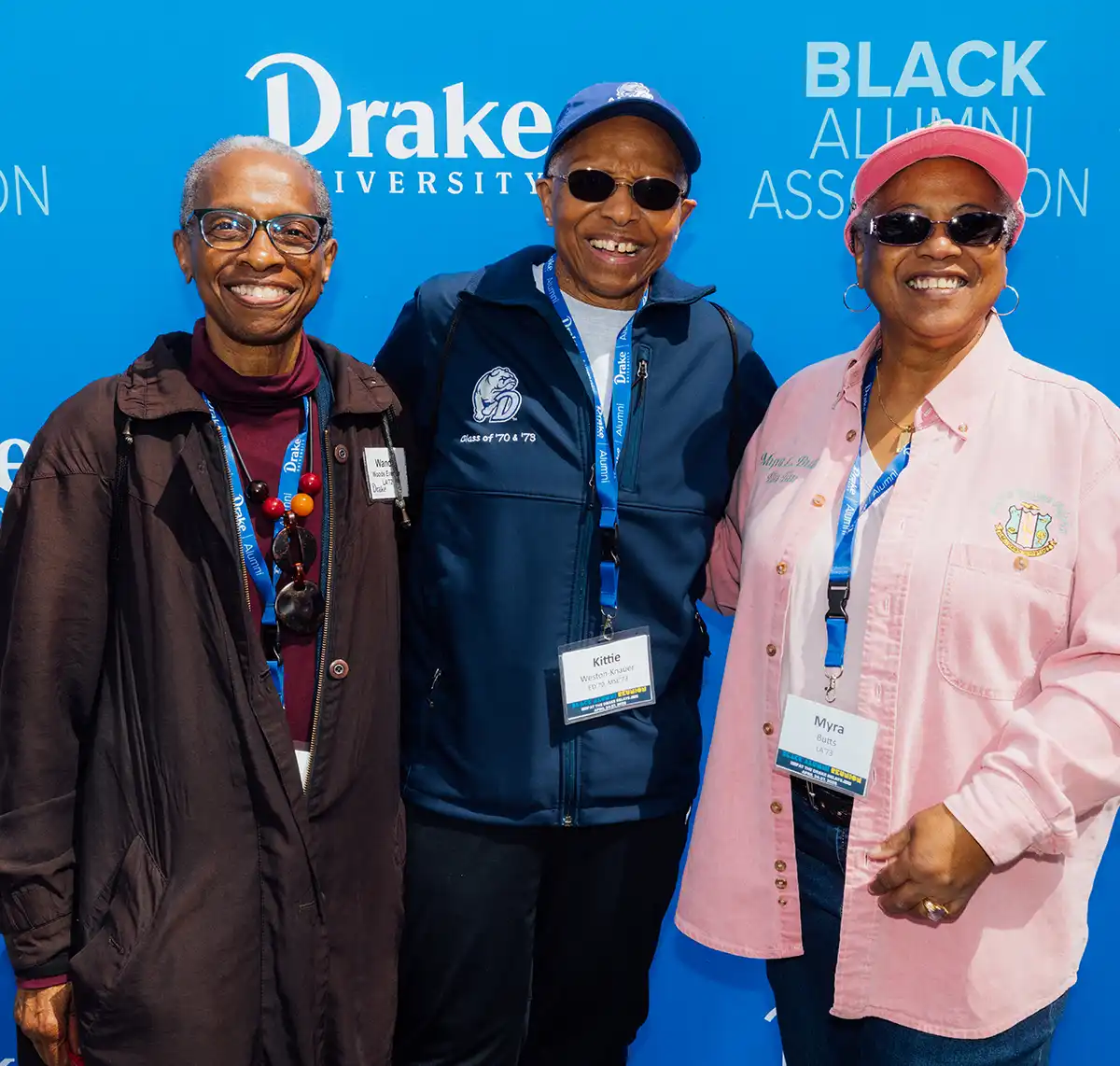
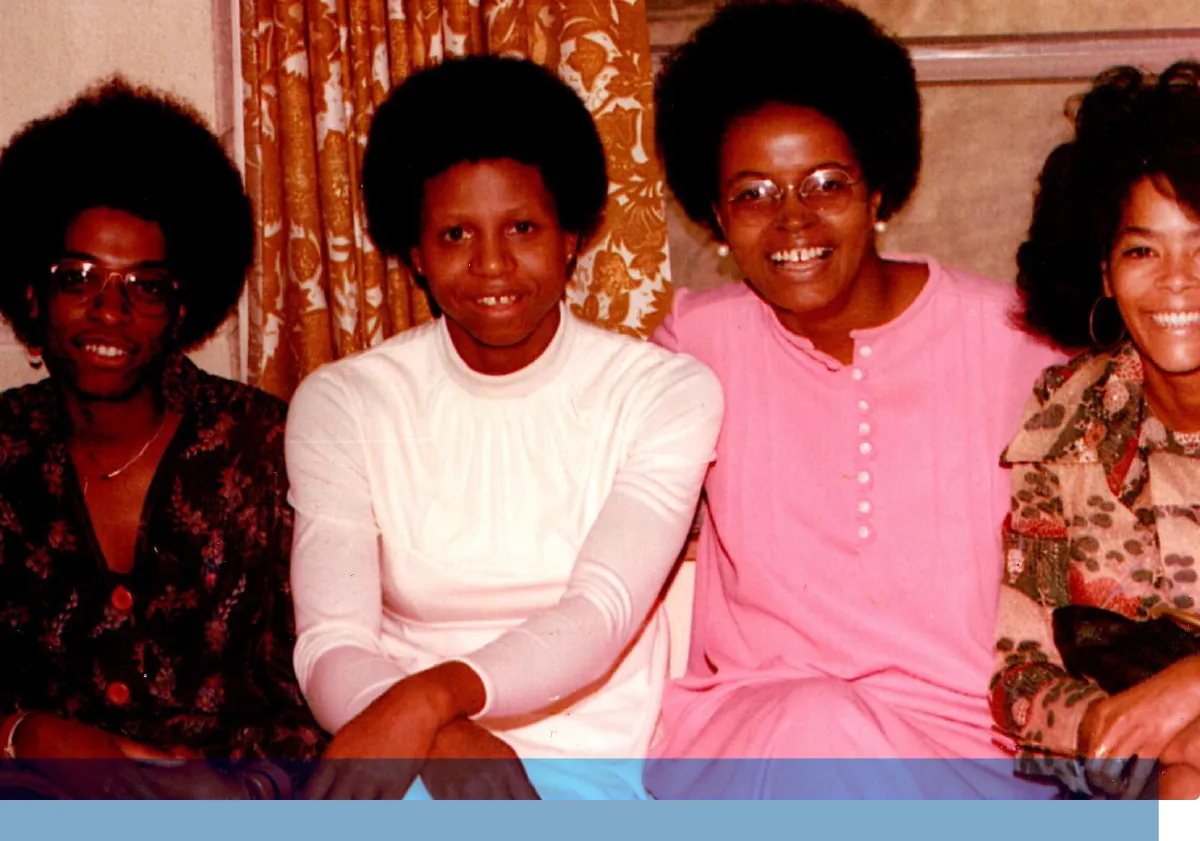
The “YaYa Sisters”—Kay Henderson Behn, ED’70, Kittie Weston-Knauer, ED’70, MSE’73, the late Kathleen “Bobbie” Dawkins Brickhouse, LA’70, Belinda Butler Bell, ED’72, Wanda Woods Everage, LA’72, and Myra Butts, LA’73—navigated the challenges of a predominantly white institution during a pivotal time in civil rights history. They made a lasting impact on each other and on Drake as an institution. More than five decades later, their friendship remains a testament to the power of shared history and enduring love—continuing to shape their lives and inspire those around them.
If they had to pinpoint the root of their friendship, it would be the support they found in each other as fellow Black women attending Drake in the turbulent late 1960s and early 1970s. Some were far from home, and the transition to college was difficult. This huge life change was also compounded by the subtle and overt racism they often faced and the lack of structured support networks for Black students at Drake, or anywhere for that matter, during this era. Whatever the reason, they gravitated toward each other, seeking a mutual support only the deepest of friendships can provide.
It All Began at Morehouse Residence Hall
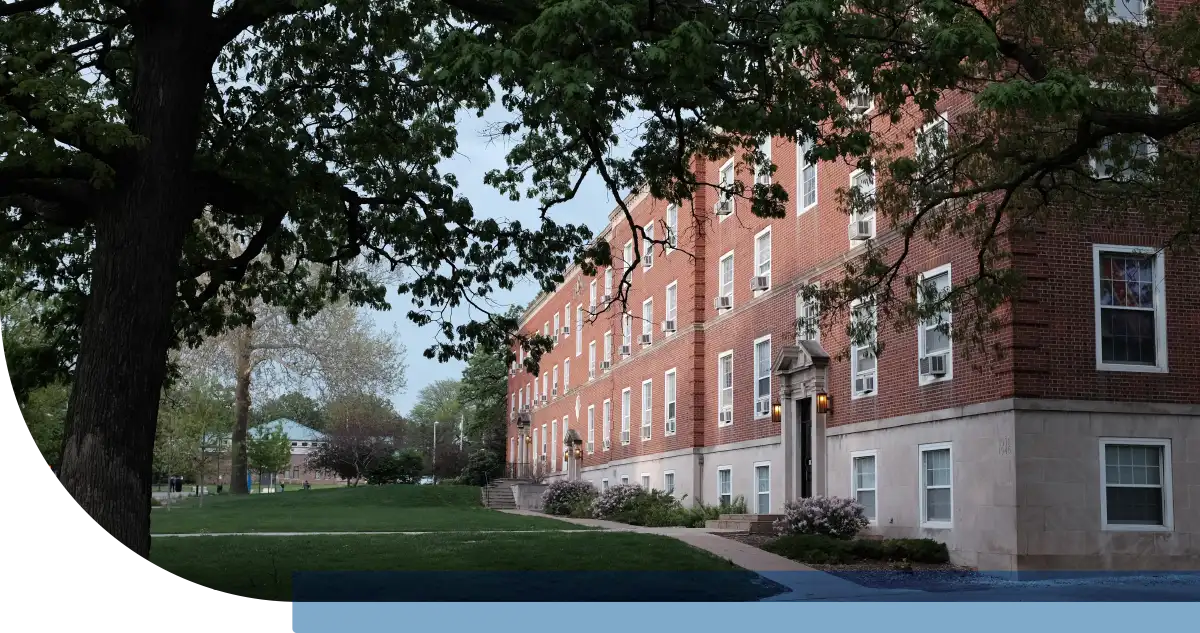
“It was mostly white students, so we just connected with each other and we all got along,” Henderson Behn said. “We would encourage and invite other Black girls on campus to hang out with us, and Morehouse was definitely our hangout.”
Weston-Knauer recalls that the three women all lived on the third floor, and they formed a natural connection. They would go to breakfast and dinner together at the dining hall and tell each other about their upbringings and families. Morehouse became their haven and a central gathering place for them and other Black women on campus.
“Bobbie was from New York and she had this Brooklyn accent,” Weston-Knauer said. “And nobody understood me, because I was from the South, so I might as well have had a mouth full of marbles. We began spending a lot of time together, really getting to know each other.”
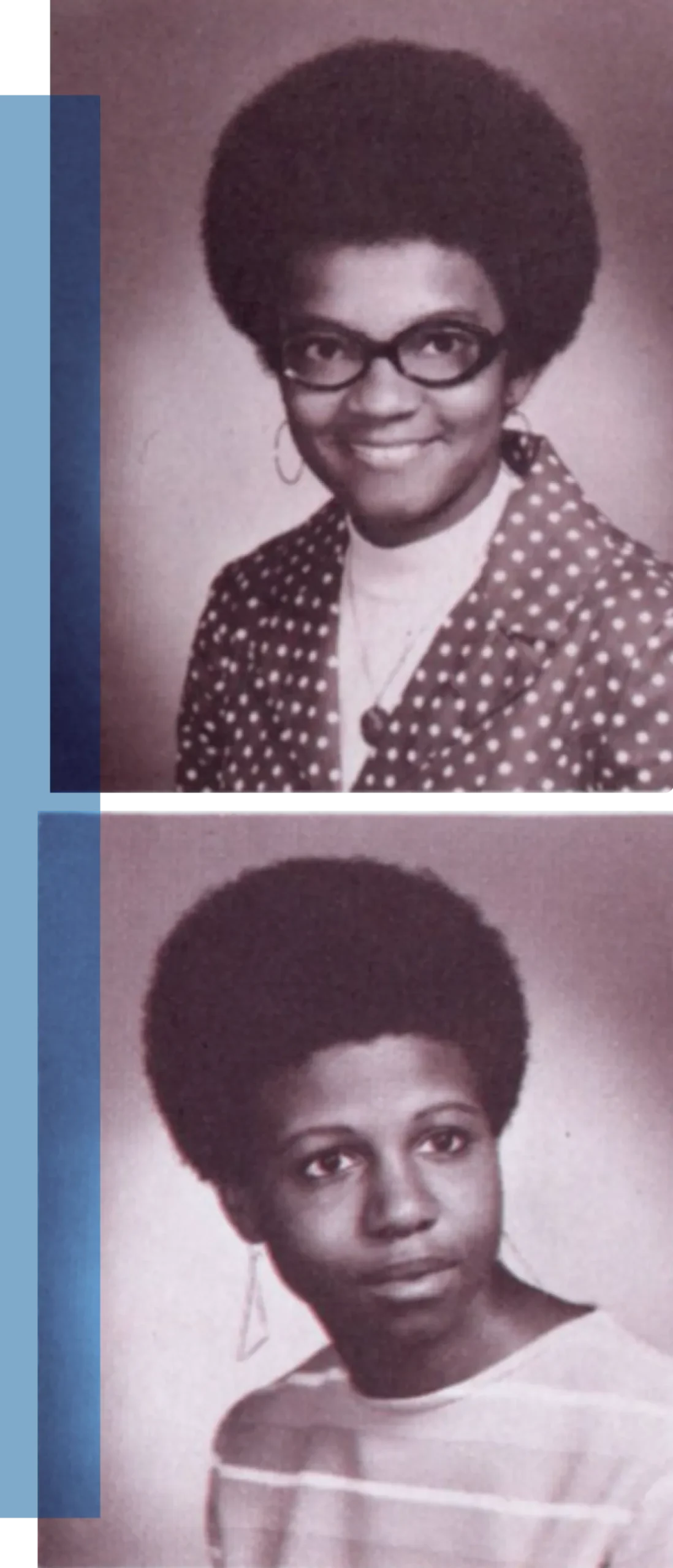
“Almost at first sight, I knew they were both going to be dear friends,” Woods Everage said. “I was already extremely homesick and missing my older sister, and they all took me under their wings.”
When Butts arrived in 1969, she did not live in Morehouse Residence Hall at first, but she was involved in campus activities for Black students, which is how she came to meet the other “YaYas.”
“Belinda and I became roommates in Morehouse my junior year, after the others had graduated,” Butts said. “Linda was from Des Moines, so her family was like my adopted family. She brought me into the fold with the YaYas group later on, since they were all such good friends at Drake, and I was the new kid on the block.”
Soul Food Dinners and Basketball Games at Vets
“We would have late-night sessions in the dorm talking about life and school; we would have water fights in the dorm,” Woods Everage said. “I remember the intensity of being involved with the Black Power Movement on campus but also the lightness of living and just having fun with each other.”
Henderson Behn was a Drake cheerleader and her then boyfriend (now her husband), Bob Behn BN’71, was the only one in the group who had a car. Five or six of them would often pile into his car and he would drive them to games. Weston-Knauer chuckles now as she recalls that the group was initially hesitant about Henderson Behn dating Bob, who is white. When they first heard about the relationship, the other women wanted to meet Bob and called a meeting with Henderson Behn in Morehouse.
“I think they could see that we really liked each other, and they realized it was serious,” Henderson Behn said. “Bob likes to joke now that he was the troublemaker with the YaYas because of that first meeting. But he’s been with us all these years.”
Members of the YaYas smile as they recall the time they hosted a soul food dinner in Morehouse as a fundraiser for establishing a Black student house on campus. They served chitlings—a traditional soul food dish made from the small intestines of pigs. Weston-Knauer and Dawkins Brickhouse were the cooks.
“I have never been a cook, but I helped clean, and I remember we cleaned [the chitlings] in the bathtub,” Woods Everage said with a laugh. “People were asking, ‘What is that smell?’ That was a pretty good bonding experience.”
A Time of Change on Campus
“There were not a lot of people on campus who looked like me, and I was so homesick,” Woods Everage said. “Those were turbulent times. We were very conscientious about what was going on in the world, but also what we wanted to change and improve at Drake.”
Weston-Knauer, Henderson Behn, and Dawkins Brickhouse petitioned the administration to establish a place for Black students to gather, and later, several of the women were involved in establishing the Drake Black Afro-American Society.
“The racism and bigotry were there in the way some of the teachers and students treated you,” Butler Bell said. “You had to unite to support each other, and that’s the network we wanted to provide.”
They do fondly recall the professors and Drake administrators who were welcoming and supportive. Several of the YaYas mention Don Adams—the vice president of student life beginning in 1969—as a Drake administrator who went above and beyond in seeking out their thoughts and involving them in campus life.
“He came in, he listened, he was at every meeting, he met with us as a group and met with us individually. He genuinely cared,” Woods Everage said. “He always reminded us of the impact we had on him as an individual and on the university because we were bold in our voices. He always told me we made the university listen.”
Butts was also involved with chartering Alpha Kappa Alpha, a black sorority chapter that is still going today..
“I’m proud of what I did at Drake and being very involved with the Black house,” Butts said.
After graduating, Woods Everage, Weston-Knauer, and Butts all worked for Drake at various times. Weston-Knauer worked briefly in Drake’s student housing department after completing her master’s at the University in secondary school administration. After graduating with a degree in biology, Butts returned to Drake as the assistant director of student activities and as a minority student advisor until 1976. Woods Everage’s tenure in the Office of the Provost lasted 24 years, and she was responsible for launching the school’s peer mentor program, which is still in place. She retired as the vice provost for student affairs and academic excellence in 2012. The Drake community honors her enormous impact with a peer mentor award bearing her name.
“The reason I started the peer mentor program with upper-class students helping first-year students was because of Bobbie and Kittie and Kay, and what they did for me,” Woods Everage said.
Their Bond Through the Years
“I would say there was a time after graduation with all the marriages, kids, and family life that we weren’t as in touch with each other as we are now,” Henderson Behn said. “But we always kept up a little and knew what was happening.”
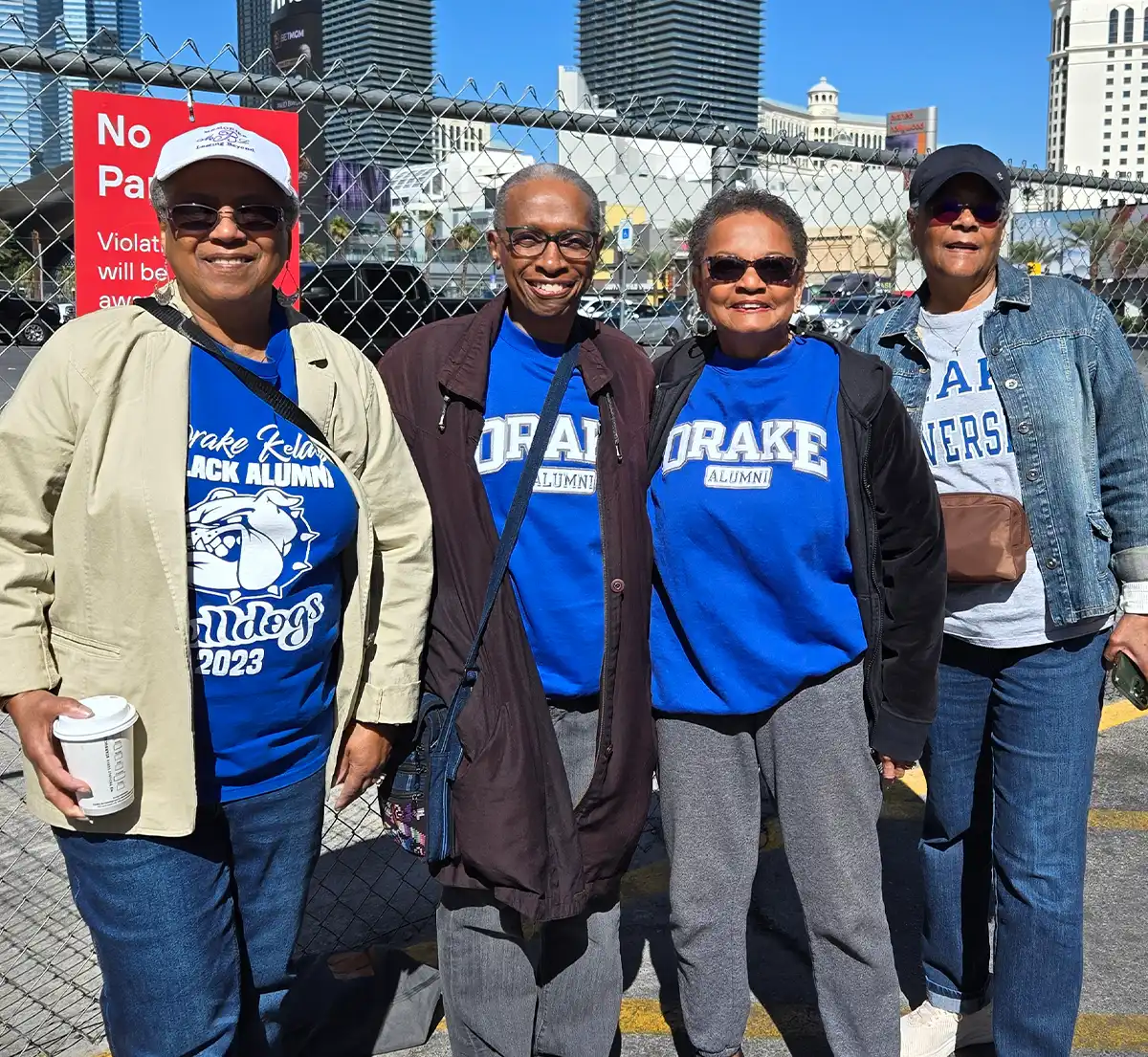
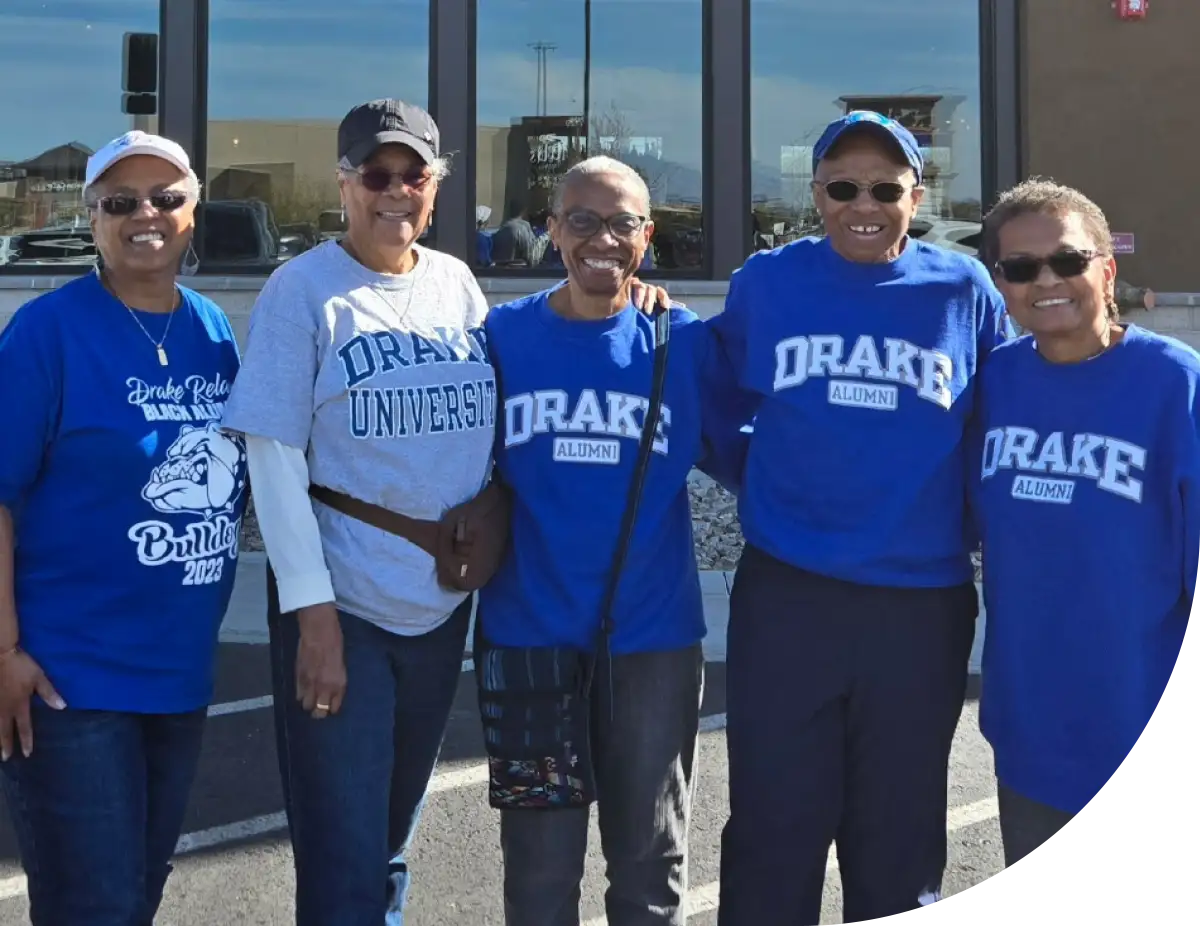
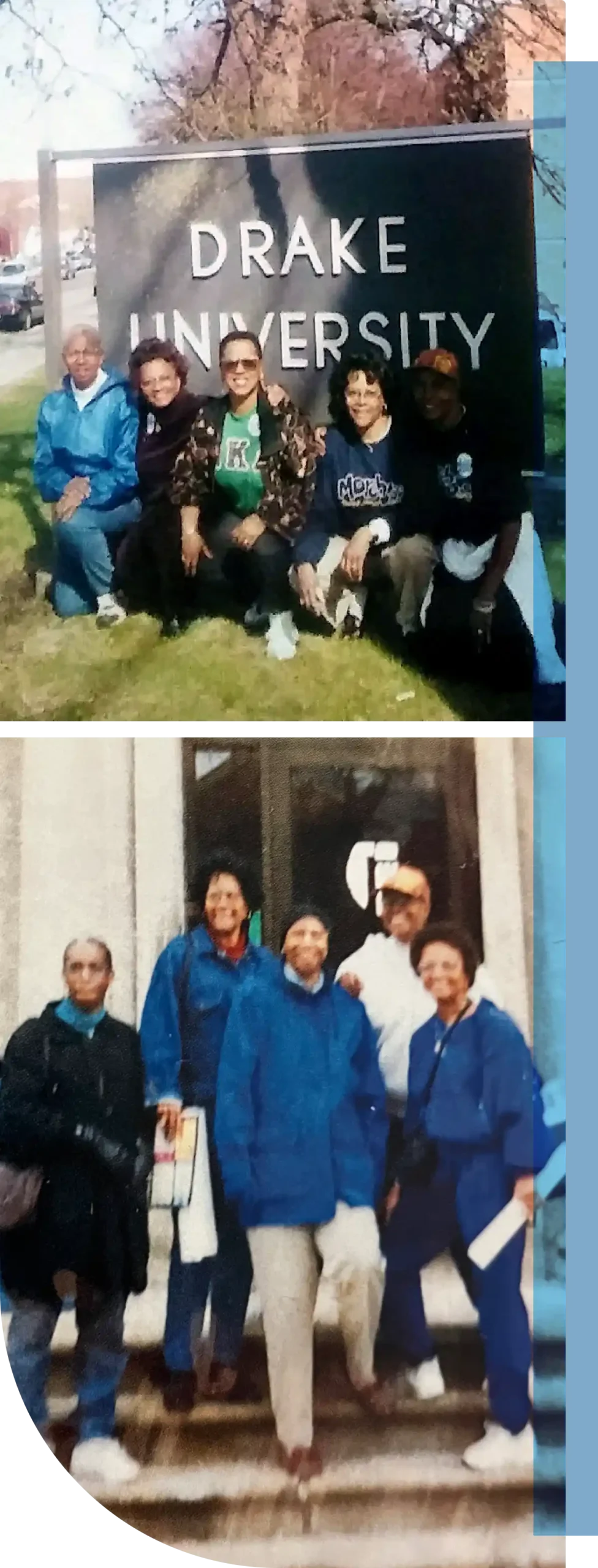
Sometimes they would return to campus for a class reunion or the Drake Relays. Eventually, visits became more organized and frequent, as they traveled together to Seattle, Atlanta, Des Moines, and Las Vegas. In recent years, an active text chain and monthly video calls are a highlight and a way for them to stay connected. It was during one of their Drake Relays weekends that they learned their dear friend Dawkins Brickhouse was ill and on the kidney transplant list. Sadly, she passed away in January 2023, but her memory lives on through the YaYa sisterhood.
The YaYas rallied around the idea of commemorating Dawkins Brickhouse and her impact on the Drake campus. They worked with Drake officials to create a plaque at Morehouse Hall in her honor. Many of the YaYa Sisters were back on campus for the 2025 Drake Relays to see the new plaque.
“It’s so important that you honor those who were with you, and Bobbie was such an integral part of what we did here on this campus,” Weston-Knauer said. “She was president of the dorm; she helped establish the Black student center. What we did as students of color then, that part of the legacy is forever.”
For Butler Bell, the plaque in Dawkins Brickhouse’s honor is recognition not only of her impressive life—she went on to earn her doctorate in psychology—but it also commemorates the many Black students who helped shape what Drake is today.
“It recognizes Bobbie, but also Morehouse and how important that was to us at that time,” Butler Bell said. “It shows that people of color lived here and people of color contributed to Drake.”
When the YaYa Sisters gather now for their monthly Zoom calls or annual trips, Dawkins Brickhouse’s name comes up with affection. They often say to each other “what would Bobbie think about this?”
“She always comes up in the conversation,” Woods Everage said. “It’s not a sadness that comes over us. We have such fond memories.”
Their Drake Experience Laid the Foundation
“The trials and tribulations that people go through, you don’t go through them alone,” Butler Bell said. “We’ve always been growing, bonding, and supporting each other. Even when we didn’t talk for months at a time, that never goes away.”
The YaYa Sisters appreciate that their time at Drake is the cornerstone of their lifelong friendship.
“It all started at Drake and Morehouse,” Henderson Behn said. “Those places are still part of us. It’s beautiful to think it’s something that has evolved and blossomed and continues to do that to this day.”
The YaYa Sisters know that they and Drake have come a long way over the past 60 years.
“There were Black students who came before us in the 1950s and 1960s who left their mark, and we were able to piggyback on their work so that we could leave our mark,” Butler Bell said. “We followed them and they opened the doors for us and now generations after us do the same. I love to see more students of color at Drake now. It’s a great school, and it gave us so much. I think all of us would say we would do it again.”