







Lessons in Leadership and Purpose


When I arrived on campus at age 18, I had ambition, but not yet a roadmap. Drake University gave me that. Over four formative years, I was mentored, challenged, supported, and inspired by people who truly embodied the idea of purpose in action. Those experiences became the foundation for a 35-year career rooted in service, leadership, and impact.
Two mentors, who are also Drake Alumni, in particular, left an enduring imprint on me. Larry Zimpleman, the retired Chairman and CEO of Principal Financial Group, modeled integrity and vision. He showed me that leadership isn’t about titles—it’s about responsibility to others. He brought heart to Corporate America, and in doing so, redefined success for many of us who followed.
Dr. Wanda Everage, Vice Provost during my time at Drake, taught me the value of purpose-driven education. She believed that excellence without empathy was incomplete. Her passion for student success was contagious, and her belief and confidence in our potential stayed with me long after graduation. She helped me see that service—whether on campus or in the community—is not a side act, but central to a meaningful life.
Inspired by these mentors and the spirit of Drake, I’ve tried to give back in any way I could. Serving on the Drake University Board of Trustees for a decade from 2011 to 2021 was an honor. It gave me the chance to contribute to Drake’s ongoing evolution and to pay forward what was given to me. Establishing the Hayes Student Commons in the new Johansen Student Center was another way to say “thank you”—to create a space where future generations can connect, grow, and find their own path.
As I reflect on the throughline of my career—whether in corporate leadership, nonprofit service, or board governance—it’s clear that Drake lit the spark. Purpose in action means aligning what you do with what you believe. It means serving with conviction, leading with compassion, and always remembering where you came from.
To current students and fellow alumni: You don’t have to change the world overnight to make a difference. Purpose looks different for everyone. It might be mentoring a student, leading with ethics in your workplace, volunteering in your neighborhood, or simply being someone others can count on. Your impact, when rooted in values, ripples outward in ways you may never fully see.
Drake University taught me that real success is measured not just in what you achieve, but in how you serve. I am endlessly grateful for this community and proud to be part of its legacy. Go Bulldogs!
With gratitude and Bulldog pride,

Retired President & CEO, Point32Health
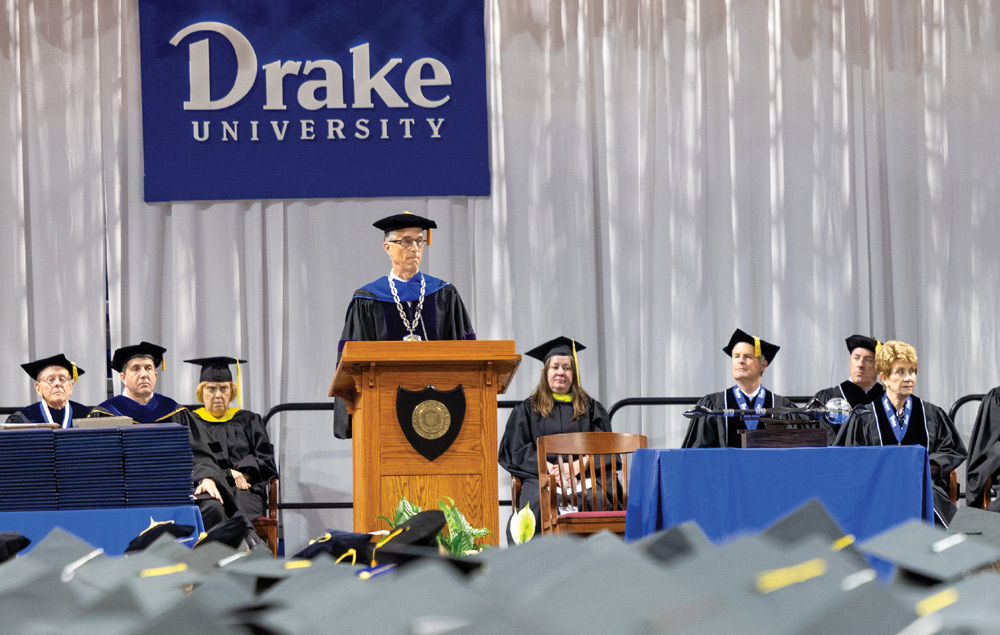
TABLE OF CONTENTS
Features
Drake Athletics
2025 Alumni Awards

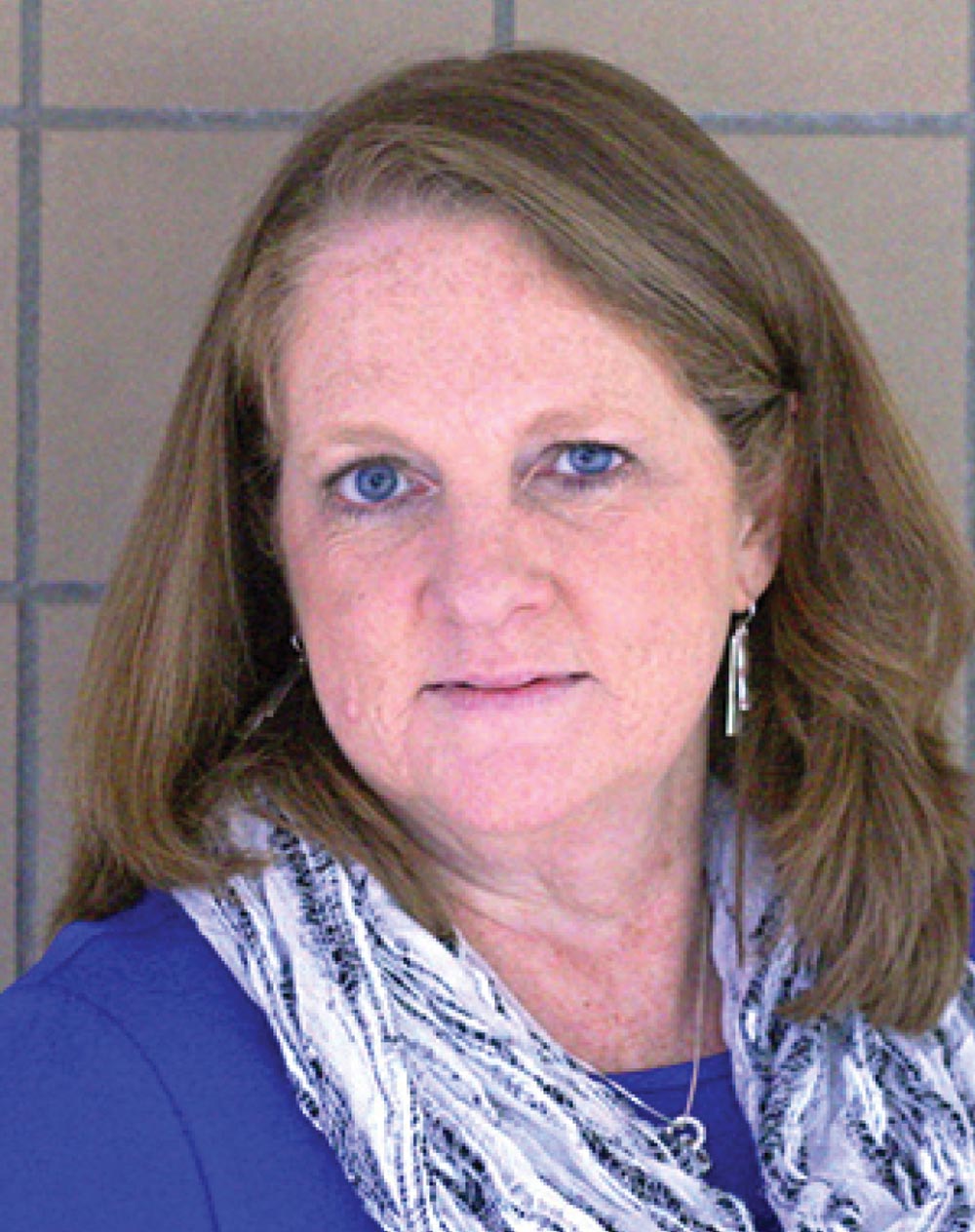
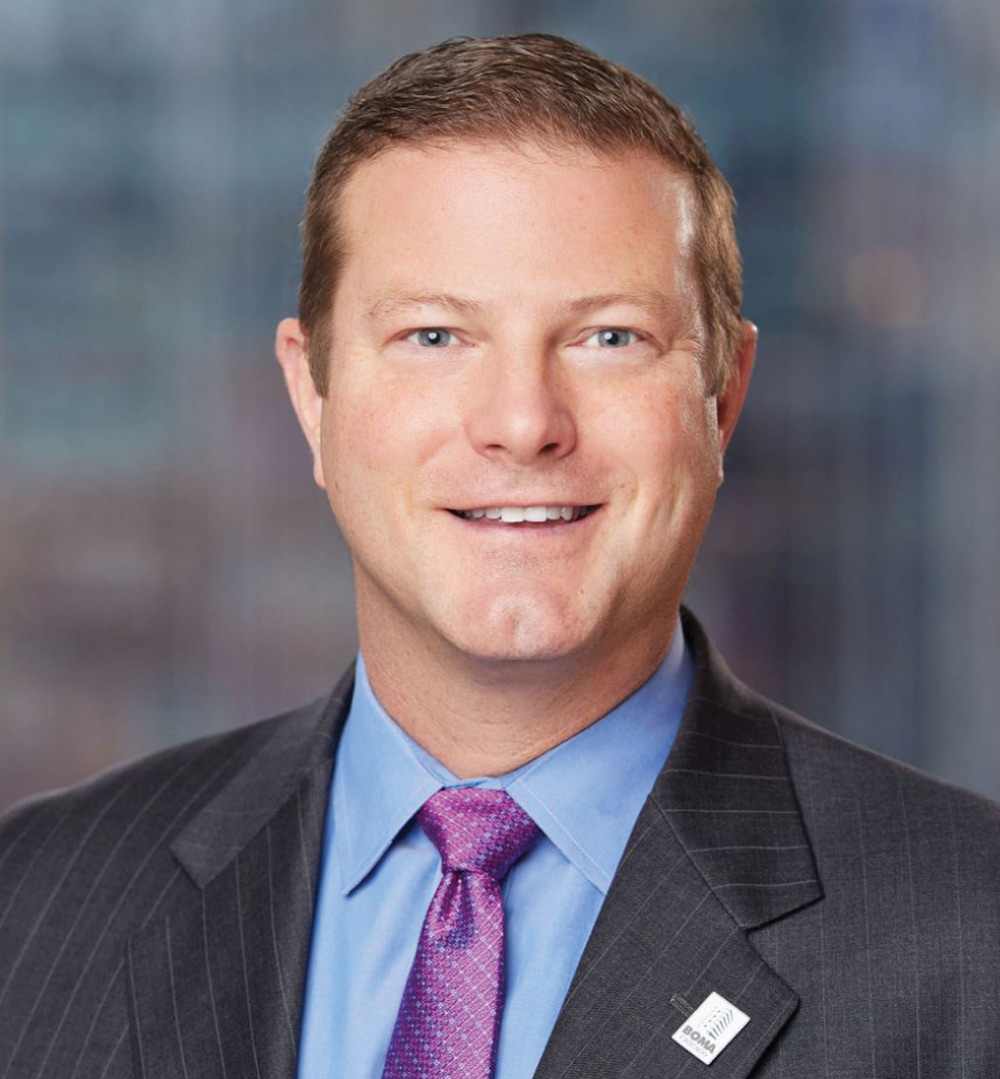
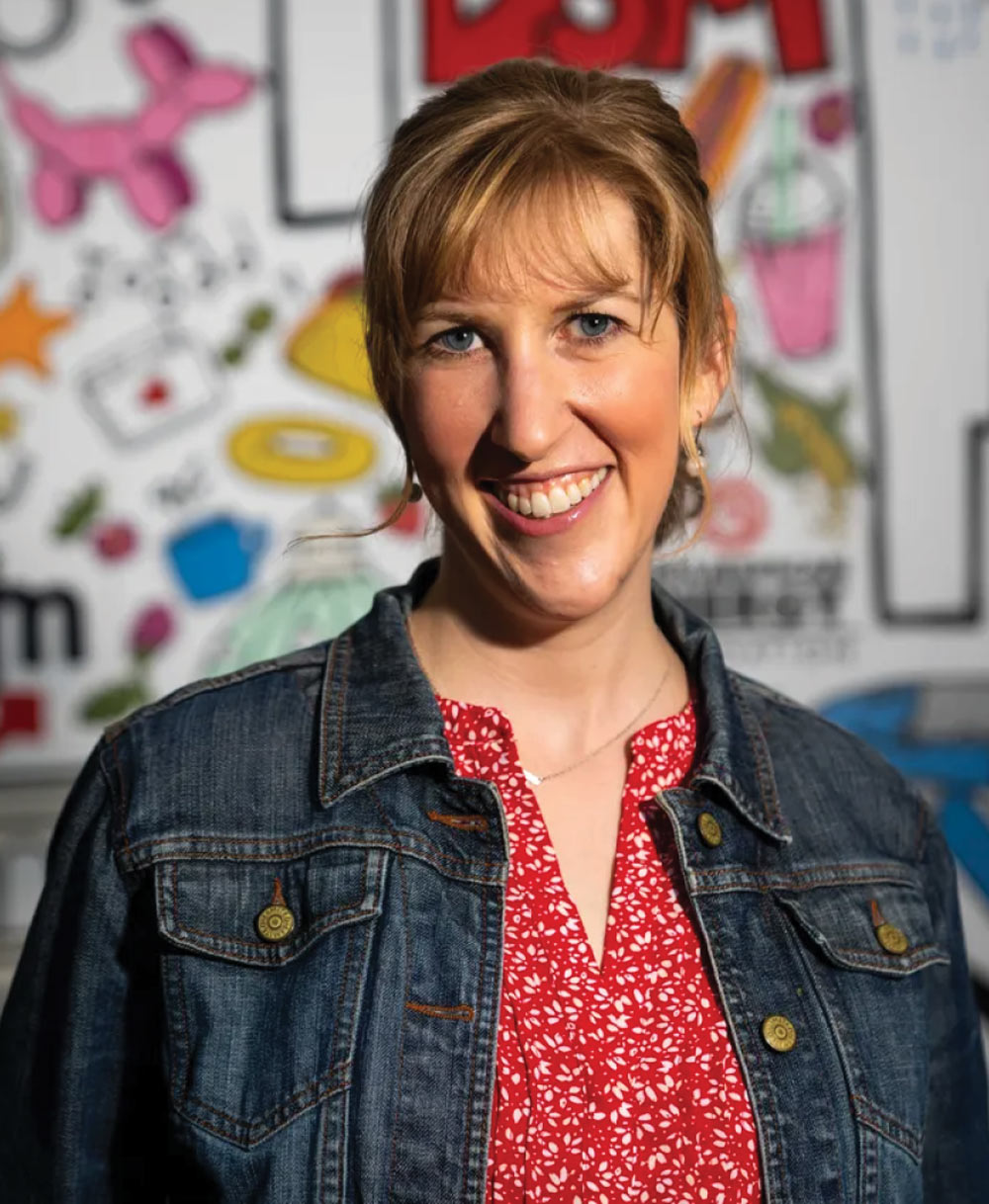
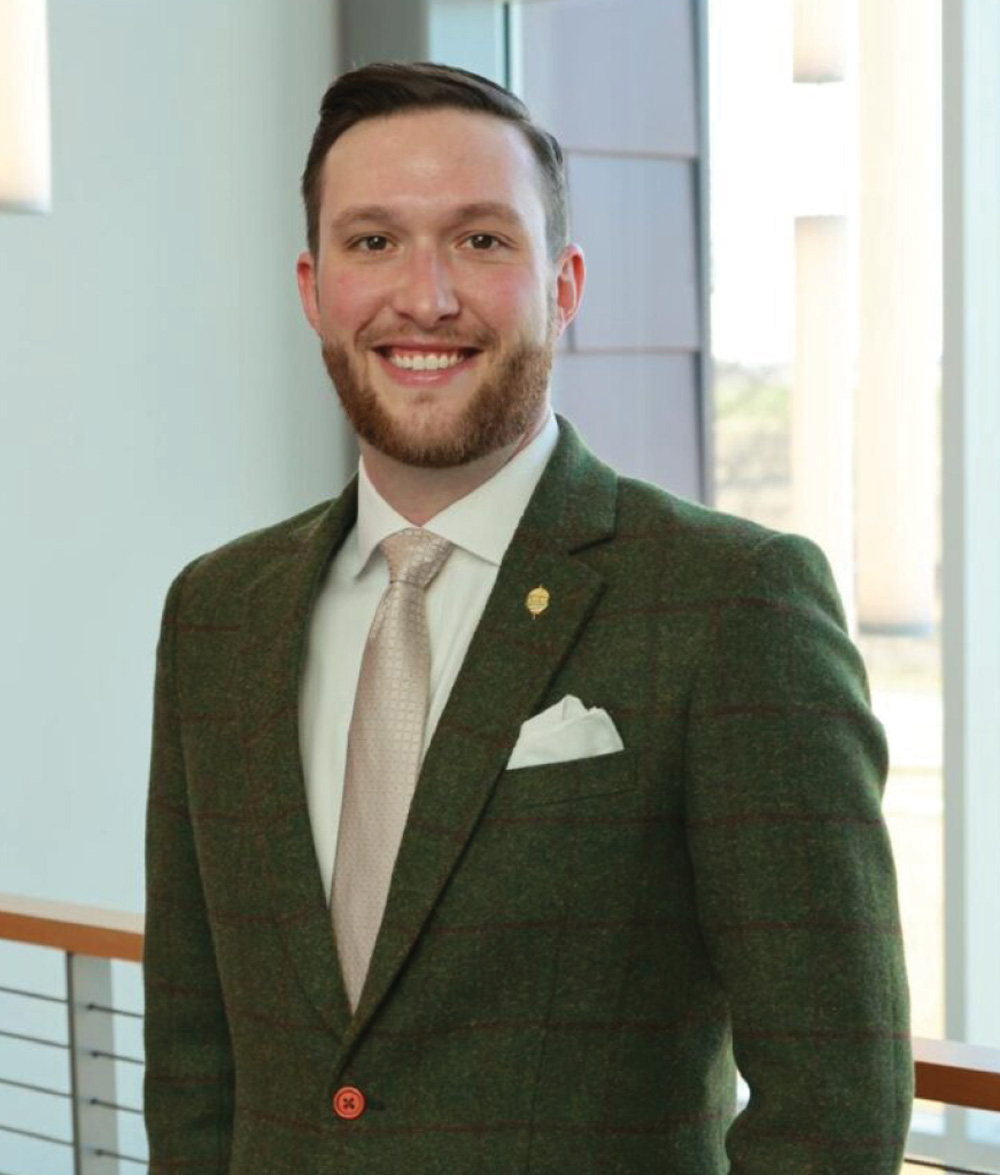
The Drake Alumni Awards honor exceptional graduates of Drake University and recognize their significant contributions to their alma mater, their profession, and their communities. This year’s award recipients are Frank Ursini, Lee Ann Colacioppo, Deidre DeJear, Hosea James Givan II, Cain Hayes, Sarah Porter, Tony Tandeski, and Annelise Tarnowski.
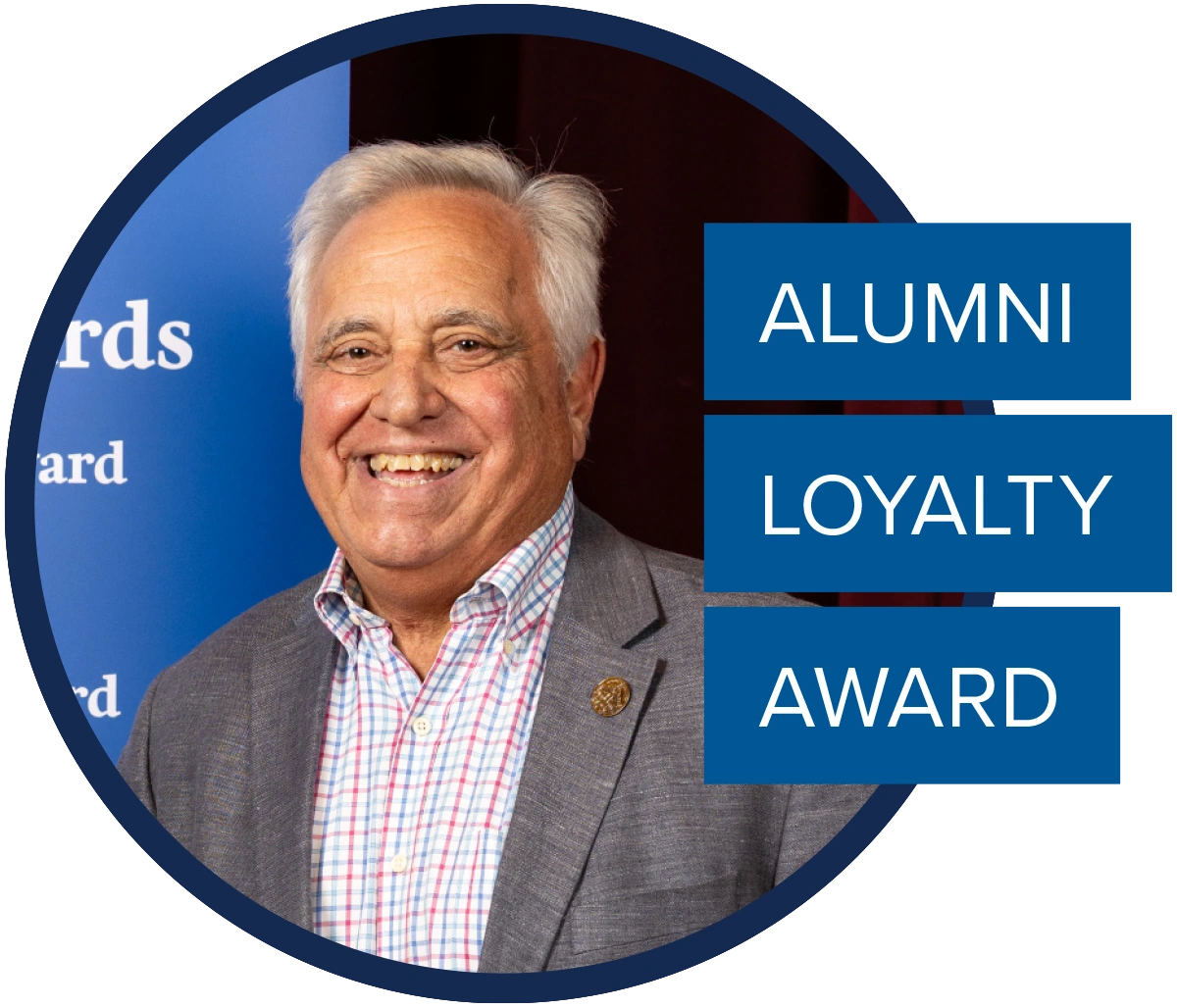
Frank Ursini, BN’73
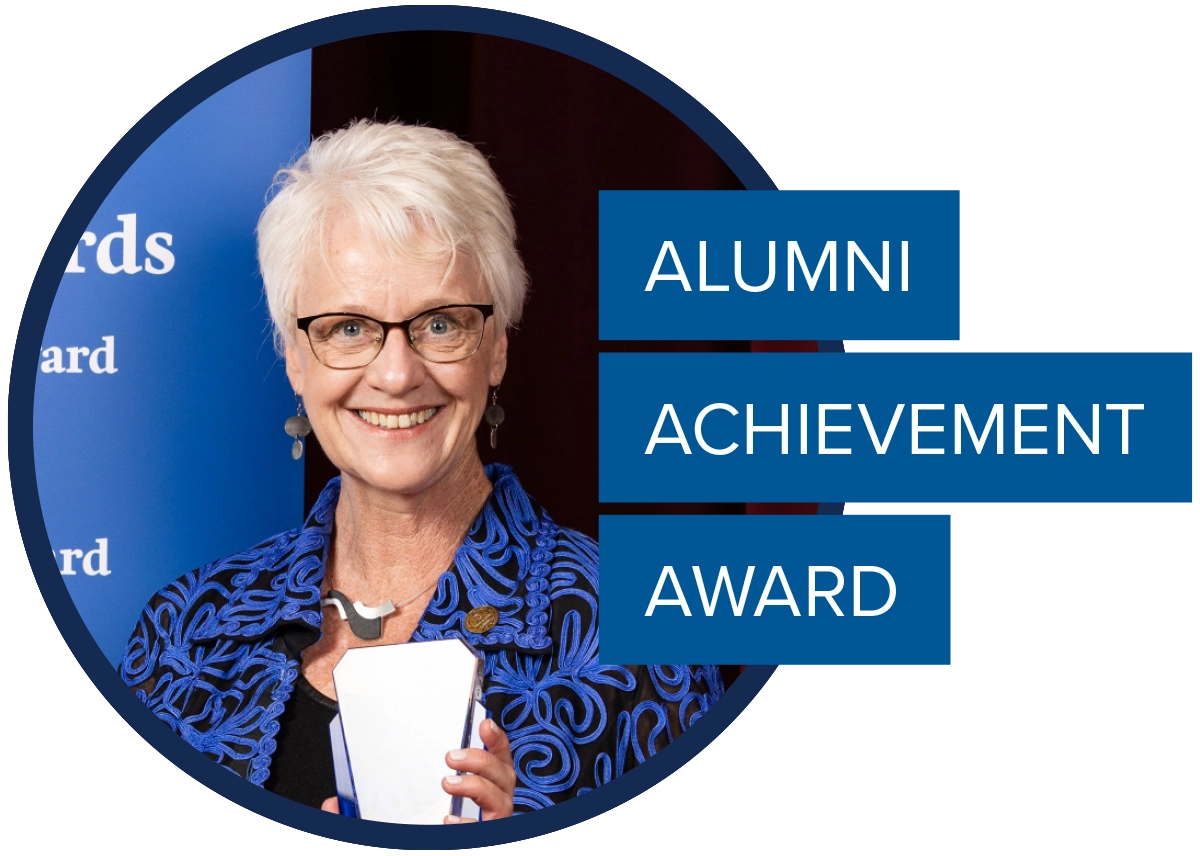
Lee Ann Colacioppo, JO’86
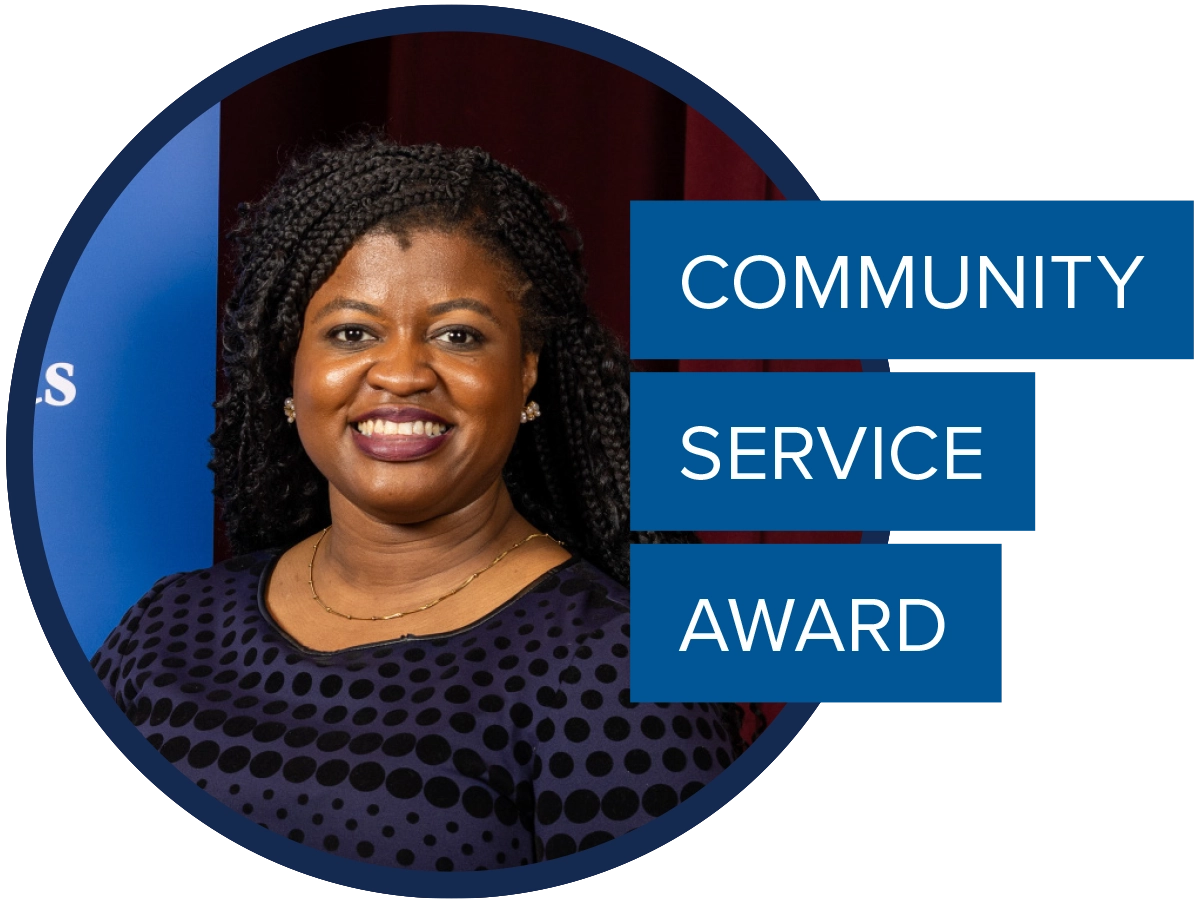
Deidre DeJear, JO’08
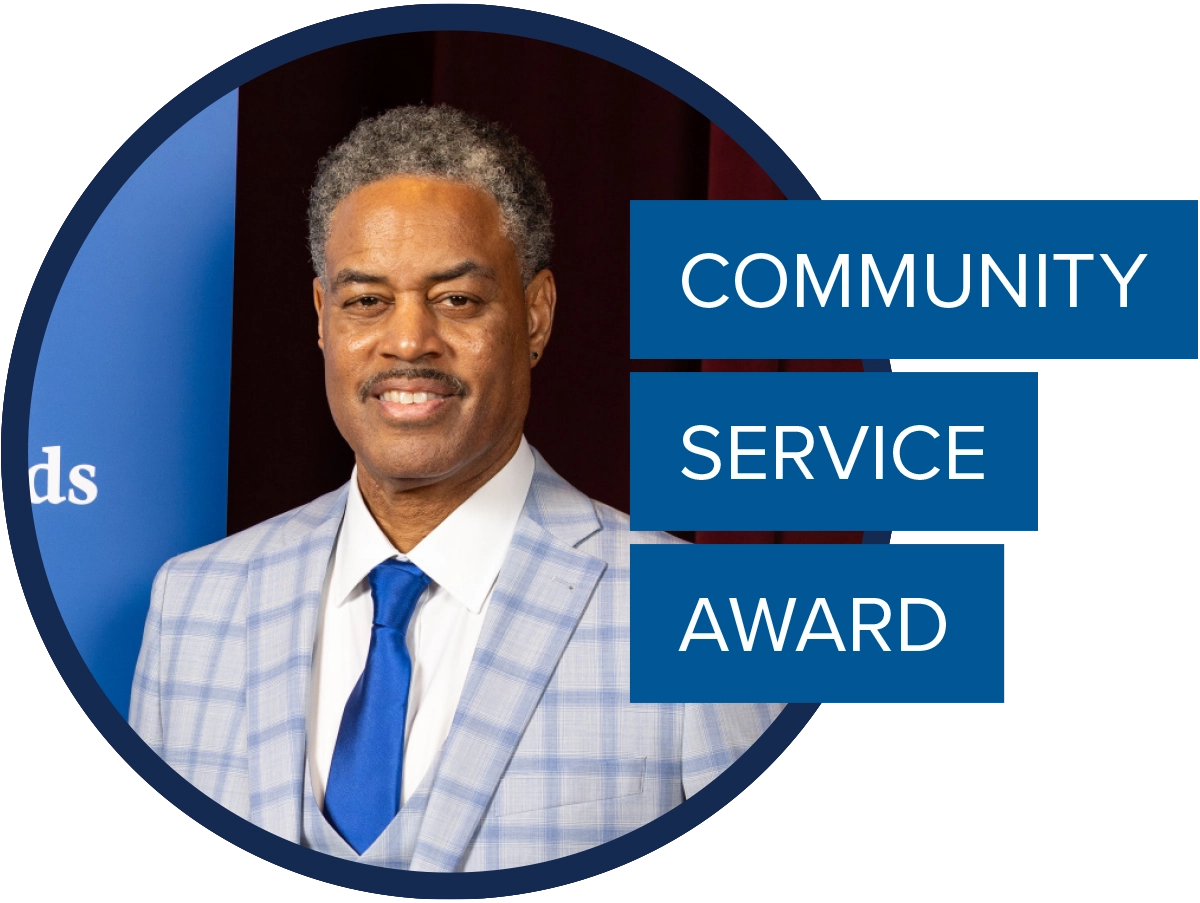
Hosea James Givan II, LA’82
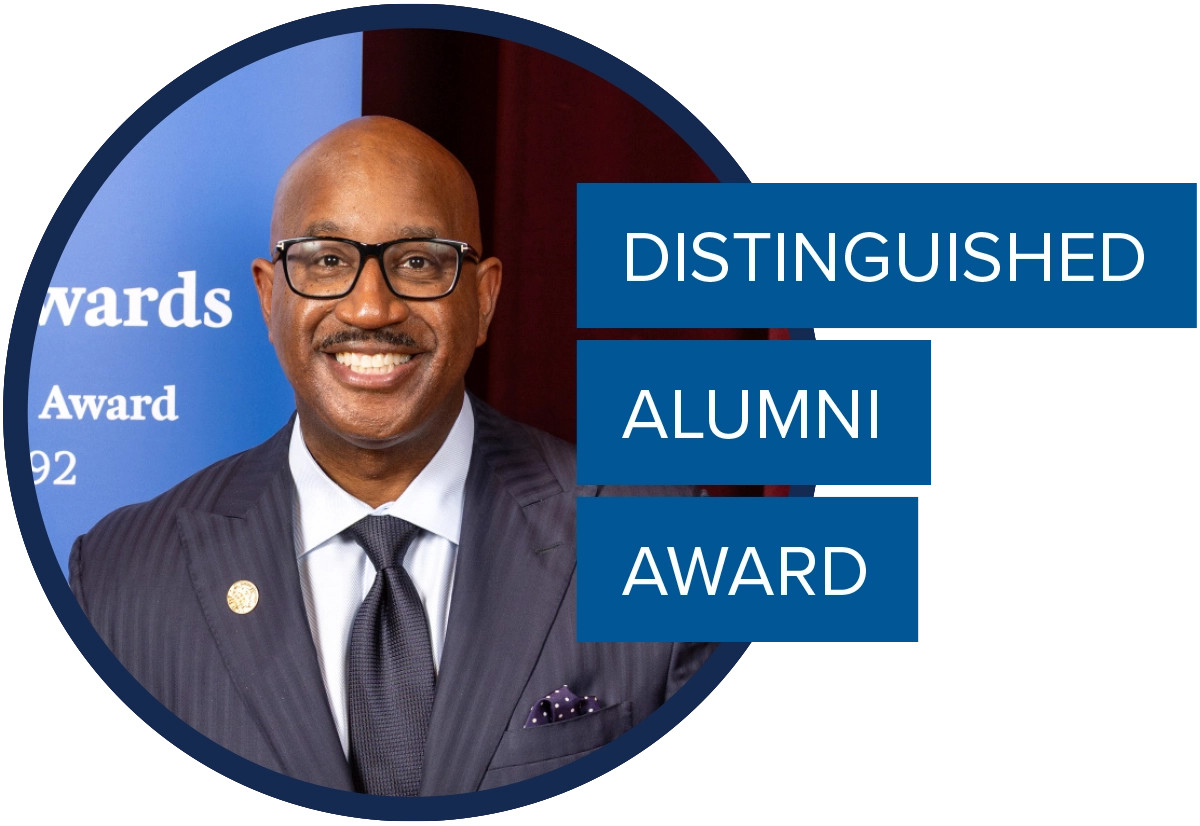
Cain Hayes, BN’92
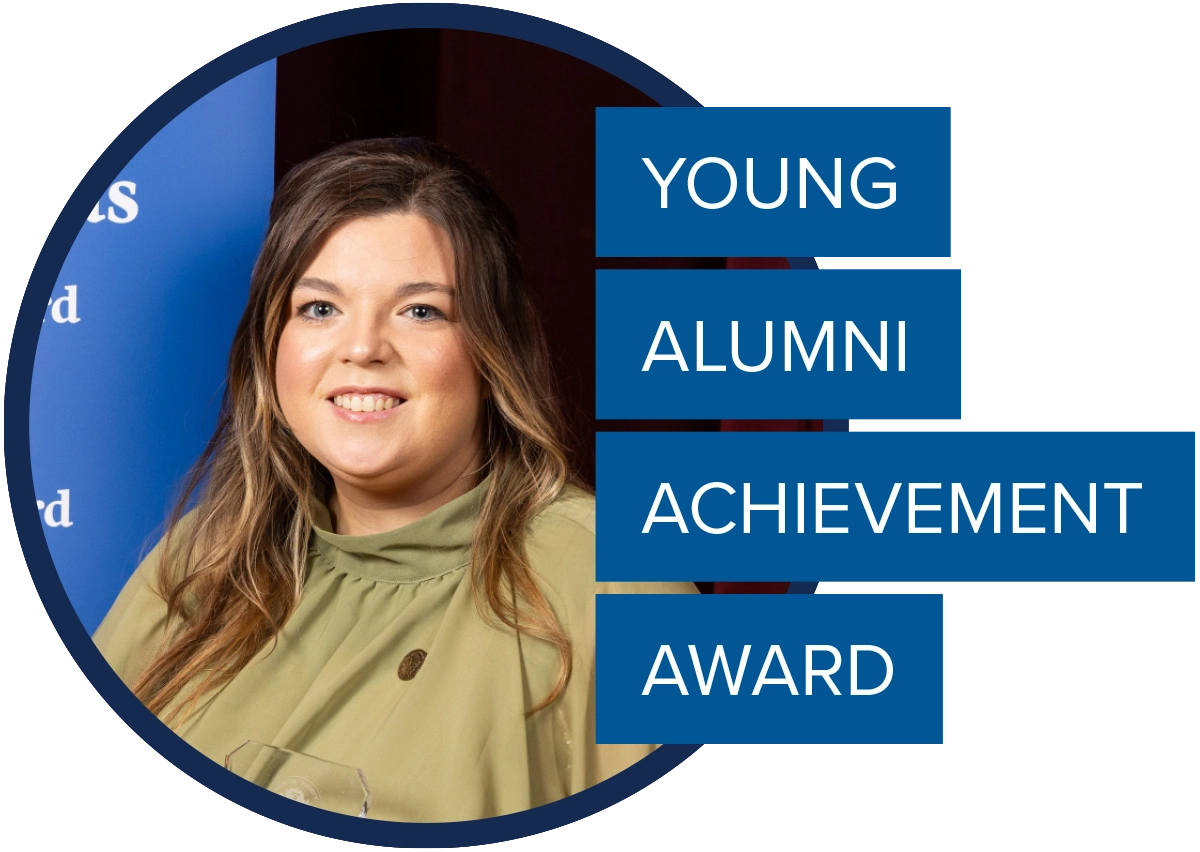
Sarah Porter, ED’16
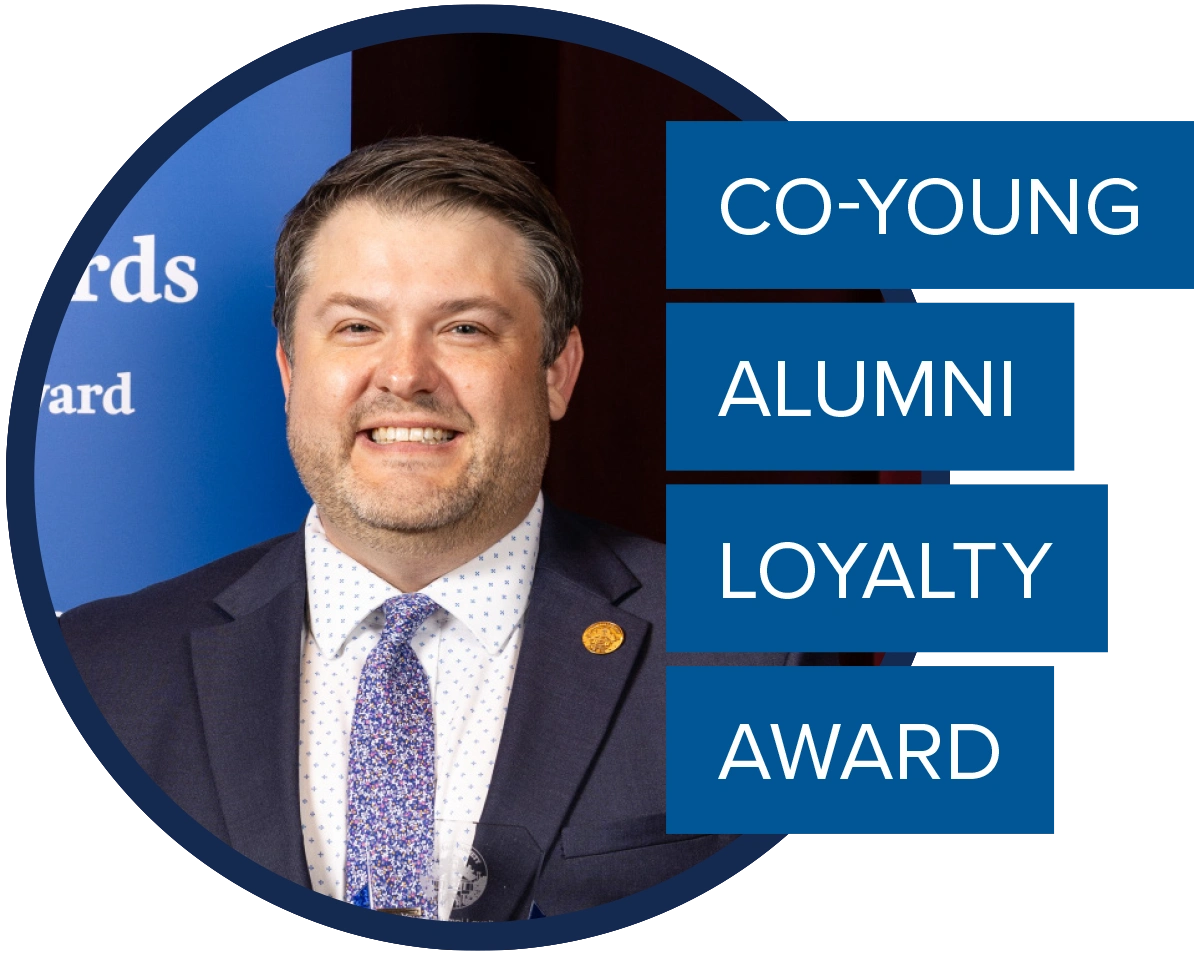
Tony Tandeski, JO’08
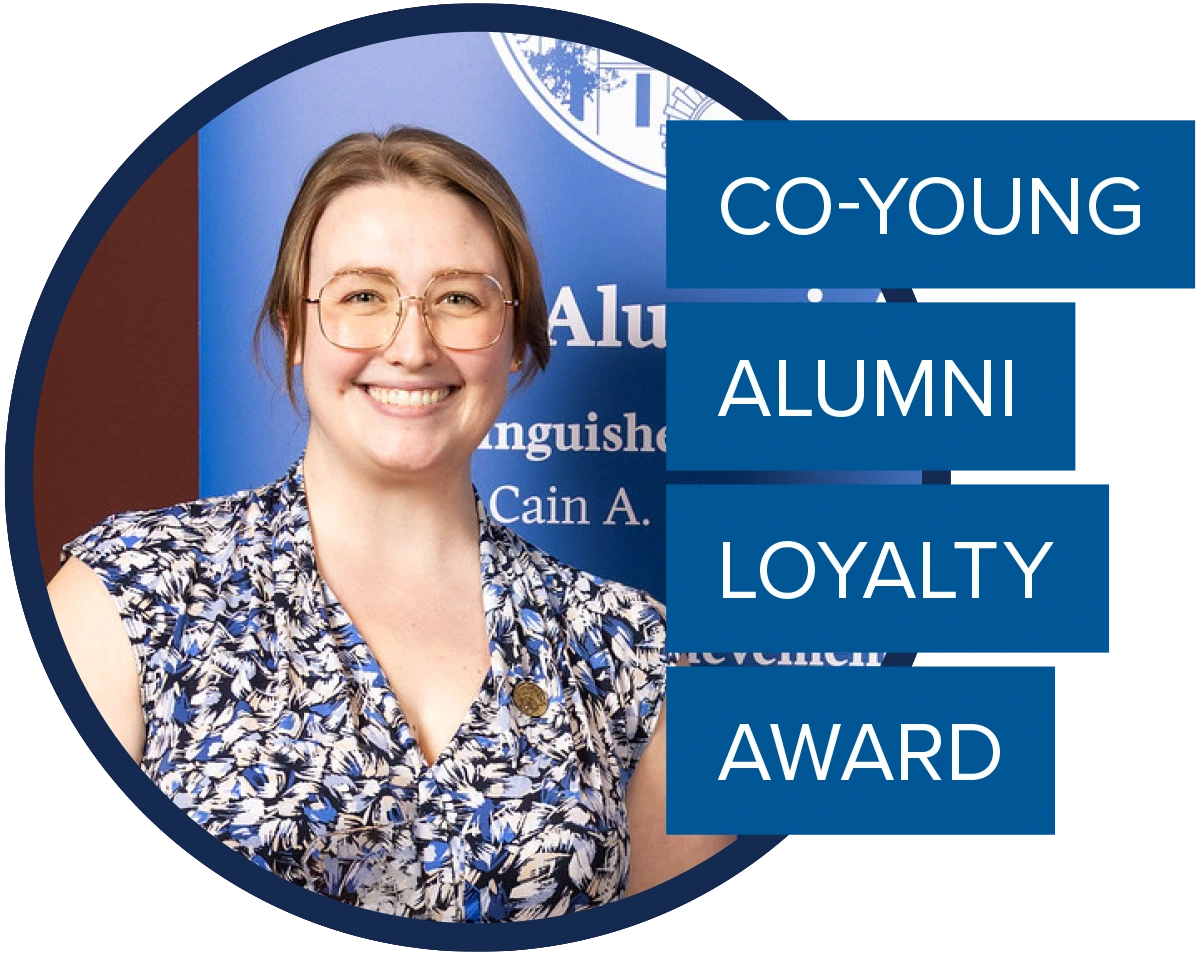
Annelise Tarnowski, JO’15, AS’15
Purpose in Action





Everyone Deserves to Be Seen and Heard

When Alexis Davis thinks about how it all began—her work in advocacy, her gift for building community—she starts with a bus ride to Springfield, Illinois.
“I was about 12 or 13, and my mom got me on a bus with her union, AFSCME Local 131,” she remembered. “We were fighting for wage rights for state employees. That was my first real experience with advocacy.”
Raised in the south suburbs of Chicago by her mother, Fredrika, Alexis grew up with daily examples of hard work, purpose, and no excuses. Her mother worked for the state of Illinois for 43 years as a mental health technician. Her father joined the police force when Alexis was three, deciding he wanted to serve and protect for her sake.
“They always told me, ‘We didn’t do well in school, but you will. You have no other choice.’ So I did drama, scholastic bowl, mathletes—I was an overachiever,” she said with a laugh.
She discovered Drake somewhat by accident. “I thought the recruiter was from Duke because of the blue,” she said. “But he was so warm and inviting. I ended up being the only one from my high school who got accepted to Drake.”
Once in Des Moines, Alexis started as a business major. “I failed Econ 101. I did not do well in Accounting,” she said. “Randy Blum, the associate dean at the time, kindly walked me over to David Wright in the journalism school and said, ‘You can have her now.’”
That moment changed everything.
Alexis flourished in the School of Journalism and Mass Communication, mentored by Wright, Dr. Kelly Bruhn, and others. “Dr. Bruhn literally bullied me into grad school, in the best way,” she said. “I came to her in this weird in-between time, not sure what I wanted. She said, ‘You’re applying to the MCL program. You’re taking your GMAT this weekend.’ And I did.”
As a Drake student, Alexis threw herself into campus life. She was a host for Young Legendz Radio—a student-run show on 94.1 The Dog that filled a major gap in Des Moines’ R&B and hip-hop offerings.
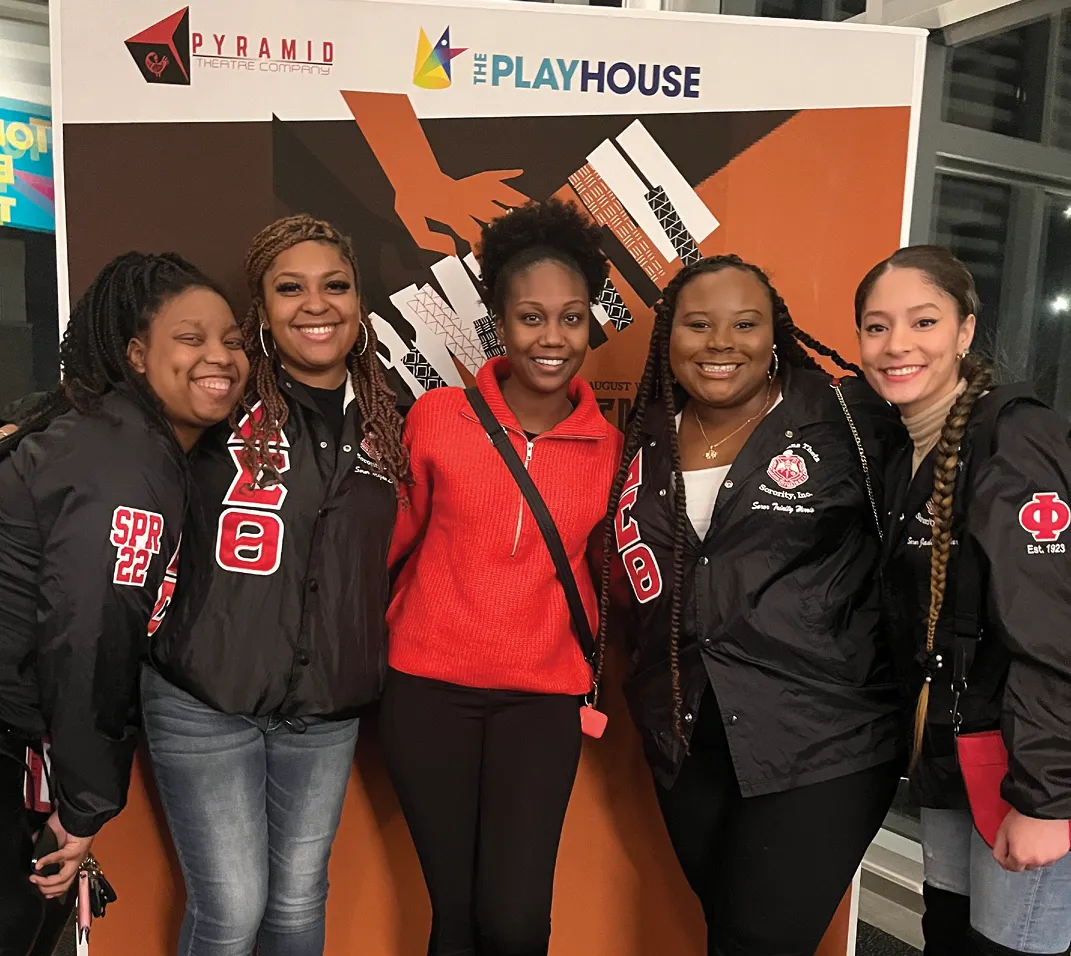
She also served as a leader in the Coalition of Black Students, where she helped launch a powerful new tradition: Black on Black, an annual formal created to recognize and celebrate Black excellence on campus.
“We weren’t being invited into other formal spaces,” she said. “So we made our own. We honored each other. We honored staff and administrators who advocated for us. Now, 15 years later, Black on Black is still going strong. That’s something I’m incredibly proud of.”
As she was earning her master’s, Alexis co-founded Pyramid Theatre Company, the first and only Black theater company in Iowa. “We didn’t start with a ton of theater experience,” she said. “I was doing project management, reading stage directions, and somehow I ended up as the managing director.”
Devoted to the Arts
Today, Alexis serves as the Director of Marketing for the League of Chicago Theatres, where she advocates for theater companies across the region and organizes programming that supports artists and reflects diverse voices.
“I really advocate for folks to have a voice in spaces in which it’s not created for them to have a voice,” Alexis said. “With Pyramid, we wanted Black artists in Iowa to know they could stay, grow, and be seen right here in the Midwest. Not just in New York or Atlanta.”
Alexis still finds time to give back to Drake. She serves as a Black Alumni Association Board Member, and the secondary advisor to the Phi Chapter of Delta Sigma Theta Sorority, supporting students virtually from Chicago and making trips back for special events.
Through every role she’s taken on, Alexis has been driven by the belief that every person deserves to be seen and heard.
“I like helping,” she said. “But more than that, I like helping others figure out how to speak up, tell their stories, and stand in their light.”
From Survival to Service

When Dani Mincks transferred to Drake University in 2021, she wasn’t a typical college student. She was in her 30s, had already managed over 100 people as an operations leader in a Philippine call center, and had recently left everything behind to start over in the United States.
“I was an international student, and I only spent two years at Drake,” Dani said. “So, I didn’t have the traditional experience. But Drake and Des Moines together helped me find work that aligns with my mission and values, which is to help people out of poverty.”
A Childhood Shaped by Change
Dani grew up in Metro Manila, a city of 20 million people, where her mother and grandmother ran a small clothing business supplying uniforms to schools and retail stores. But when her grandfather suffered a stroke, everything changed.
“All of our resources just went away,” she said. “His care became the priority, and there was no health insurance at that time. My parents separated, and that affected the business even more.”
Dani was attending the state university when the business collapsed, but she left school to help support her family.
“Looking back, the price of a venti coffee at Starbucks was the same amount of money that fed our family for a week,” she said. “I hated it. I hated getting handouts and relying on others for food. I wanted to be independent, so I started working.”
She entered the financial world through collections and banking, learning how money really worked. But eventually, she realized she wasn’t using that knowledge to help people like herself—she was using it to help people who already had enough.
Finding Her Purpose
Dani moved to the U.S. in 2018, initially attending a small community college in Austin, Minnesota, a town with a population under 25,000. The culture shock was real. The nearest Starbucks was 45 minutes away. After growing up in a metropolis, Dani wondered what she was doing in rural Minnesota.
But doors kept opening. During the pandemic, Dani transferred to Drake to complete her business degree. It wasn’t easy.
“I felt so lost,” she said. “It’s hard to make friends as an adult, and especially as an international student. But I’ve learned that we’re not meant to go through our problems alone.”
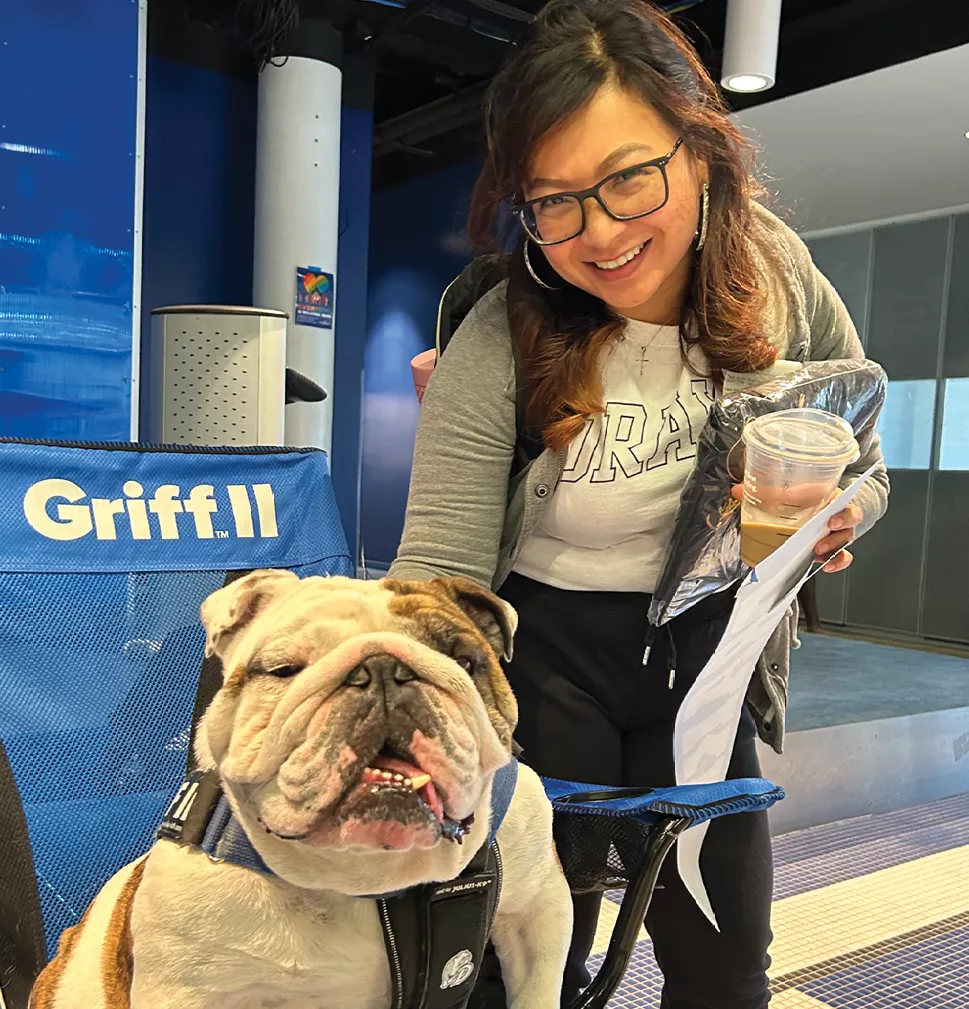
In 2022, she found her next step. Dani was introduced to Change Course, a nonprofit career development program in Des Moines focused on helping people break free from poverty—not just financially, but emotionally, spiritually, and relationally.
“It’s a five-month program that surrounds participants with community,” she said. “We teach coping skills, career tools, but the heart of it is relationships. It’s about helping people see they are worthy, that they are not alone, and that they can do hard things.”
She joined the team as a career coach and now serves as the Director of Community Engagement and Lead Career Coach.
A Recent Success Story
Not every participant’s journey ends in success, but one recent story reminded Dani what’s possible when someone is truly ready for change.
She met a young man who had moved from Florida to Iowa after learning the state had one of the lowest homelessness rates in the country. A Florida church assisted him in relocating, and a Change Course volunteer connected him to the program. He embraced the curriculum, found a full-time job, secured his apartment through YSS, and is now training to become a registered nurse through the Iowa National Guard.
“It’s amazing,” Dani said. “Those are the stories that keep us going. But 90 percent of the time, it’s hard. Lots of heartbreak and tears. But this city has all these organizations that work together, lots of youth programs, too. That’s what I love about Des Moines: the agencies here are willing to help each other to help others.”
Walking With Others
Change Course is always looking for professionals who want to support others through mentorship, mock interviews, resume reviews, or second-chance employment opportunities.
Dani knows what it means to start over. She’s done it more than once. And she believes that lived experience helps her serve others with empathy, accountability, and honesty.
“I always go back to those moments as a kid,” she said. “Not having enough. Not knowing what came next. That’s why I care so much. Because I know what it’s like.”
She tells her participants they don’t need to have it all figured out.
“You just need someone to walk with you,” she said. “That’s what Change Course does. That’s what I get to do every day.”
A New Way to Serve

When Elizabeth “Buffy” Higgins-Beard, AS’98, walks into her Milton Township office, she passes the original decor—framed images of the Constitution and the Bill of Rights, as well as her recent additions: portraits of trailblazing women, such as Maya Angelou and Ruth Bader Ginsburg. Being an elected official is not where Buffy imagined she’d end up.
After 25 years in nonprofit leadership, including her most recent job as CEO of The Duke of Edinburgh’s International Award USA, Buffy is now an elected Milton Township Supervisor in her longtime Illinois community.
“None of it sounds sexy compared to working with the Royal family,” she said, laughing. “But I’m excited that we’re establishing more services and making plans to expand services judiciously to respond to all the changes that are coming out of DC. As need rises, the township will be there to help.”
Buffy’s entire career has been rooted in public service. She led local and regional nonprofits in the Chicago area before taking on national leadership roles. At The Duke of Edinburgh’s International Award USA, she helped teens of all backgrounds discover their purpose, passion, and place in the world.
“It was a dream job,” she said. “I got to use everything I’d learned—fundraising, partnership building, and program design to open the US office. And I got to make sure it wasn’t just for the kids in the best schools. It had to be for everyone.”
But, as her children grew up and left home, Buffy decided she needed a change. She took a deliberate sabbatical to reflect on what the next chapter of her career might look like. “There’s something about 25 years,” she said. “It felt like time to pause and ask what comes next. So I listened. And the answers emerged.”
Those answers led her to campaign for local office, and she won. She made state history, becoming the first Democrat to be elected in 175 years, as well as the first woman to serve as township supervisor.
This new role continues a common thread in her career: Buffy is a bridge builder. Whether helping Chicago teens become the first in their families to attend college or connecting under-resourced communities to research partners and grant funding, she sees her role as one of connection.
“Communities have strengths,” she said. “They just need a bridge to the resources. My job has always been to enter those spaces with humility and help build that bridge.”
It Started at Drake
Buffy credits two moments at Drake University for setting her career path in motion. First, it was Dr. Dan Spencer’s religion and philosophy classes, which required students to serve and worship in communities different from their own.
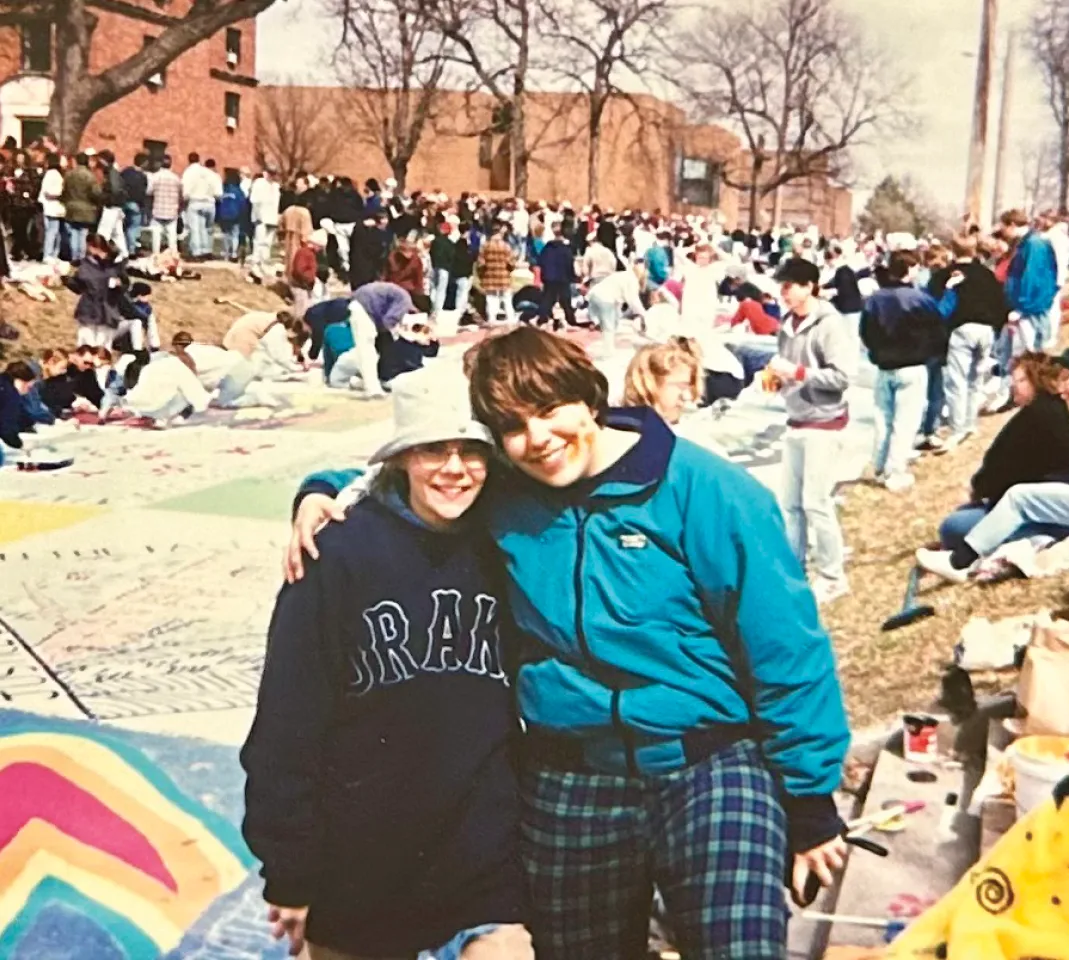
The second turning point came during a Drake summer study abroad public health seminar in the Dominican Republic. There, she saw babies dying from preventable illnesses, and patients suffering from diseases that would be treatable in the U.S.
“It stuck with me,” she said. “I realized I didn’t want to be a doctor. I wanted to earn a Master’s and to work in public health—to help communities gain access to the knowledge and infrastructure they needed to thrive.”
Her time as a Residence Hall Advisor in Goodwin Kirk Hall at Drake was formative, too. “That was my first management job,” she said. “It taught me how to work with others, lead a team, and create a welcoming space. We even had dance-offs on move-in day. We made it joyful.”
Family Legacy of Service
Buffy grew up in Naperville, Illinois, and now lives just nine miles from her childhood home. Her family modeled service in many ways. Her grandfather taught literature and languages in small towns and youth prisons. Her grandmother ensured that every child who wanted to be in Girl Scouts could afford to participate, while managing a local women’s clothing store. Her mother volunteered in the community, while building a career in horticulture industry sales. Her father worked in the city government for his entire professional life, ending his career as a longtime City Manager and professor.
“Growing up, I didn’t realize that all of my family was connected to public service,” she said. “But they were. And that mindset was all around me.”
Advice for Fellow Bulldogs
Buffy suggests starting with your passion. “Whatever it is—bicycles, finance, logistics—there’s a nonprofit that needs that skill set,” she said. “For me, it was youth. And there’s always a young person or a family looking for new ways to grow and learn.”
Buffy’s public service role isn’t the only new thing in her life. This fall, she’s heading back to school as a Fellow in the University of Chicago’s Leadership and Society Initiative, reflecting on what she wants the last third of her career to look like.
“It’s a good balance,” she said. “I have a role that matters. And I have the chance to explore what comes next.”
That One Teacher

When Mitchell Schank started his first year of teaching, his grandfather, Grandpa John, a retired math teacher from rural Wisconsin, sent him a list of ten things to remember as a teacher.
“It’s all good advice,” Mitchell said. “But the one that’s been my favorite, the most impactful in my life right now is this: ‘Find those people who don’t have the titles who are in charge.’”
Mitchell laughs when he explains it, but he’s serious about the lesson. “My examples are the secretaries, administrative assistants, and our print shop. You need to become friends with those people because they are the real ones who run a school.”
Now a science teacher, assistant co-ed cross country coach, and head girls’ track coach at Hopkins High School in Minnetonka, Minnesota, Mitchell passes that wisdom on to student teachers. He tells them, “If you take one thing from me, find those people and become best friends. Bribe them if you have to, like I do.”
That mix of humor and respect for the people around him has shaped Mitchell’s career—and helped him receive a nomination for the 2025 Minnesota Teacher of the Year Award.
Swim Lessons at the Y
Mitchell’s first job was as a swim instructor at the local YMCA. “I wasn’t even on the swim team,” he said. “It just sounded like a fun job. I really enjoyed helping the kids learn and watching their progress.”
That early exposure to teaching stuck. His summers as a camp counselor evolved into roles as lead and assistant camp director. “That was really where I fell in love with working with kids and seeing them grow,” he said.
But teaching wasn’t on his radar as a career. At least not yet. He began college at Drake as a pharmacy major, as he liked science and people, but after a short job-shadowing experience, he quickly knew it wasn’t for him. “I went back to what I’d always enjoyed doing—being around kids and teaching them,” he said.
Even before officially declaring the education major, Mitchell found his community. Friends in the School of Education helped him map out classes. Faculty members like Dr. Jerrid Kruse became mentors.
Soon, those college summers at camp revealed his true calling: to become a high school principal. As assistant camp director, he helped manage schedules, policies, behaviors, and parent communication, building a foundation for school leadership. “It showed me I could help remove barriers for kids at a really large scale.”
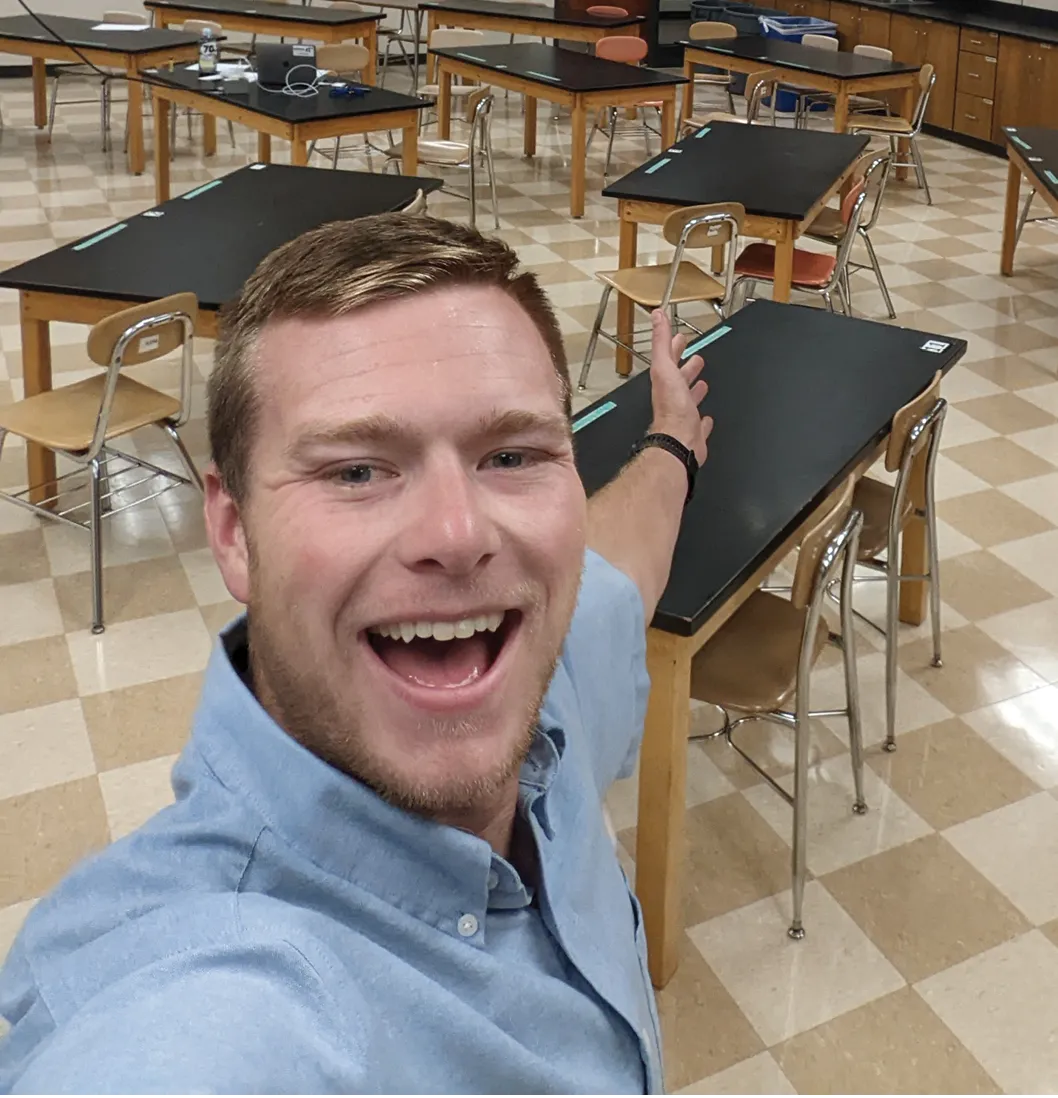
A Culture of Belonging
At Hopkins High School, Mitchell brings that big-picture mindset into his daily work as a teacher, coach, and mentor.
“It’s really fun to get a kid as a ninth grader and have four years of working with them to become a track athlete,” he said. “It’s great to see them mentally, physically, and emotionally grow as a person.”
One of the most meaningful parts of his work has been his involvement with Link Crew, a yearlong national program that pairs upperclassmen mentors with ninth graders to help ease the transition to high school.
“Ninth graders are on this journey; they want to learn how to act in the new world of high school,” he said. “So this program is about role modeling good behaviors.”
Mitchell helps select and train student mentors, plan events, and ensure that every ninth grader has someone looking out for them. It’s all about building community and confidence.
What’s Next
As much as he loves the classroom, Mitchell recently completed his doctorate in educational leadership at Winona State and is actively looking for an administrative role.
He credits Drake for preparing him for this next chapter. “The professors in the School of Education introduced me to so much, including standards-based grading, which is more about the learning, and not just the point chasing,” he said. “Seeing them in their roles as educators and researchers was really impactful.”
He also attended Drake for his master’s degree in Educational Leadership with principal licensure. He acknowledged Dr. Doug Stilwell and Dr. Randy Peters for preparing him to be systems-focused. “It was more like analyzing the problem and doing something about it,” Mitchell said. “It was how to make systems and logistics better, and I use that all the time in my classroom.”
As he moves toward school leadership, Mitchell expects to rely on his grandfathe’s advice as well as his own teaching experiences to help him succeed and stay focused on his mission. “It can be easy to get away from what’s best for kids when you’re deep into the research, data, or policies,” he said. “But I’m just going to remind myself of my purpose.”
Solving Impossible Problems

When you read Nawi Ukabiala’s resume, it is intimidating. A senior associate in the International Dispute Resolution Group at Debevoise & Plimpton LLP in New York City. He’s worked on high-stakes human rights cases, authored briefs on crimes against humanity and LGBTQ+ rights, and contributed to global legal inquiries that shape how justice is understood around the world. He leads trainings for governments and practitioners. He’s a published scholar. And he still finds time for pro bono work with organizations like Her Justice and the Visualizing Justice Project.
In short, he’s someone people turn to when they have impossible legal problems.
But when Nawi (pronounced NOW-ee) logs in for the interview from his Brooklyn apartment, he appears in a crisp white T-shirt, earbuds in, framed by a wall of obviously well-read books. He is not intimidating. He is gracious, calm, and thoughtful. He apologizes for being a few minutes late due to a calendar glitch, and jokes about how hard it is to rely on his actual memory with today’s tech aids.
This is what makes Nawi so interesting. The work he does is high-level, complex, and happens on a global stage. But he shows up as warm, curious, and effortlessly wise. You want to learn from him and believe with him that the law, even in this imperfect world, can be a force for peace.
From Nigeria to Urbandale
Nawi was born in Nigeria, spent a few early years in England, and grew up mostly in Urbandale, Iowa. His parents, both immigrants, set a powerful example of being in service to others. His mother was a lawyer, trained as a barrister in England (complete with the long black robe and white wig). “There are pictures of me as a kid dressed up in that,” Nawi said, smiling. “Pretending to do arguments.” His father was a pediatric surgeon with a passion for international relations that sparked something early in his son.
“I remember him talking to me about the Rwandan genocide,” Nawi said. “He said the UN—or the international community—should have intervened sooner. And that really registered for me: there are mechanisms that are supposed to prevent human rights atrocities. If they work properly, maybe that’s something humanity can achieve.”
Other moments followed. He remembers asking his father who Osama bin Laden was after 9/11. He was captivated by the legal and moral arguments made in response to the Iraq War. “Those were the kinds of questions that drew me in,” he said. “I was just really drawn to that discourse.”
A Belief That Nothing Is Too Big
With two high-achieving parents, Nawi was raised with equally high expectations, but also a deep sense of possibility. “It conditions you to believe you’re capable of anything,” he said. “Nothing ever seemed too big. I understood that if I worked hard, I could shoot for the stars.”
He studied international relations at George Washington University, then, after debating between graduate programs in economics and law, chose Drake Law School, encouraged by his mother. It turned out to be one of the most formative experiences of his life.
“I had no bad professors,” he said. “It was just such a rich learning environment.”
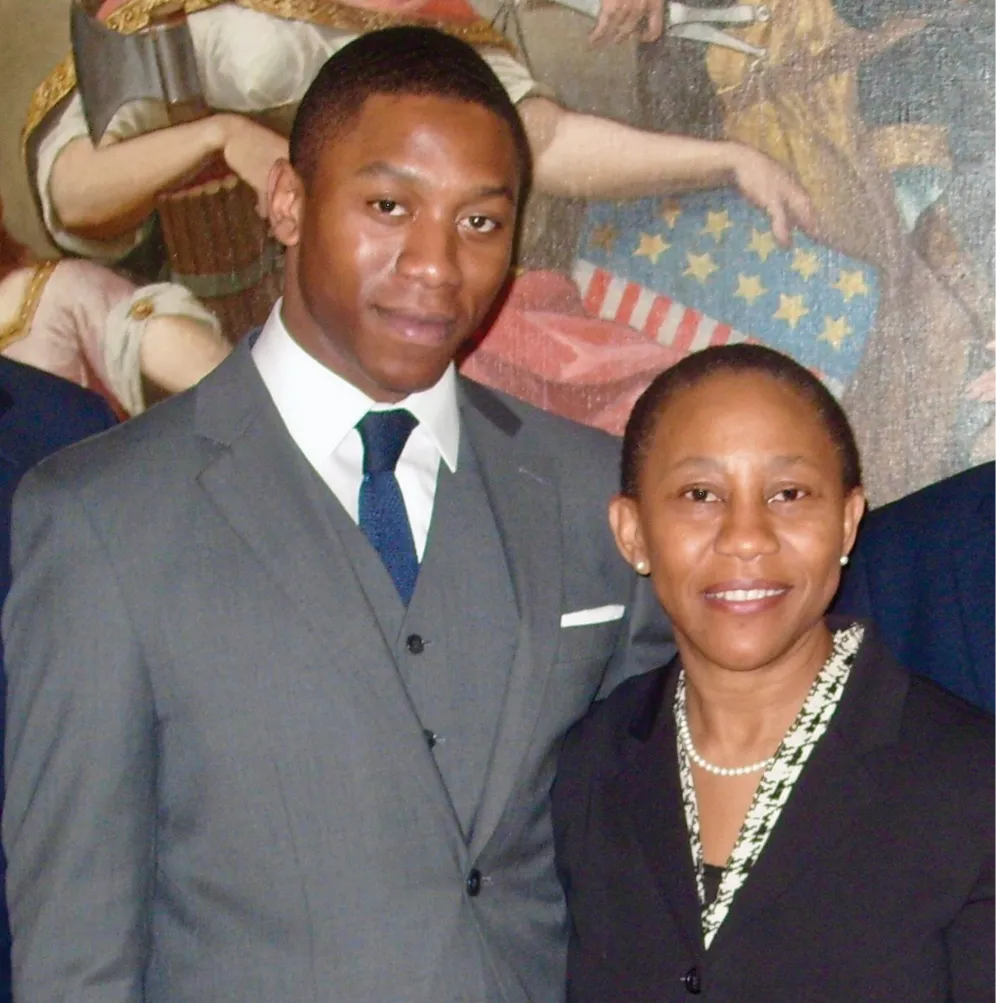
Most of all, Nawi remembers the Appellate Advocacy Clinic, where he argued before the Iowa Supreme Court and Court of Appeals. “That experience was so practical—and really special,” he said. “It stands out among a lot of excellent memories.”
Still Believing in Law
Today, Nawi works on legal issues that most of us don’t have to think about, including international arbitration, transnational litigation, and public international law. But his beliefs are rooted in something very human.
“I still believe in international law,” he said. “It’s not as naive a belief as when I first learned about it, but I still believe that when we have the right leaders and the political will to put our stock in law over war or violence, it benefits all of humanity.”
He acknowledges the limitations. “A lot of times it doesn’t work. A lot of times, it gets subverted. But I still believe in its potential for peace and prosperity.”
Nawi wishes more Americans understood that human rights law applies to everyone, including the U.S.
“It was staggering to me, realizing how deeply American exceptionalism is embedded,” he said. “It’s not just foreign policy hawks; many in American civil society don’t think of human rights as something America should be held accountable for. But it’s universal. That’s the whole point.”
Looking Ahead
What’s next? Nawi paused for a moment and then answered with crystal-clear intention: “I want to get to the top of my profession. To be one of the leading minds and practitioners, someone people turn to when they have the impossible problems.”
For anyone inspired to follow his journey, Nawi invites readers to visit his LinkedIn page, where he shares his writing, legal briefs, and advocacy work, including a powerful video series called Visualizing Justice, which explores major civil rights issues in the United States.
His Mission Didn’t End in Kabul
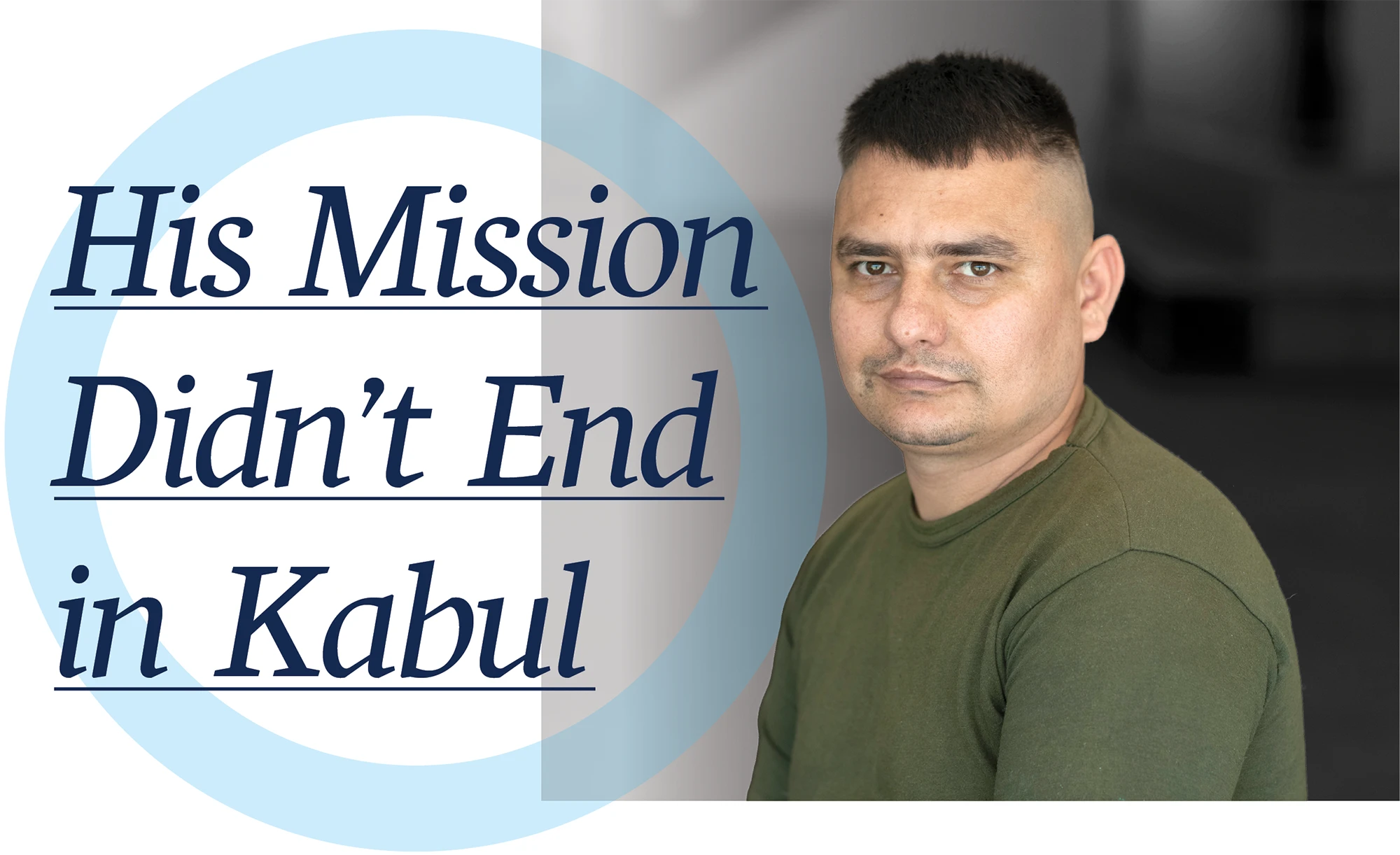
When Shir Agha Safi was a boy in rural Afghanistan, going to school was a daily test of endurance and courage.
Safi—a nickname given to him by his grandfather when he was a boy—walked three and a half miles to school each way, often in freezing temperatures. Additionally, he had to cross the fast-moving and treacherous Kunar River on an inflated inner tube, as no bridge existed near his home.
As he walked along the narrow road, flanked by steep mountains and the river, Safi often met another challenge: gunfire from Taliban fighters on the cliffs above, firing down on American troops who were traveling the same road.
Safi, just nine years old, would have to choose between diving into the frigid river for cover or hiding behind a tank.
He chose the tanks.
“The American soldiers felt like protectors to me,” he said. “That inspired me to be someone like them—to protect people.”
From Soldier to Survivor
His childhood encounters led Safi into a 12-year career as a major in the Afghan National Army, where he worked alongside U.S. forces in counter-terrorism and peacekeeping operations. He fought against various terrorist groups and suffered injuries several times in the line of duty. Despite the risks, he remained steadfast in his mission to serve his country.
Then came August 2021, when the U.S. announced plans to begin withdrawing its troops from Afghanistan after nearly 20 years. Within a matter of hours, the capital city of Kabul was captured by the Taliban, and Safi was suddenly in great danger.
On August 25, Safi was injured during the attack, but narrowly escaped from Kabul, thanks to the help of U.S. service members who risked their lives to get him on a plane.
The very next day, a suicide bombing at the Kabul International Airport killed 13 U.S. service members—the same Marines who had helped Safi escape. Many were his friends, who’d he’d worked alongside.
Safi wears a bracelet with all of their names to honor them. “They saved my life, and then lost theirs,” Safi said. “I live with that trauma every day and have nightmares about it still.”
A New Life, A New Purpose
Wounded and in shock, Safi arrived at Camp Quantico near Triangle, Virginia, on August 31, 2021, as a refugee with no hope of returning to his home and family. Fortunately, he had friends who escaped with him and introduced him to service people who helped him learn American culture and find opportunities.
One of those connections led him to Iowa, where he now resides with his wife and two sons and serves as the executive director of Afghan Partners in Iowa. Safi continues to live a life of deep service to the people of Afghanistan.
His new mission started just a few days after Safi arrived in Iowa in the fall of 2021. He was introduced to fellow Afghan refugee Najib, who did not speak English and was struggling to understand his new home.
The very next day, police showed up at Safi’s door because someone knew he was bilingual and could speak to both the Iowa locals and the Afghan refugee community. The officers told him that Najib had been hit and killed by a car while trying to cross the street, and they were looking for his next of kin.
“That was the moment I knew,” Safi said. “Najib had escaped a terrible war and extreme dangers in Afghanistan, only to make it to Iowa, where he died because he couldn’t understand the traffic signs as he crossed the street. I knew that Afghans needed me here, even more than they did in Afghanistan.”
Assisting a Community
Afghan Partners in Iowa opened its doors in 2022 and now operates out of offices in Des Moines and Cedar Rapids, supporting an estimated 1,250 Afghan families across the state. The nonprofit assists with food, housing, job training, legal support, immigration paperwork, and more. Safi and his team work to help families transition out of shelters, connect with community services, and build independent lives.
Since founding the nonprofit Afghan Partners in Iowa, Safi has become the first point of contact when someone in the Afghan community needs help, whether it’s finding housing, navigating the school system, or understanding the basics of American life. “I’ve taught people to use the elevator, how to use a shower, how to cross the street,” he said. “Everything.”
Just a few days before his Blue magazine interview, Safi and his wife opened their home to three Afghan children whose parents were temporarily unable to care for them. Their family of four suddenly became a family of seven. “That’s just what we do,” he said.
Finding His Place at Drake
When Safi first arrived in Des Moines, he moved into an apartment across the street from Drake University. He was determined to continue his education, but everyone told him to attend the local community college. Safi had other ideas. “I dreamed of going to Drake,” he said. “I would just stand across the street and watch students walking to class. It’s where I wanted to go.”
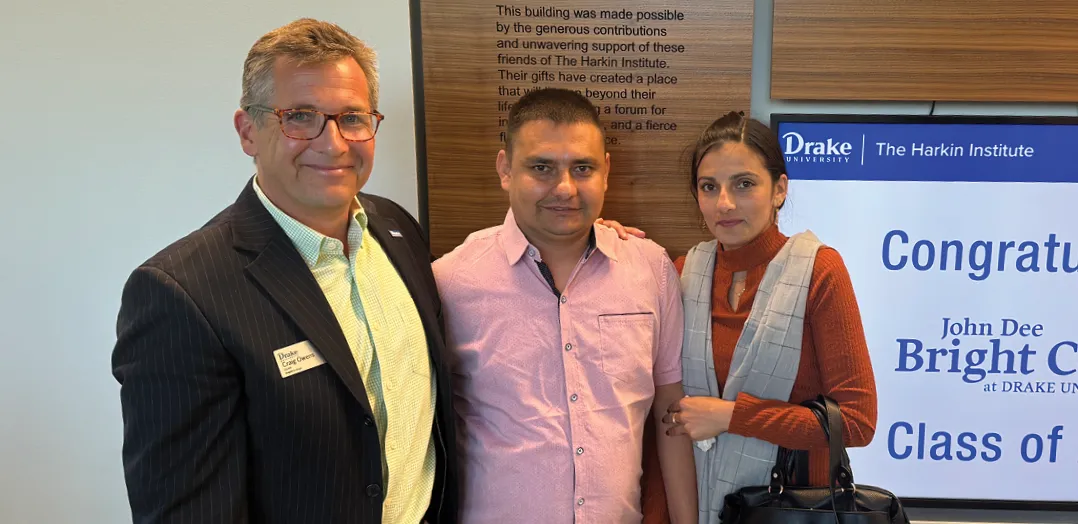
Eventually, with help from a Drake staff member, he enrolled at the John Dee Bright College. “My time at Drake gave me the tools to think critically, communicate clearly, and work with diverse people,” he said. “It helped me understand complex social systems and come up with real solutions to community challenges.”
Now pursuing his bachelor’s at Drake, Safi credits his professors and mentors for shaping the person he is today. “Whatever I am now,” he said, “it’s because of them. They made me into the Safi I am today.”
Safi is helping the refugee community address their biggest barriers—immigration status, employment, and housing—one family at a time. His mission is to help fellow refugees find jobs that match their skills, affordable places to live, and conquer the overwhelming amount of paperwork they face.
“I thought my mission was in Afghanistan,” he said. “But it’s here in Iowa now.”
You can learn more about Afghan Partners in Iowa and sign up to volunteer on their website.
Meet our Newest Alumni:
Drake Class
of 2025
of 2025


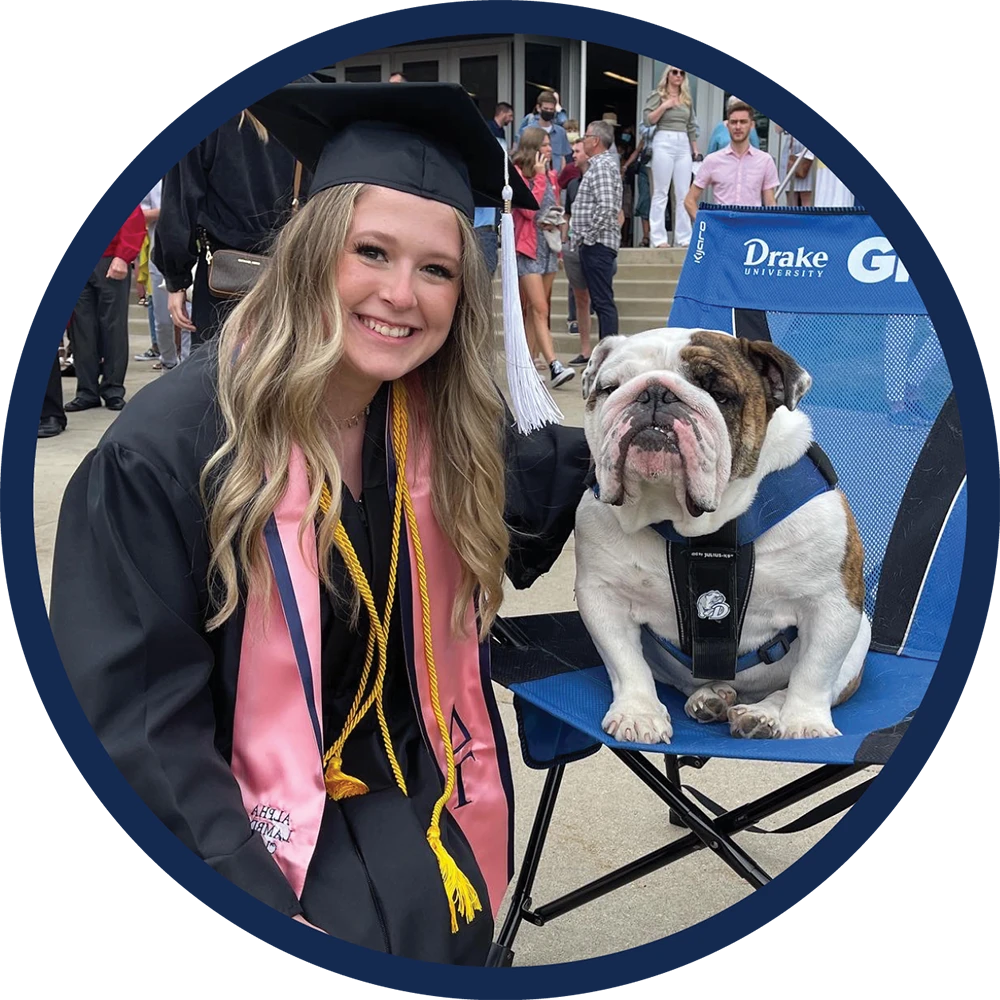


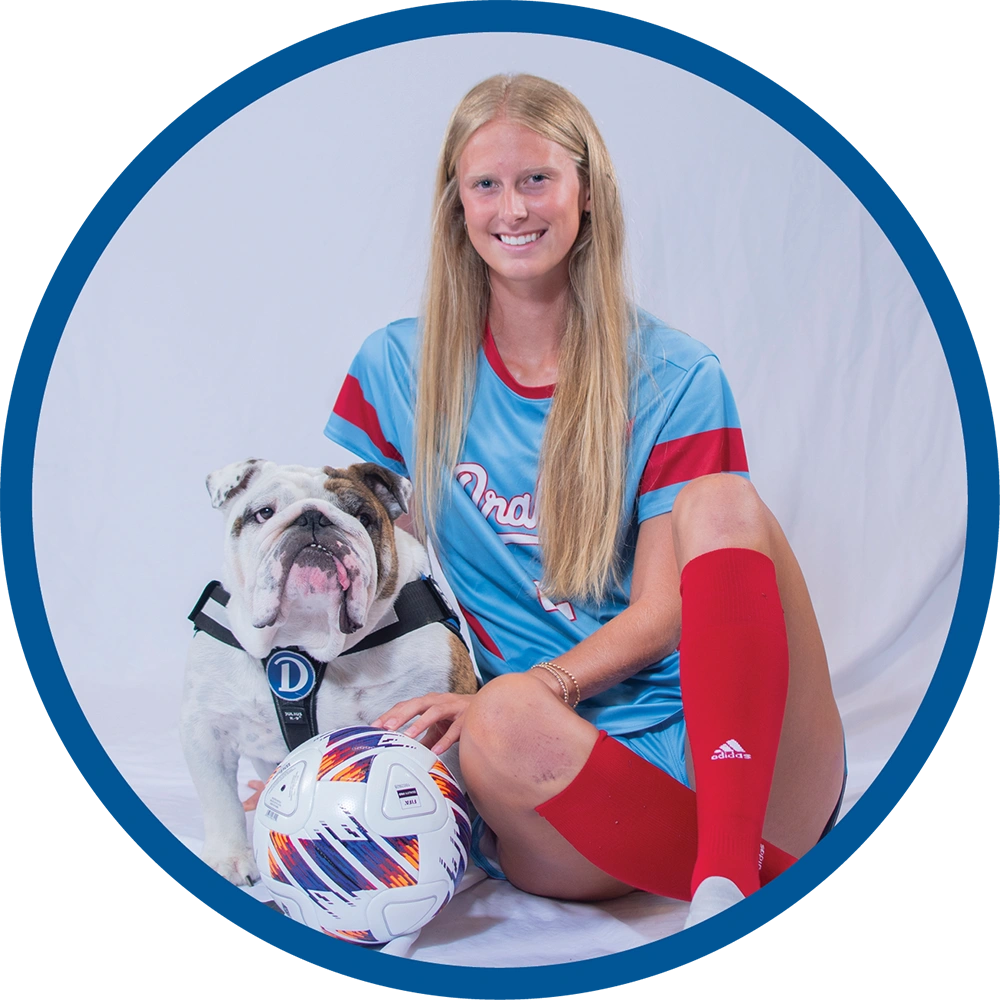
Kayla Hruska
College: Law School
Hometown: Cresco, Iowa
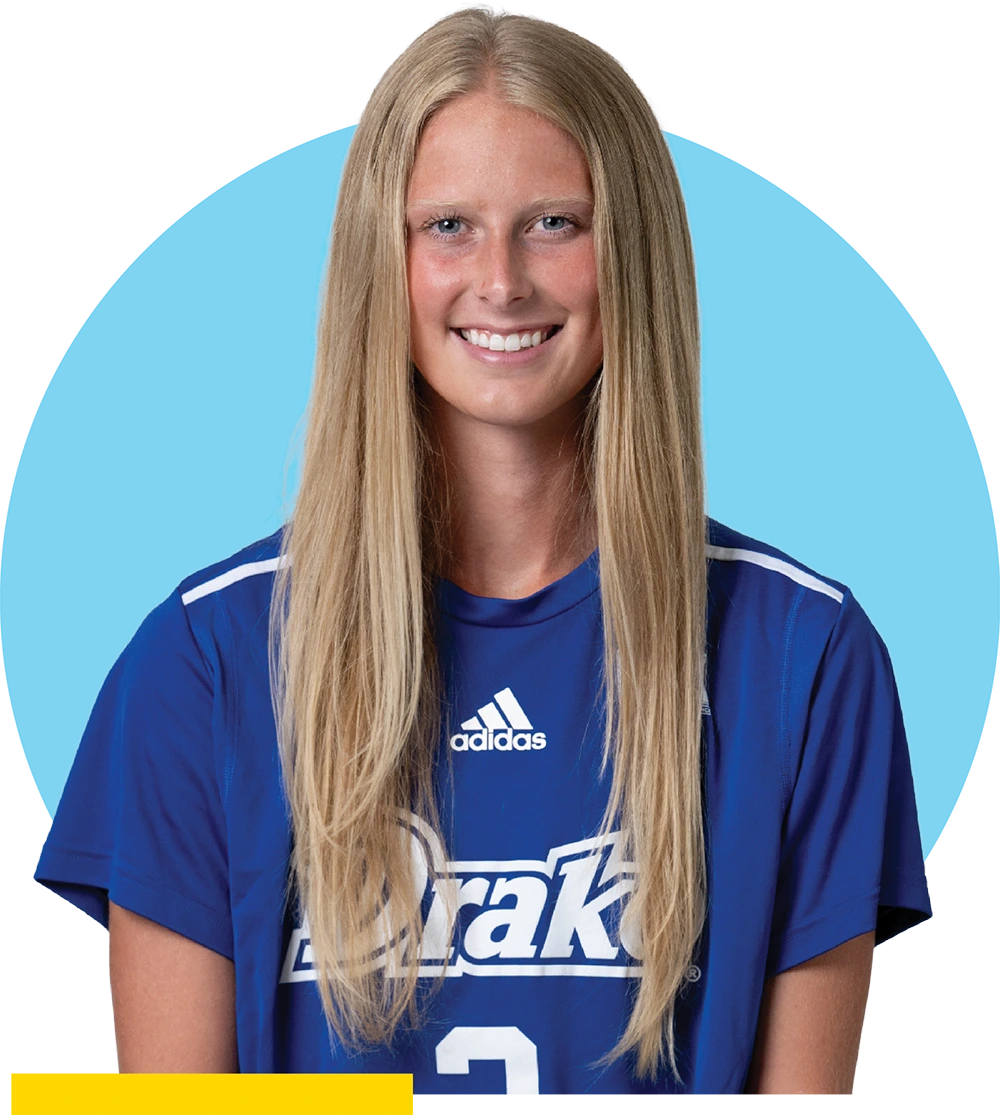
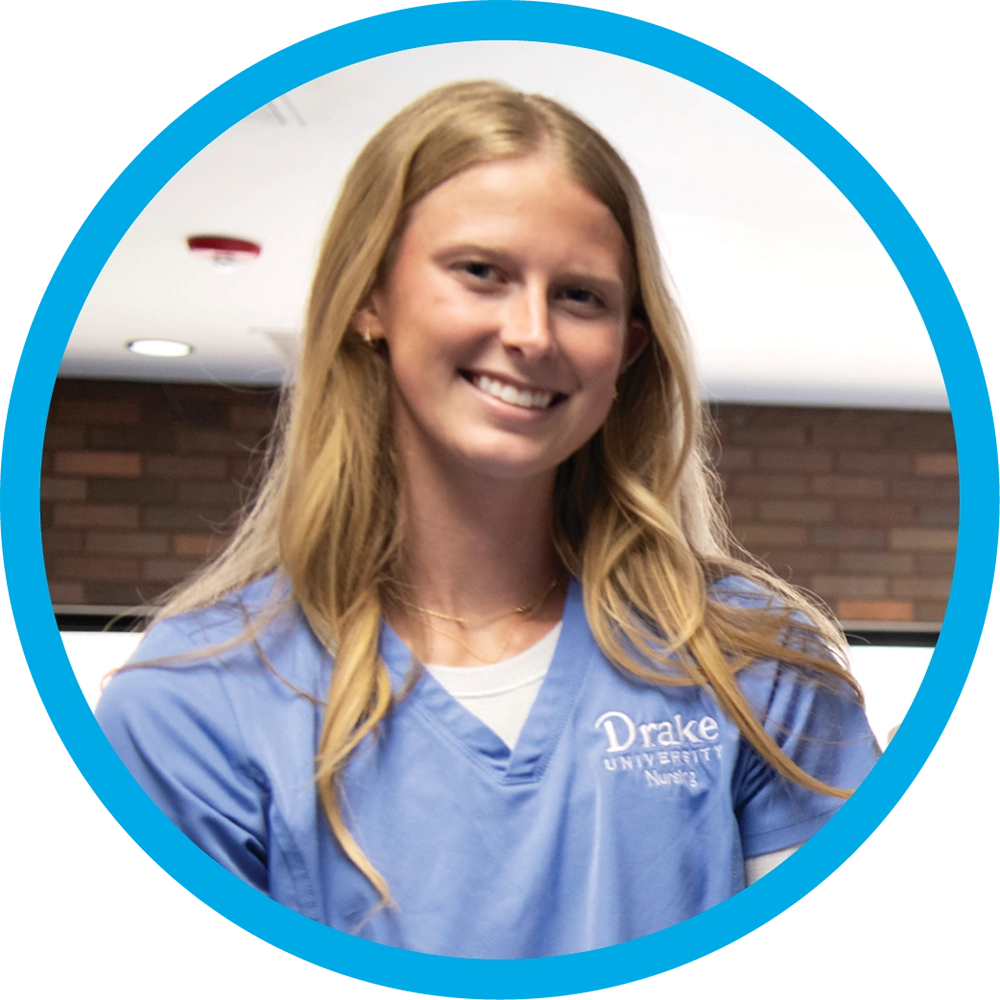
Avery Mertz
College: College of Pharmacy & Health Sciences
Kansas City, Missouri
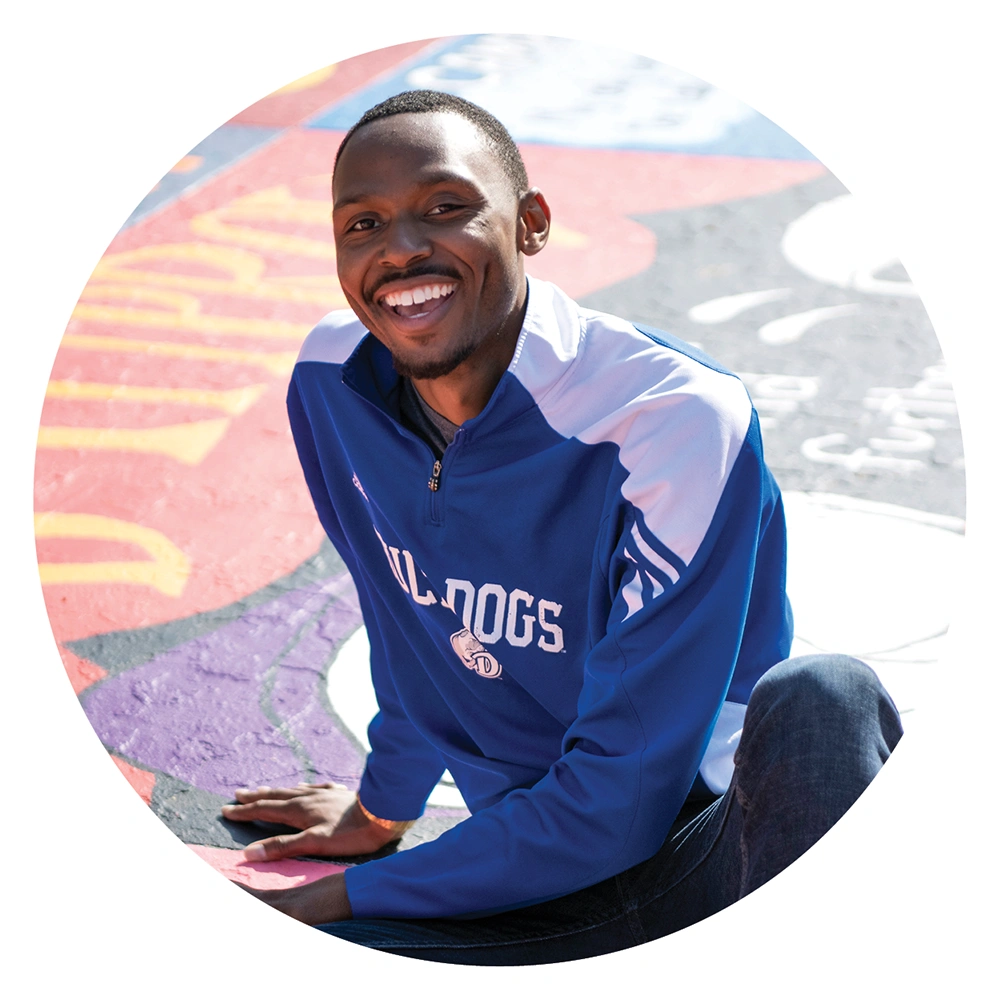



Donovan McCamey
College: John Dee Bright College
Hometown: Des Moines, Iowa
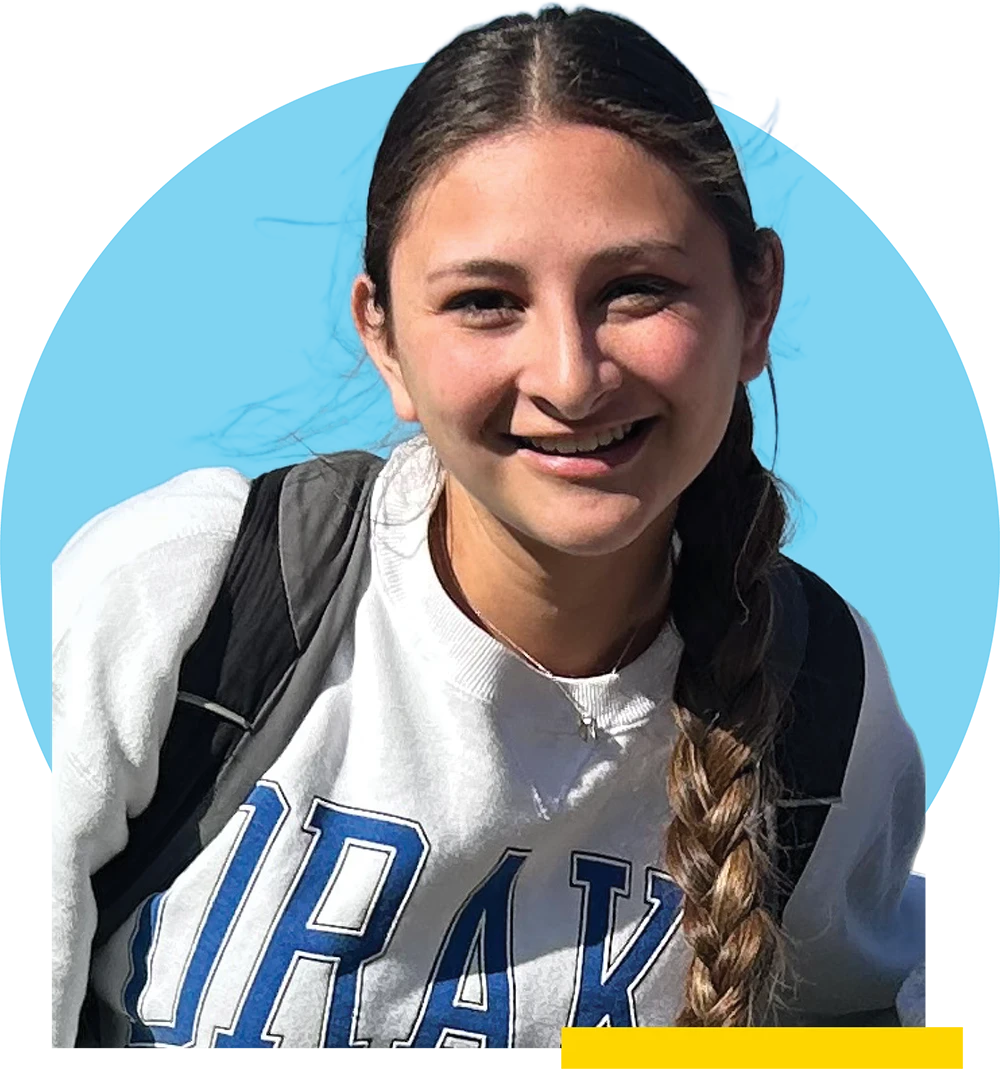
Catalina Samaniego
College: Arts and Sciences
Hometown: Des Moines, Iowa
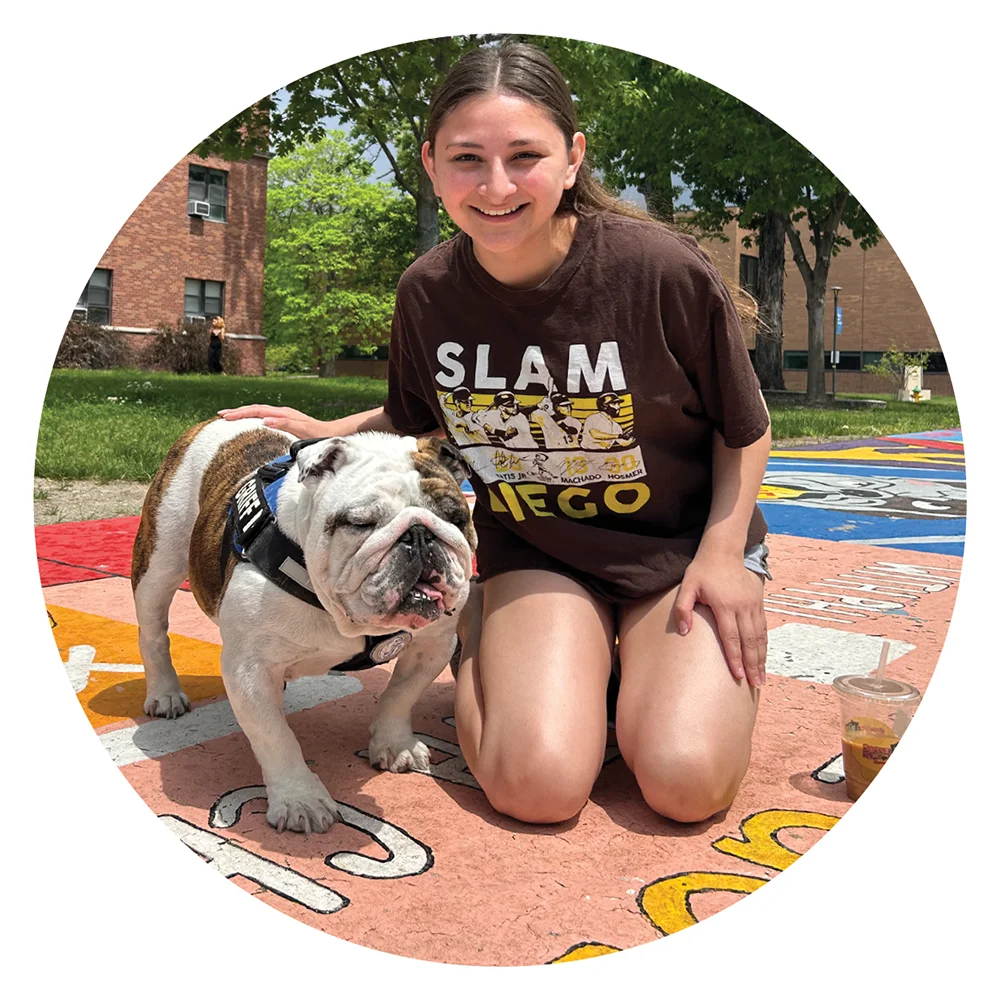
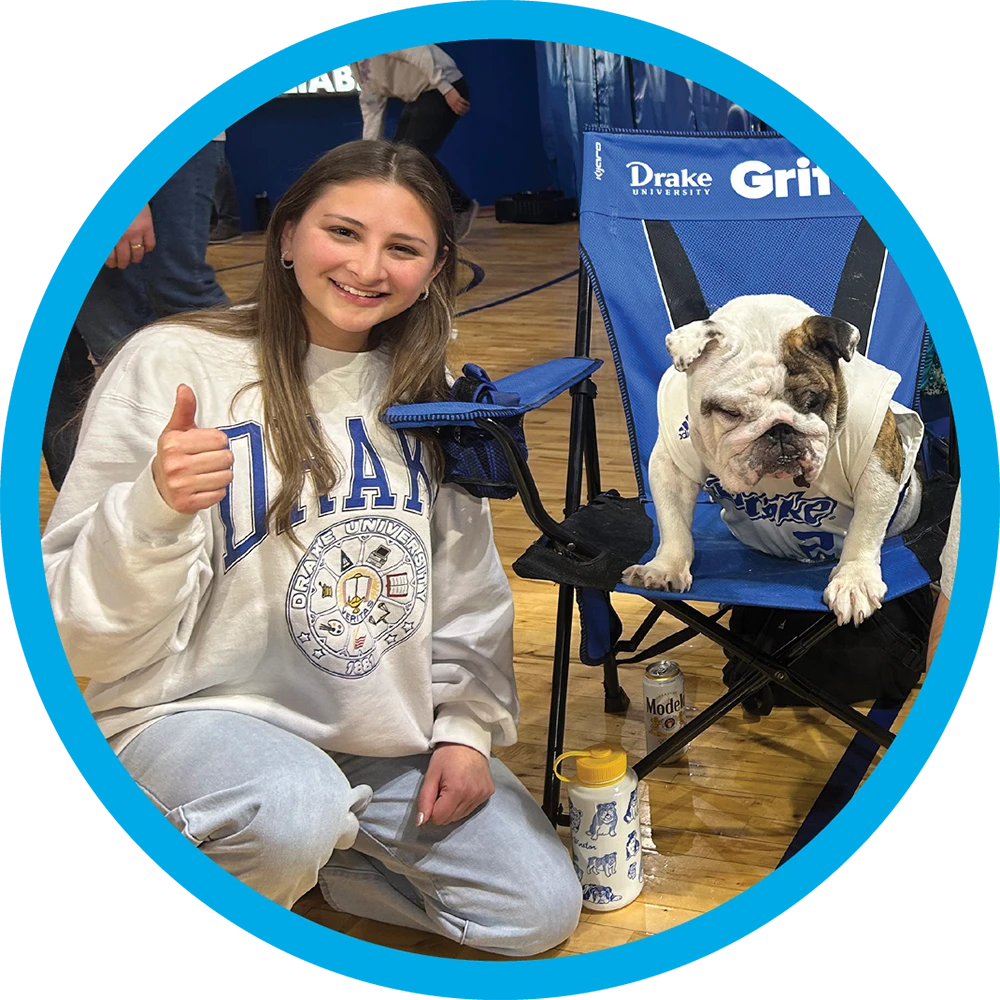
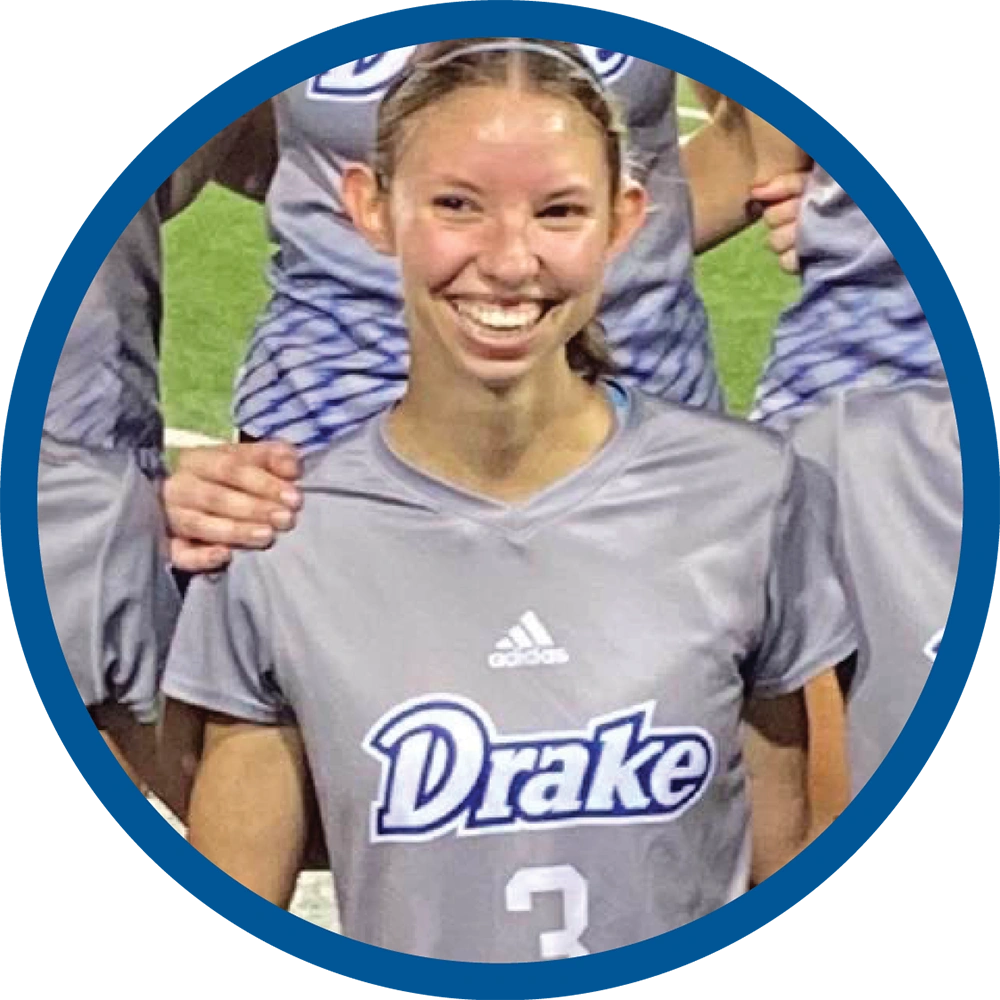


Bridgid Miller
College: School of Education
Hometown: Hopkins, Minnesota
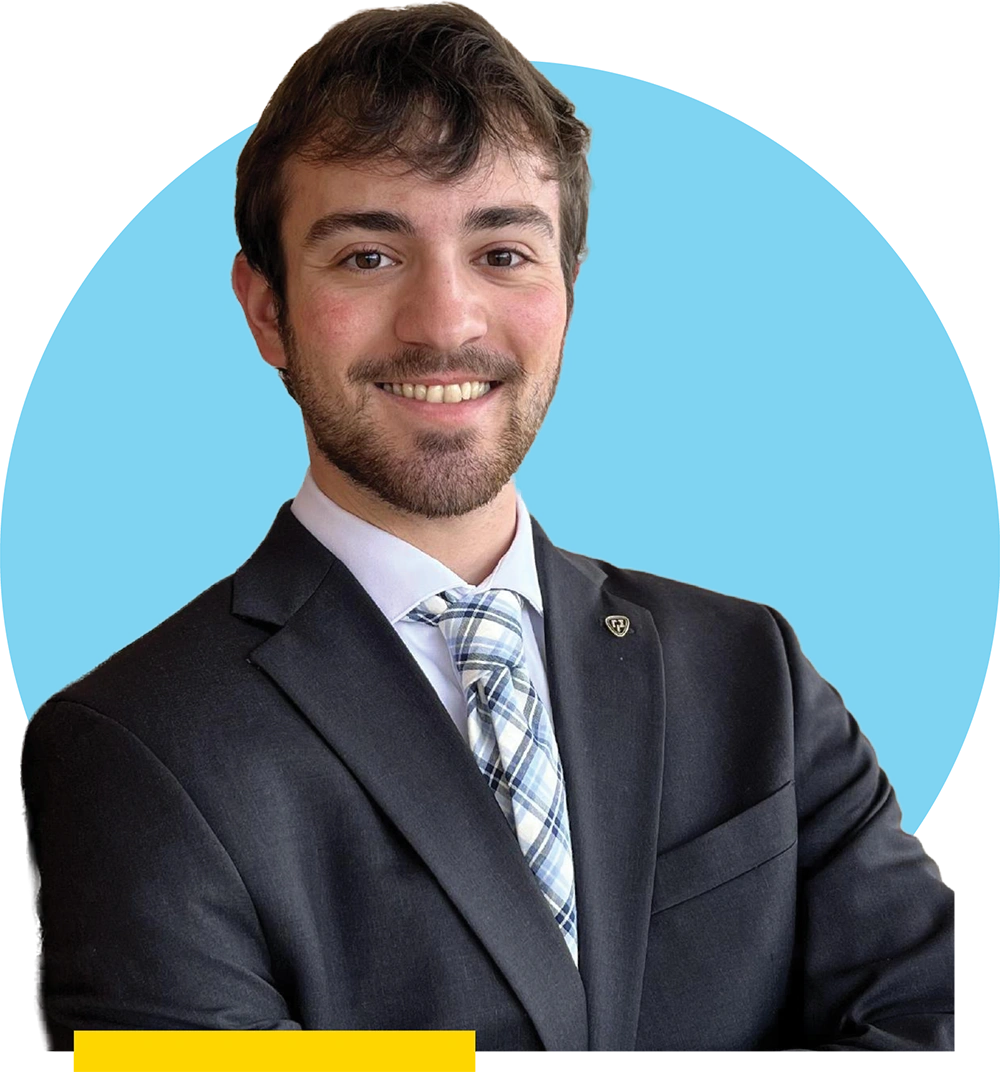
Trevor Stevens
College: Zimpleman College of Business
Hometown: Kansas City, Missouri



Mel Dygert
College: School of Journalism and Mass Communication
Hometown: Johnston, Iowa


Bulldogs in the Spotlight















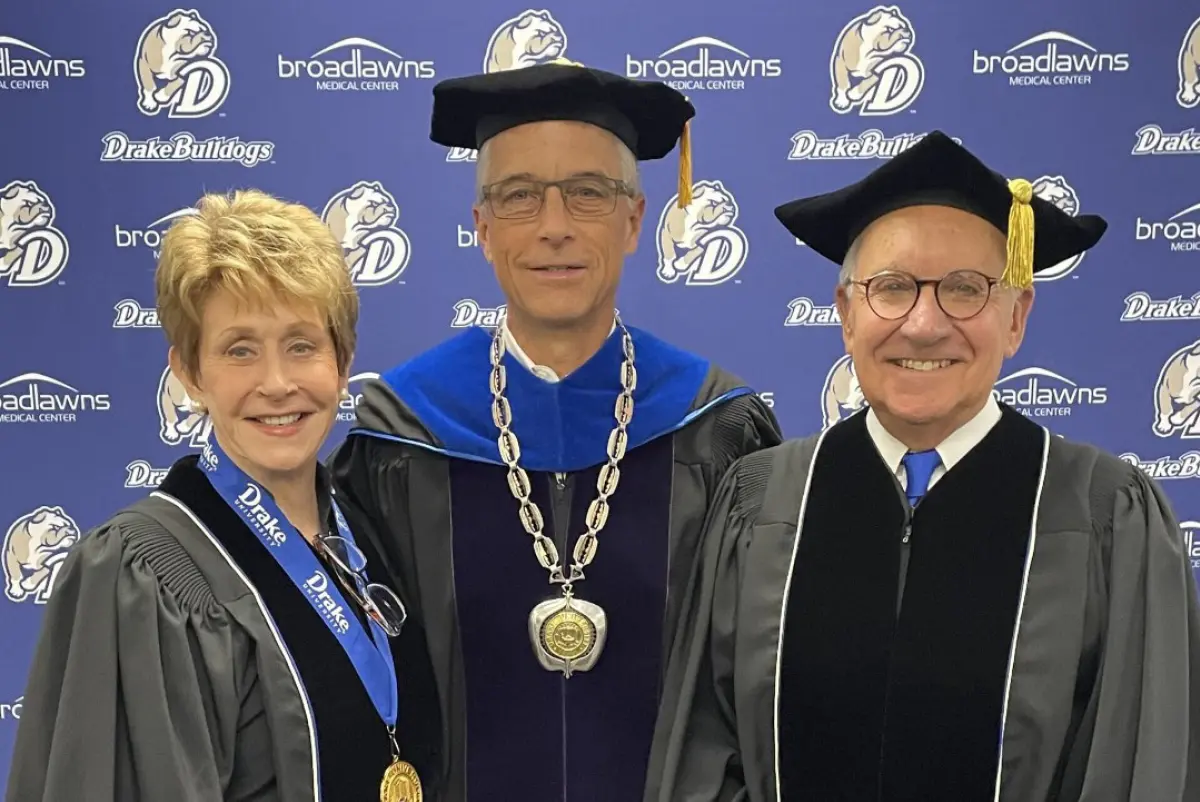
The Transformative Power of Giving Back:
Peggy Fisher and Larry Stelter Honored with Drake Medal
Peggy and Larry, owners of the Stelter Company, have built a meaningful life committed to advancing nonprofits and transforming lives through philanthropy.
For more than 30 years, the couple has generously supported the University through their time, talent, and financial contributions. Peggy served as a member of Drake’s governing board for nearly 20 years, becoming the first woman to chair the board in 2019.
The couple’s generosity to Drake has created life-changing student opportunities, faculty advancements, and campus transformations. These include a $3.3 million gift to The Ones campaign, significant support of Drake Athletics, major investments in capital projects, including the Gregory & Suzie Glazer Burt Boys & Girls Club, Johansen Student Center, Knapp Center renovation, Drake Plaza, and Quad Creek development. The couple has also funded the Peggy Fisher & Larry Stelter Endowed Chair of Magazine & Brand Media and regularly engages with students and faculty within the School of Journalism and Mass Communication.
Joe Aiello, BN’80, Board of Trustees member, presented Peggy and Larry with the award during last spring’s commencement ceremony. He thanked the couple for their strong commitment and powerful example that has transformed Drake University, and in the process, created a deep-seated legacy that will benefit students for generations to come.
From Bulldog to Queen Bee
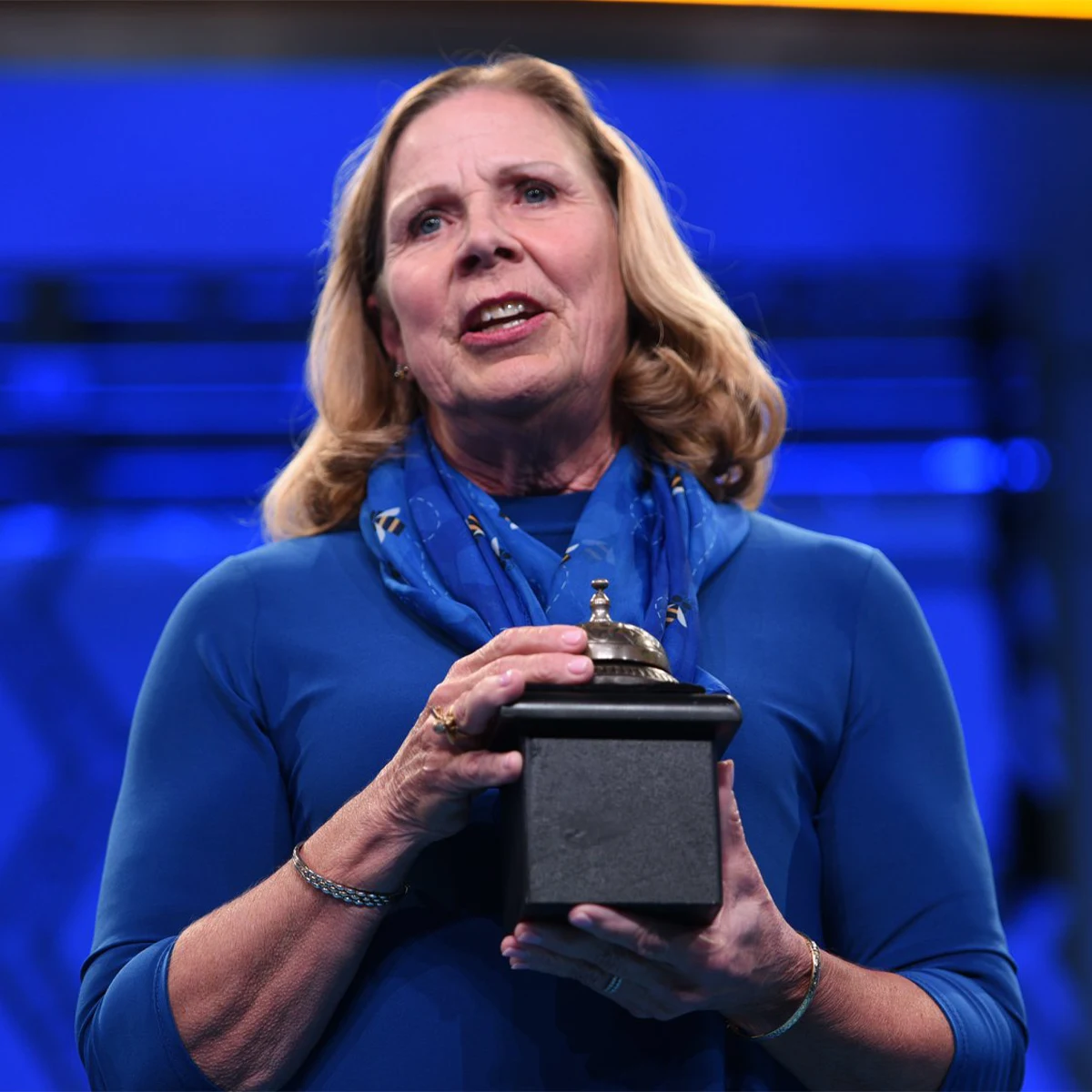
From Bulldog to Queen Bee
[mer-ē brÚks] biographical name
- Drake alum and Head Judge of the Scripps National Spelling Bee reflects on a century of the cherished American event and her longtime role in the competition.
Brooks first caught the Bee “bug” after graduating from high school, when her uncle—the Editorial Promotions Director for what was then Howard Scripps News—encouraged her to volunteer at the event, knowing she aspired to become a teacher. Energized by the bright minds of the young spellers, Brooks continued working with the Bee’s college crew while studying speech communications at Drake’s School of Education.
“I did my student teaching at Hoover, and yet, my first job was at Hoyt Middle School with sixth through ninth graders,” said Brooks. ”I’m still working with mostly eighth graders, so the Bee just gives me the opportunity to still use my teacher skills.”
Those early classroom experiences not only shaped Brooks’ decades-long teaching career but also influenced her continued work with the Bee. After college, she steadily climbed the ranks, eventually becoming head judge in 2004.
While her role is grounded in objectivity, Brooks brings compassion and connection to the competition, offering words of encouragement after the sting of a misspelled word—exchanges now warmly known as “Mary’s Moments.”
“They know that I’m there to give them the best opportunity to spell the word correctly,” she said. “We’re not their enemy, it’s the dictionary.”
Having recently celebrated its 100th anniversary in May, the Scripps National Spelling Bee continues to showcase some of the best and brightest young spellers—a quality Brooks says captivates audiences year after year and will continue to do so for the century ahead. “When you’re watching the Scripps National Spelling Bee, there is this feeling that the world is in good hands.”
Looking ahead to the Bee’s next century, the hive continues to flourish thanks to the dedication and compassion of Mary Brooks, the Queen Bee of Scripps.
Brooks embraces the nickname with bee paraphernalia like her buzzworthy necklace and ring.
Meet Elly Simpson

Yet, as the complexities of advanced math grew during her sophomore year, so did a different realization: Her true passion lay not in the quiet solitude of a lab, but in the vibrant energy of live events and human connection.
“I’m a people person,” she reflected. “I want to be around lots of people, not in a lab for the rest of my life.” This pivotal shift led her to explore business and communications before finally settling on marketing. She saw it as a versatile foundation for a career rooted in her secondary passions: performing and athletics.
“I knew if live entertainment and sports didn’t work out, I’d have a really solid foundation under me to explore other industries,” she explained. Her lifelong involvement in choir, band, theater, and high school sports fueled this desire to be competitive and entertain others.
What also proved to be fertile ground for this transition, of course, was Drake University. With a solid education in the works, Elly immersed herself in relevant internships, gaining hands-on experience with Drake Athletics, Catch Des Moines, and the Iowa Barnstormers.
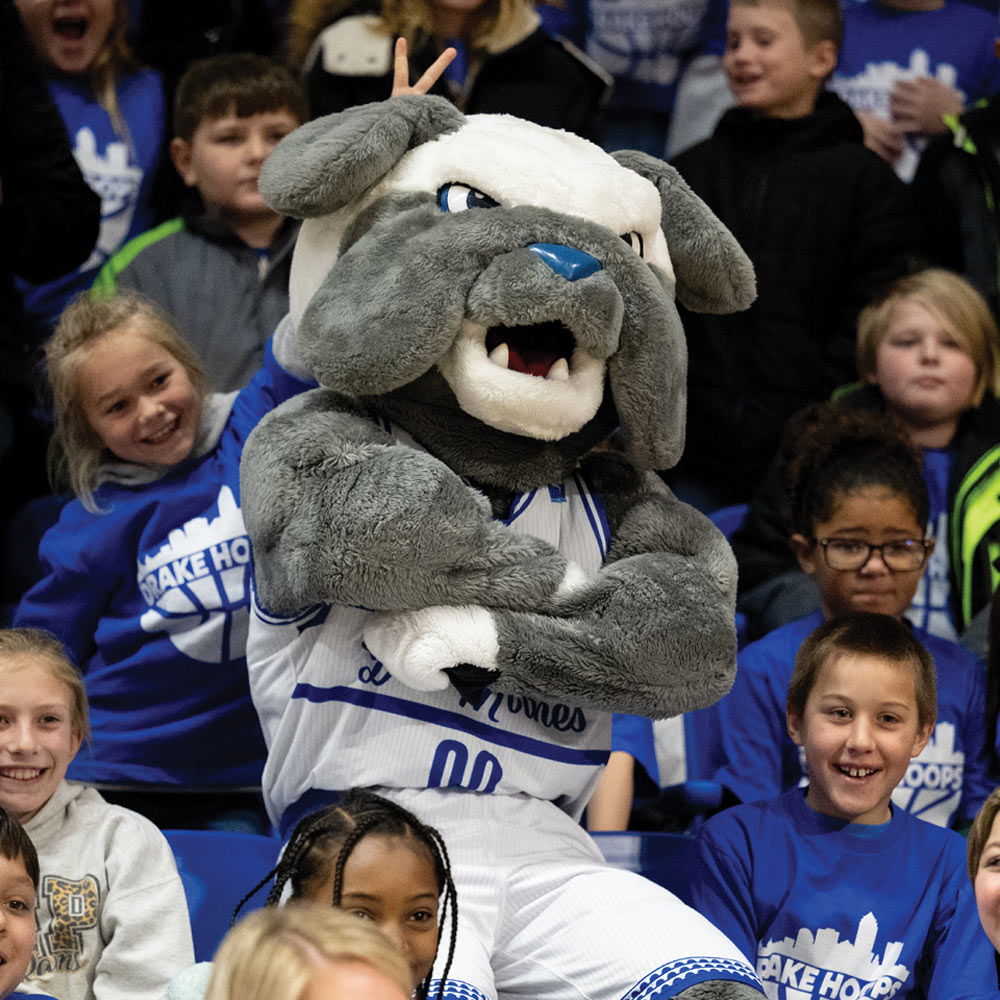
But perhaps the most unique and impactful experience, she said, was her three years as Spike the Bulldog. Donning the suit for special events from 2014 to 2017, Elly fully embraced the opportunity. “It’s a whole different persona,” she said. “When I wear the suit, I’m no longer Elly—I’m Spike the Bulldog.”
This role allowed her to merge her love for sports and entertainment, interacting with fans at countless sporting and community events and traveling with the women’s basketball team to the NCAA tournament in 2017. This experience, she says, was always “the number one hook in interviews” throughout her job search.
The Enduring Friendsip of the ‘YaYa Sisters’

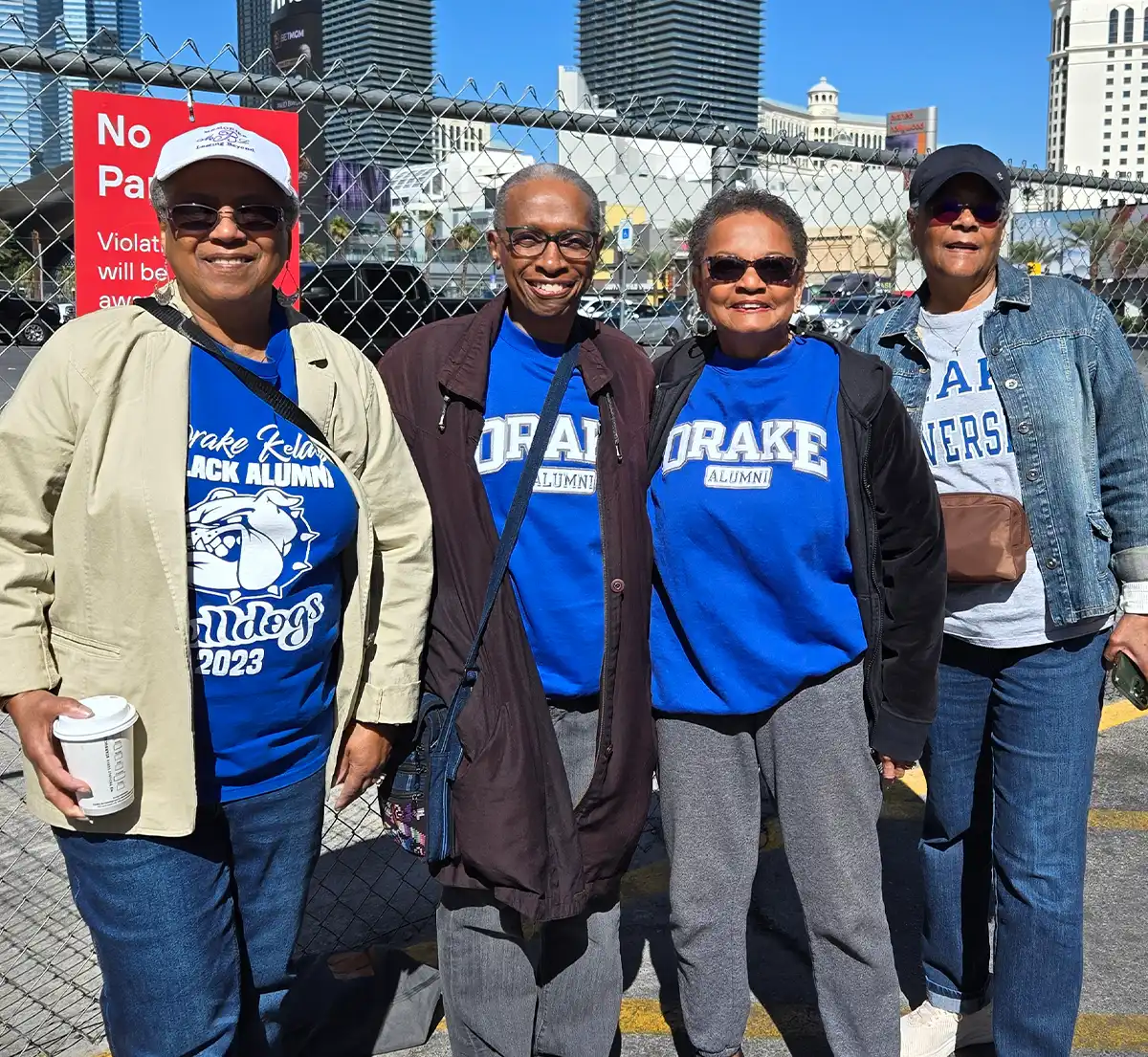
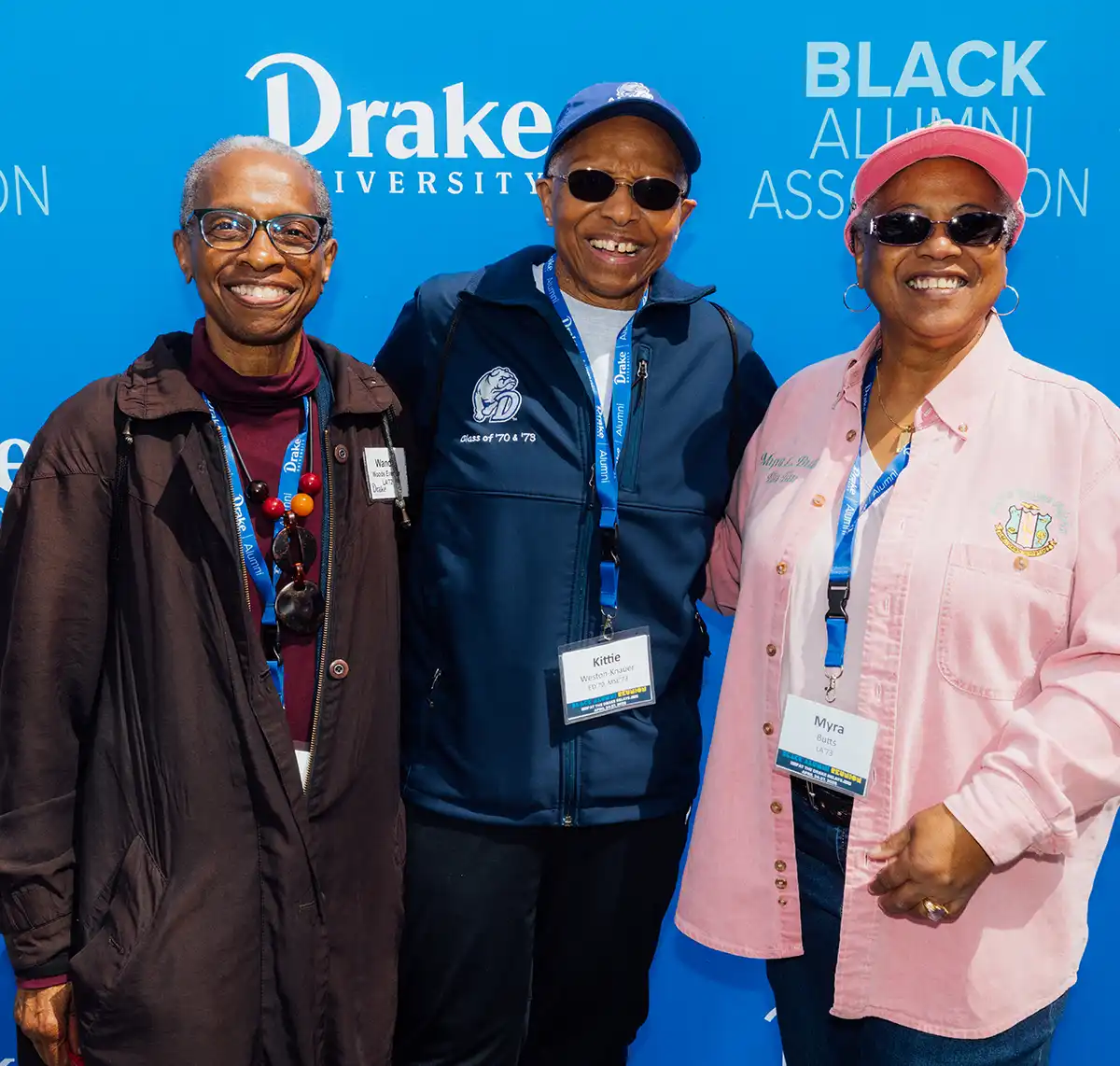
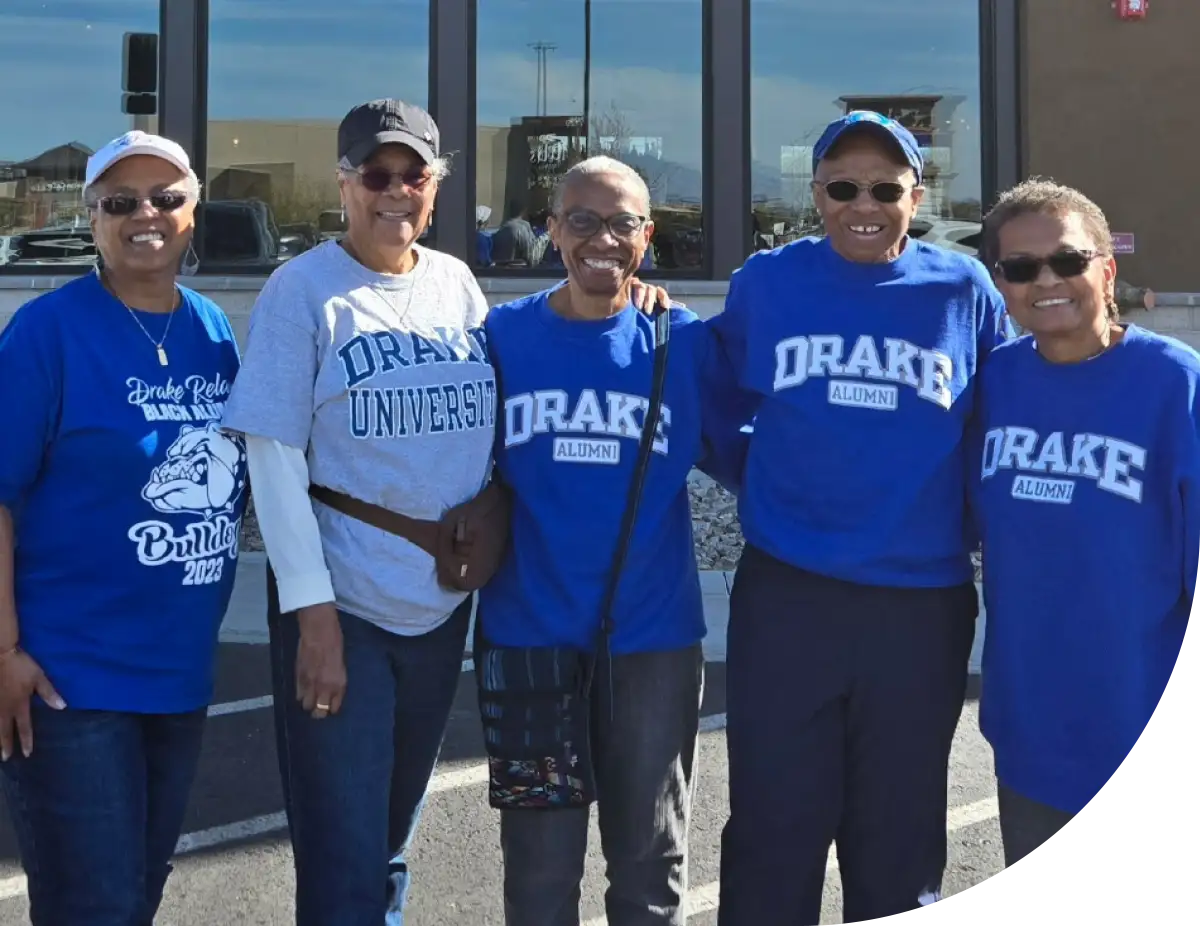
The “YaYa Sisters”—Kay Henderson Behn, ED’70, Kittie Weston-Knauer, ED’70, MSE’73, the late Kathleen “Bobbie” Dawkins Brickhouse, LA’70, Belinda Butler Bell, ED’72, Wanda Woods Everage, LA’72, and Myra Butts, LA’73—navigated the challenges of a predominantly white institution during a pivotal time in civil rights history. They made a lasting impact on each other and on Drake as an institution. More than five decades later, their friendship remains a testament to the power of shared history and enduring love—continuing to shape their lives and inspire those around them.
If they had to pinpoint the root of their friendship, it would be the support they found in each other as fellow Black women attending Drake in the turbulent late 1960s and early 1970s. Some were far from home, and the transition to college was difficult. This huge life change was also compounded by the subtle and overt racism they often faced and the lack of structured support networks for Black students at Drake, or anywhere for that matter, during this era. Whatever the reason, they gravitated toward each other, seeking a mutual support only the deepest of friendships can provide.
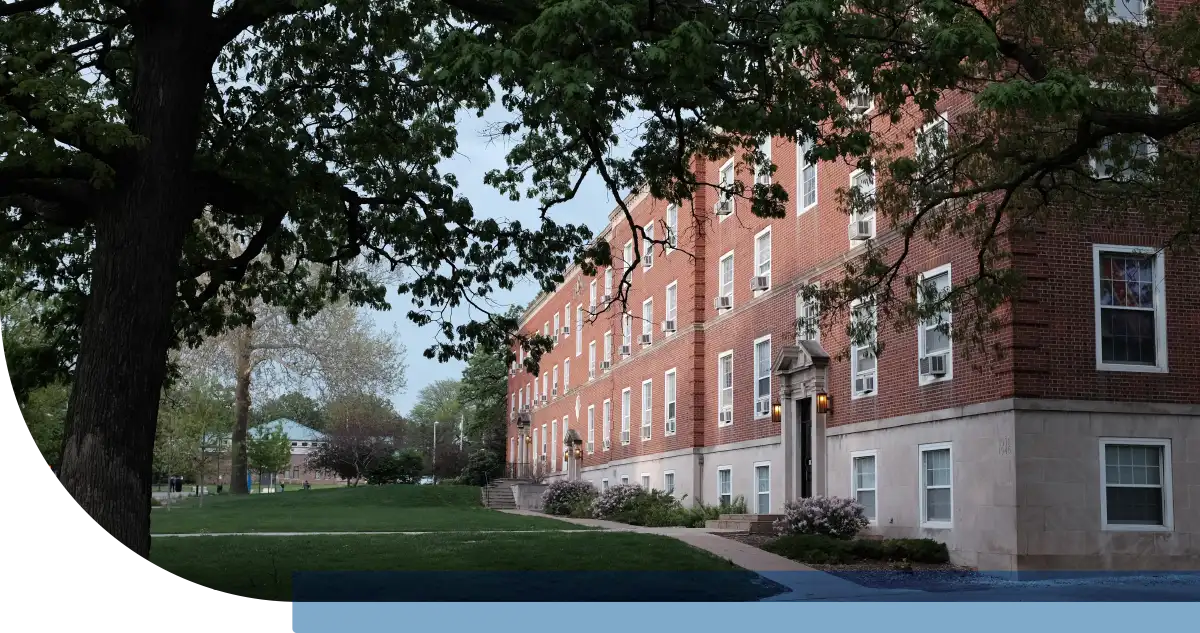
It All Began at Morehouse Residence Hall
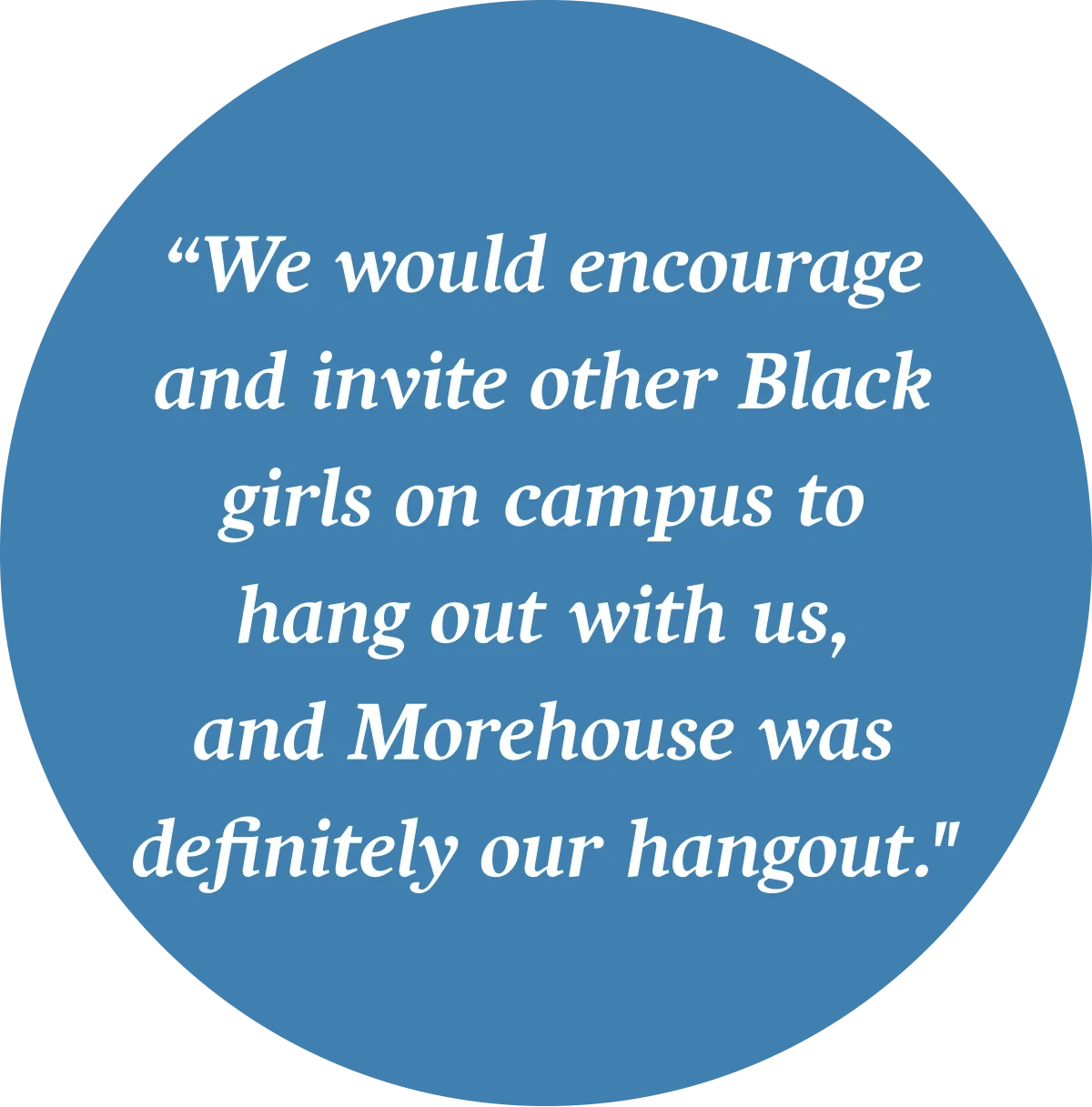
“It was mostly white students, so we just connected with each other and we all got along,” Henderson Behn said. “We would encourage and invite other Black girls on campus to hang out with us, and Morehouse was definitely our hangout.”
Weston-Knauer recalls that the three women all lived on the third floor, and they formed a natural connection. They would go to breakfast and dinner together at the dining hall and tell each other about their upbringings and families. Morehouse became their haven and a central gathering place for them and other Black women on campus.
“Bobbie was from New York and she had this Brooklyn accent,” Weston-Knauer said. “And nobody understood me, because I was from the South, so I might as well have had a mouth full of marbles. We began spending a lot of time together, really getting to know each other.”
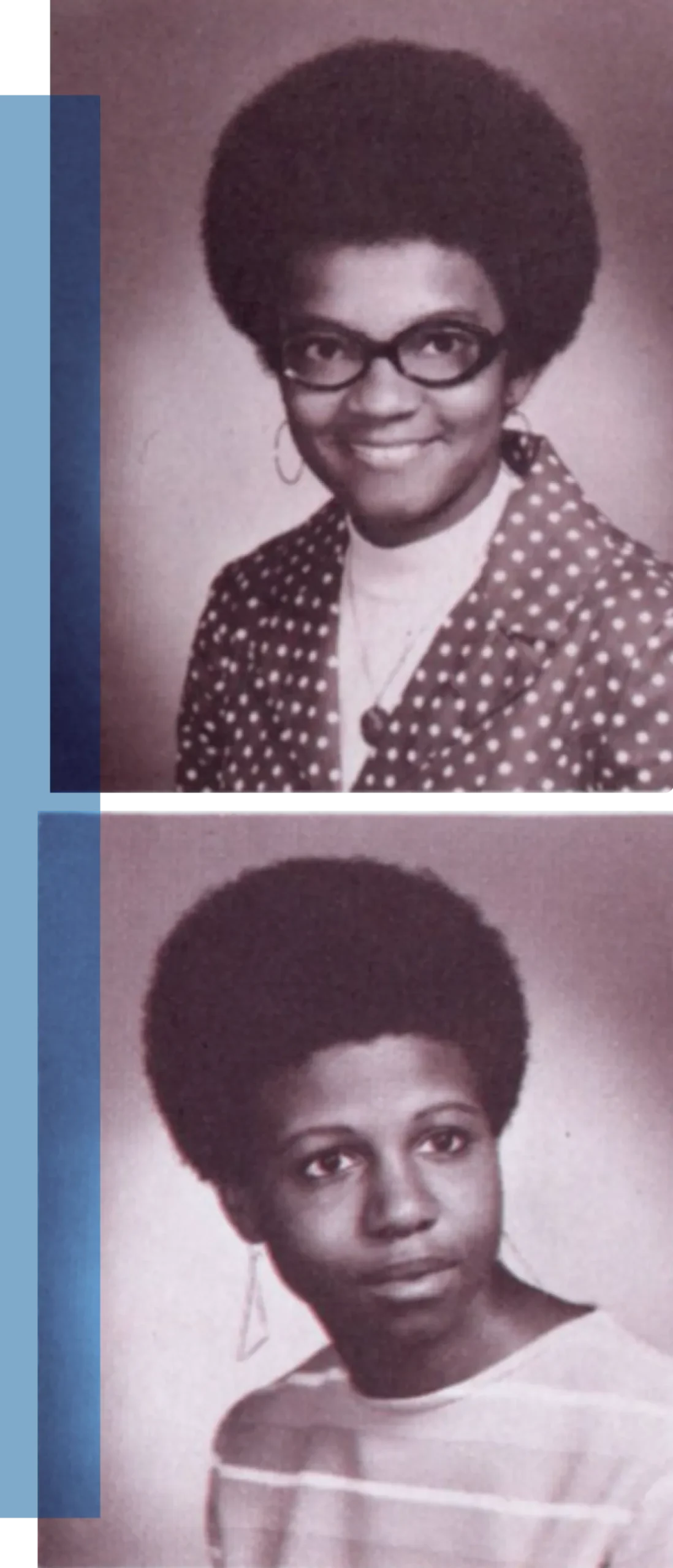
“Almost at first sight, I knew they were both going to be dear friends,” Woods Everage said. “I was already extremely homesick and missing my older sister, and they all took me under their wings.”
When Butts arrived in 1969, she did not live in Morehouse Residence Hall at first, but she was involved in campus activities for Black students, which is how she came to meet the other “YaYas.”
“Belinda and I became roommates in Morehouse my junior year, after the others had graduated,” Butts said. “Linda was from Des Moines, so her family was like my adopted family. She brought me into the fold with the YaYas group later on, since they were all such good friends at Drake, and I was the new kid on the block.”
Soul Food Dinners and Basketball Games at Vets
“We would have late-night sessions in the dorm talking about life and school; we would have water fights in the dorm,” Woods Everage said. “I remember the intensity of being involved with the Black Power Movement on campus but also the lightness of living and just having fun with each other.”
Henderson Behn was a Drake cheerleader and her then boyfriend (now her husband), Bob Behn BN’71, was the only one in the group who had a car. Five or six of them would often pile into his car and he would drive them to games. Weston-Knauer chuckles now as she recalls that the group was initially hesitant about Henderson Behn dating Bob, who is white. When they first heard about the relationship, the other women wanted to meet Bob and called a meeting with Henderson Behn in Morehouse.
“I think they could see that we really liked each other, and they realized it was serious,” Henderson Behn said. “Bob likes to joke now that he was the troublemaker with the YaYas because of that first meeting. But he’s been with us all these years.”
Members of the YaYas smile as they recall the time they hosted a soul food dinner in Morehouse as a fundraiser for establishing a Black student house on campus. They served chitlings—a traditional soul food dish made from the small intestines of pigs. Weston-Knauer and Dawkins Brickhouse were the cooks.
“I have never been a cook, but I helped clean, and I remember we cleaned [the chitlings] in the bathtub,” Woods Everage said with a laugh. “People were asking, ‘What is that smell?’ That was a pretty good bonding experience.”
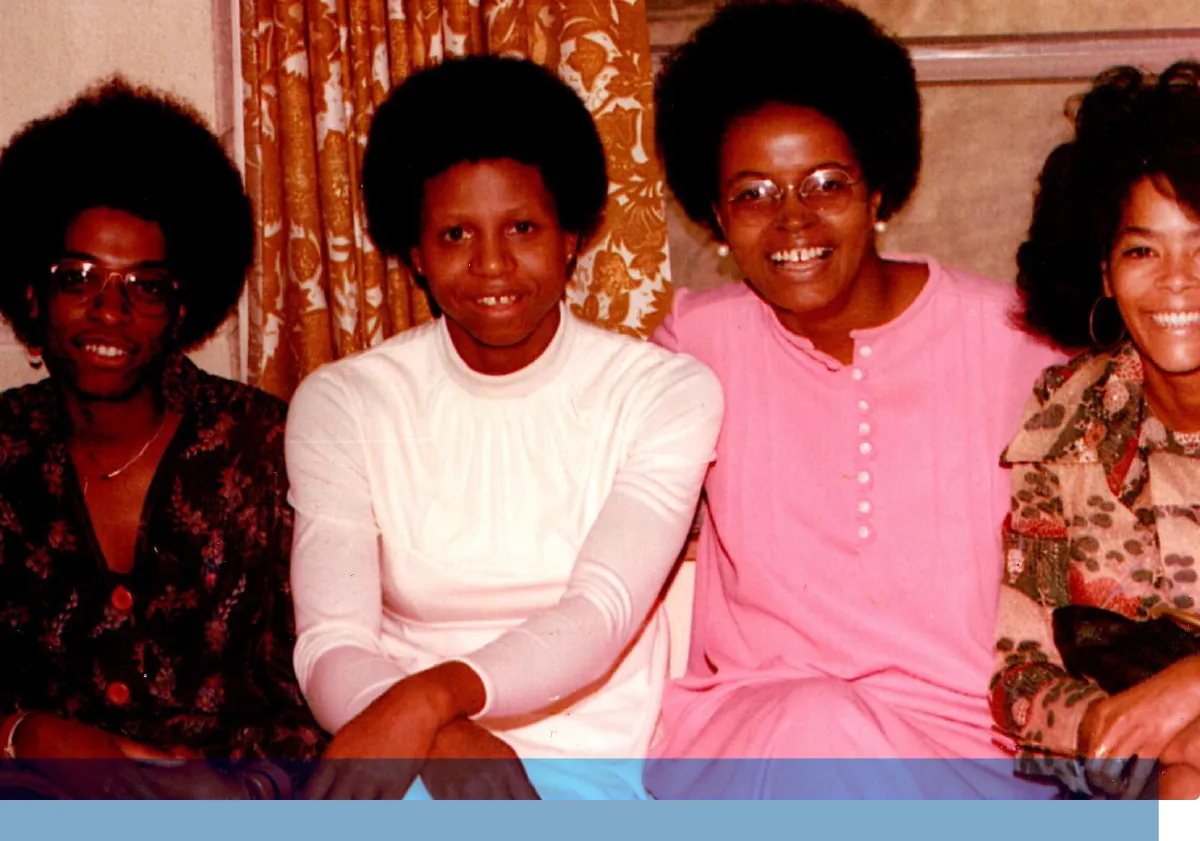
A Time of Change on Campus
“There were not a lot of people on campus who looked like me, and I was so homesick,” Woods Everage said. “Those were turbulent times. We were very conscientious about what was going on in the world, but also what we wanted to change and improve at Drake.”
Weston-Knauer, Henderson Behn, and Dawkins Brickhouse petitioned the administration to establish a place for Black students to gather, and later, several of the women were involved in establishing the Drake Black Afro-American Society.
“The racism and bigotry were there in the way some of the teachers and students treated you,” Butler Bell said. “You had to unite to support each other, and that’s the network we wanted to provide.”
They do fondly recall the professors and Drake administrators who were welcoming and supportive. Several of the YaYas mention Don Adams—the vice president of student life beginning in 1969—as a Drake administrator who went above and beyond in seeking out their thoughts and involving them in campus life.
“He came in, he listened, he was at every meeting, he met with us as a group and met with us individually. He genuinely cared,” Woods Everage said. “He always reminded us of the impact we had on him as an individual and on the university because we were bold in our voices. He always told me we made the university listen.”
Butts was also involved with chartering Alpha Kappa Alpha, a black sorority chapter that is still going today..
“I’m proud of what I did at Drake and being very involved with the Black house,” Butts said.
After graduating, Woods Everage, Weston-Knauer, and Butts all worked for Drake at various times. Weston-Knauer worked briefly in Drake’s student housing department after completing her master’s at the University in secondary school administration. After graduating with a degree in biology, Butts returned to Drake as the assistant director of student activities and as a minority student advisor until 1976. Woods Everage’s tenure in the Office of the Provost lasted 24 years, and she was responsible for launching the school’s peer mentor program, which is still in place. She retired as the vice provost for student affairs and academic excellence in 2012. The Drake community honors her enormous impact with a peer mentor award bearing her name.
“The reason I started the peer mentor program with upper-class students helping first-year students was because of Bobbie and Kittie and Kay, and what they did for me,” Woods Everage said.
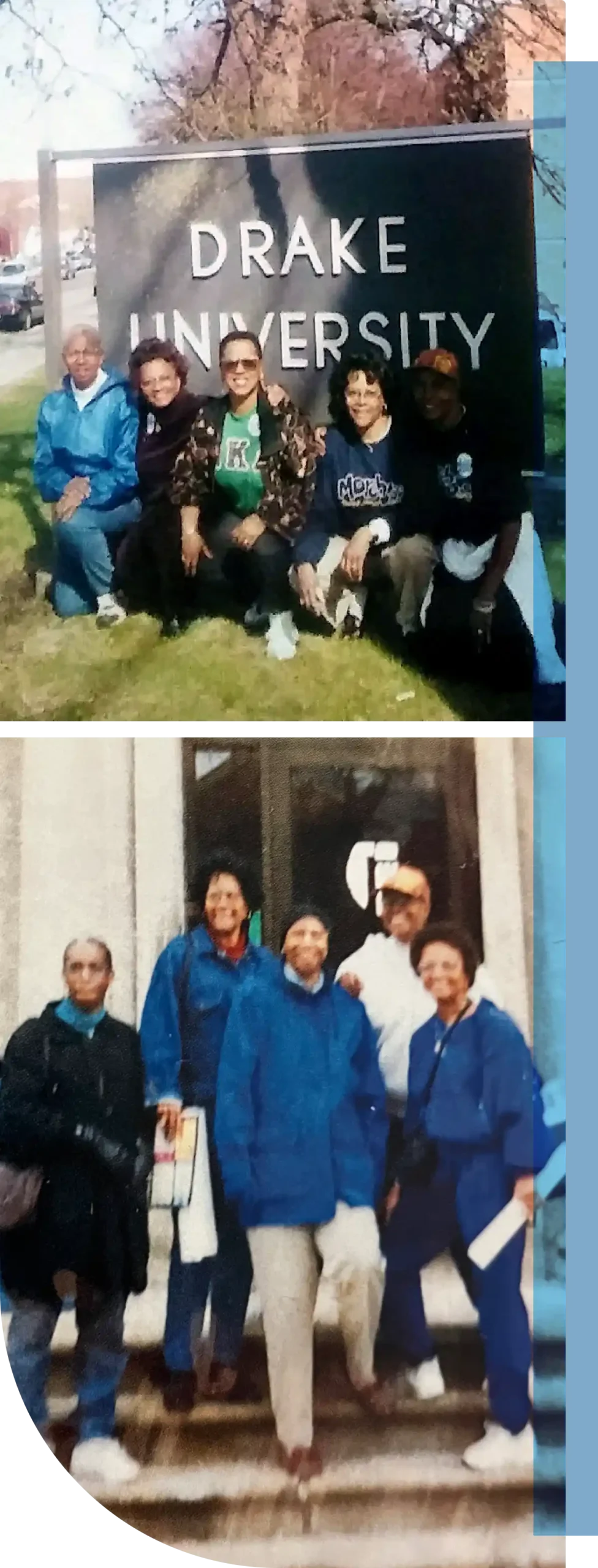
Their Bond Through the Years
“I would say there was a time after graduation with all the marriages, kids, and family life that we weren’t as in touch with each other as we are now,” Henderson Behn said. “But we always kept up a little and knew what was happening.”
Sometimes they would return to campus for a class reunion or the Drake Relays. Eventually, visits became more organized and frequent, as they traveled together to Seattle, Atlanta, Des Moines, and Las Vegas. In recent years, an active text chain and monthly video calls are a highlight and a way for them to stay connected. It was during one of their Drake Relays weekends that they learned their dear friend Dawkins Brickhouse was ill and on the kidney transplant list. Sadly, she passed away in January 2023, but her memory lives on through the YaYa sisterhood.
The YaYas rallied around the idea of commemorating Dawkins Brickhouse and her impact on the Drake campus. They worked with Drake officials to create a plaque at Morehouse Hall in her honor. Many of the YaYa Sisters were back on campus for the 2025 Drake Relays to see the new plaque.
“It’s so important that you honor those who were with you, and Bobbie was such an integral part of what we did here on this campus,” Weston-Knauer said. “She was president of the dorm; she helped establish the Black student center. What we did as students of color then, that part of the legacy is forever.”
For Butler Bell, the plaque in Dawkins Brickhouse’s honor is recognition not only of her impressive life—she went on to earn her doctorate in psychology—but it also commemorates the many Black students who helped shape what Drake is today.
“It recognizes Bobbie, but also Morehouse and how important that was to us at that time,” Butler Bell said. “It shows that people of color lived here and people of color contributed to Drake.”
When the YaYa Sisters gather now for their monthly Zoom calls or annual trips, Dawkins Brickhouse’s name comes up with affection. They often say to each other “what would Bobbie think about this?”
“She always comes up in the conversation,” Woods Everage said. “It’s not a sadness that comes over us. We have such fond memories.”
Their Drake Experience Laid the Foundation
“The trials and tribulations that people go through, you don’t go through them alone,” Butler Bell said. “We’ve always been growing, bonding, and supporting each other. Even when we didn’t talk for months at a time, that never goes away.”
The YaYa Sisters appreciate that their time at Drake is the cornerstone of their lifelong friendship.
“It all started at Drake and Morehouse,” Henderson Behn said. “Those places are still part of us. It’s beautiful to think it’s something that has evolved and blossomed and continues to do that to this day.”
The YaYa Sisters know that they and Drake have come a long way over the past 60 years.
“There were Black students who came before us in the 1950s and 1960s who left their mark, and we were able to piggyback on their work so that we could leave our mark,” Butler Bell said. “We followed them and they opened the doors for us and now generations after us do the same. I love to see more students of color at Drake now. It’s a great school, and it gave us so much. I think all of us would say we would do it again.”
Six Decades of Family,
Philanthropy,
and Bulldog Pride
How It All Began
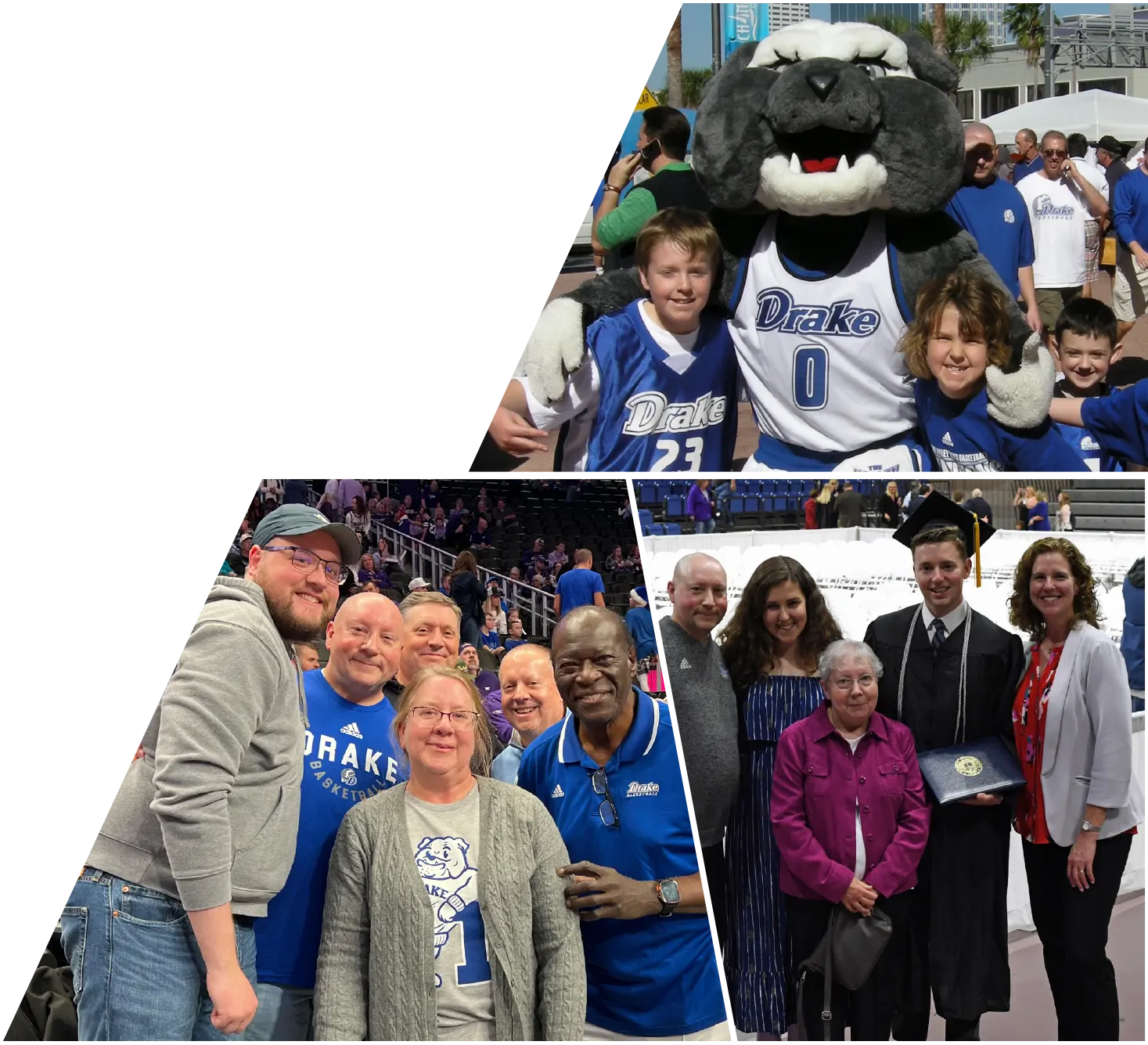
“My first college basketball game was watching Drake at Vets Auditorium when I was four years old,” said Mardis. “I remember seeing a local TV personality and Dolph Pulliam, a former Drake basketball player, which was pretty exciting.”
This early exposure instilled a loyalty that would only grow deeper with time.
From Students to Fans
“To this day, all three of us brothers are Drake basketball season ticket holders,” Mardis shared. “We also would regularly attend Drake football games and, since the early ’80s, have gone to the Drake Relays. My father would take me and my brothers out of school to watch the Relays. Today, my brothers and I still go every year, no matter the weather.”
The Drake connection became even stronger when Mardis met his wife, Laurie, who graduated in ’93 with a degree in education. This brought another loyal alumna into the growing family.
The Next Generation
“Benjamin was drawn to the University’s first kinesiology program, which prepared him for physical therapy, while Kaitlyn found her place in the vocal music program,” said Mardis. “Both found their niche and did well.”
The Mardis family’s Drake ties grew yet again when Benjamin met his future wife on campus, Carissa Bowie, AS’19. As Brent Mardis proudly stated, “Quite a few of us have Bulldog blood running through us, that’s for sure.” The family’s continuous flow of alumni underscores the University’s enduring appeal across diverse interests and career paths.
Giving Back
“I serve on a national group that advised the actuarial science program,” said Mardis. “My wife and I often speak to different classes in the College of Business.”
They have given donations to many different sports departments, including basketball, golf, and softball. The vocal music program has also received their steady support, especially when Kaitlyn was in the program.
An important family contribution came through Brent’s workplace, Sammons Financial Group, which made a substantial gift to fund the Sammons Intercultural Center, finished in early 2025. Brent, assenior executive at Sammons Financial Group, was the lead helping make the company’s gift to The Ones: Drake’s Campaign for the Brave and Bold a reality.
Lasting Memories
“You feel like you’re part of a family when you go to Drake,” Brent Mardis said. “It’s small enough that you get to know your teachers very well. You have a close group of friends you spend time with.”
These important connections last long after graduation, with Mardis and his wife still seeing teachers they had in the ‘90s, and University staff often asking about his children.
“The staff at Drake truly care about how they’ve set you up for success. It really shows how strong of a commitment they have to former students’ well-being and continued success.”
As the Mardis family looks to the future, their commitment to Drake remains as strong as ever. They envision that future generations will carry on the traditions of academic pursuit, athletic passion, and heartfelt giving that have defined their extraordinary connection for more than 60 years.
Rewriting Des Moines’s Reading Community

For Kansas native and New York expat Linzi Murray, Des Moines wasn’t just a second home, but a place where she could fulfill her dream of building a business. Today, as the proud owner of Reading in Public Bookstore + Cafe, an independent bookstore in West Des Moines, Murray is shaping Central Iowa’s reading community, one good book at a time.
Murray’s love for the city began when searching for colleges. Although her parents wanted her to stay in Kansas, she was drawn to Drake for its proximity to home. She initially declared a painting major, but knew she wished to explore her interests, and the university offered that flexibility.
“I thought, ‘I don’t know what I’m going to do with this, but I know I’m in a place where I have that freedom to figure it out,’” said Murray. “And when I do eventually have more focus and an idea of what I want to be doing, I know that I won’t have to change schools.”
That freedom to explore helped Murray discover a passion for graphic design, which she added as a second major before graduating with her BA in 2017. Within a week of graduation, Murray moved to New York City with her Drake sweetheart, now husband, Ying Chyi Gooi, to chase their dreams. There, she worked as a graphic designer for a major design agency.
During her four years in NYC, Murray—a self-described bibliophile—thrived in its vibrant reading culture, where it seemed everyone had a book in hand and independent booksellers were abundant. However, when the COVID-19 pandemic shuttered many of her beloved bookshops, Murray felt as if she had lost an outlet that once rooted her so deeply to the city.
“A part of me just felt like it suddenly bottomed out,” said Murray. “I had this epiphany that I felt like I can’t live without access to bookstores.”
Out of that sense of loss came a spark of possibility. While Murray and her husband had always planned to return to Des Moines to build a family, the city also offered the chance to bring a taste of New York’s literary culture back with her.
Murray recalls that when she was a Drake student, there was only one local independent bookstore, and at the time, Des Moines didn’t seem to have the overt reading community she had come to love. However, upon returning to scout potential storefronts in Historic Valley Junction, Murray was met with a newly expanded reading community and great enthusiasm for her small business proposal.
“Since I’ve been back, I’ve learned that we have huge, voracious readers just so enthusiastic about reading,” she said. “We just didn’t have those outlets before.”
Now, three years into owning her business, Reading in Public is a staple of Valley Junction and the now-flourishing independent bookstore culture in Greater Des Moines. Rooted in community and collaboration, Murray regularly partners with other business owners, most recently Chef Cass Spence of Culinary Annex. In July, they launched their inaugural collaboration, in which Murray selects a cookbook, and Chef Cass chooses a recipe that attendees prepare. In addition, Murray provides two book “pairings” to accompany the meal’s theme.
Beyond fostering community collaboration, Murray’s identity as a transracially adopted Chinese-American woman deeply shapes the curation of titles on her store’s shelves, helping many customers see themselves represented. She describes her special touch as a bookseller as offering hidden gems and weaving unique stories into her curated selections for customers to discover.
“We get that comment a lot about how diverse our selection is, but to my mind, it’s just natural,” said Murray. “I’m intentionally getting these books, but also, there’s so much literature out there, especially by people of color and marginalized groups, that it’s just natural to happen to have them on our shelves.”
Beyond the joys of spotlighting stories that deserve to be read, Murray reflects that her greatest source of pride is creating a space people can enjoy. As more readers find community and comfort in her store, Murray’s Des Moines story is still being written, with many chapters yet to come.
CLASSROOM TO COMMUNITY:
Marketing a New Dogtown
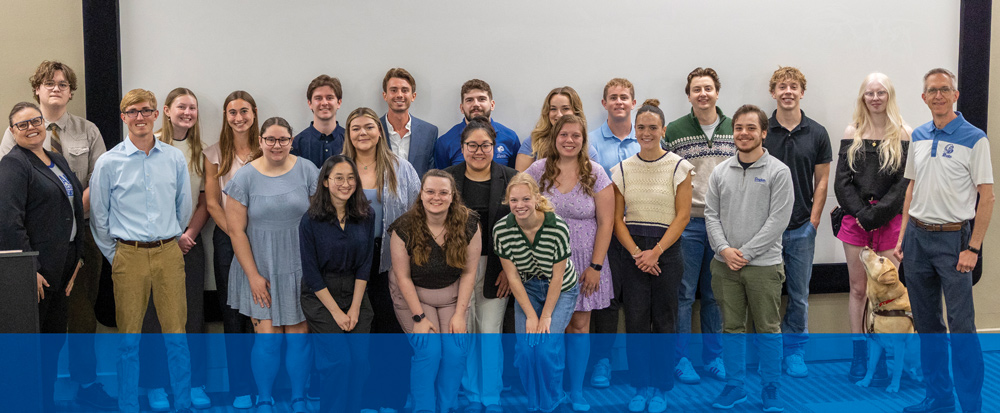
Associate Professor Heidi Mannetter continues this practice in her Marketing Management course, which transforms students into career-ready marketers through a hands-on marketing campaign. When she took over the class, Professor Mannetter saw an opportunity to reimagine the lecture-based curriculum as an experience-driven project.
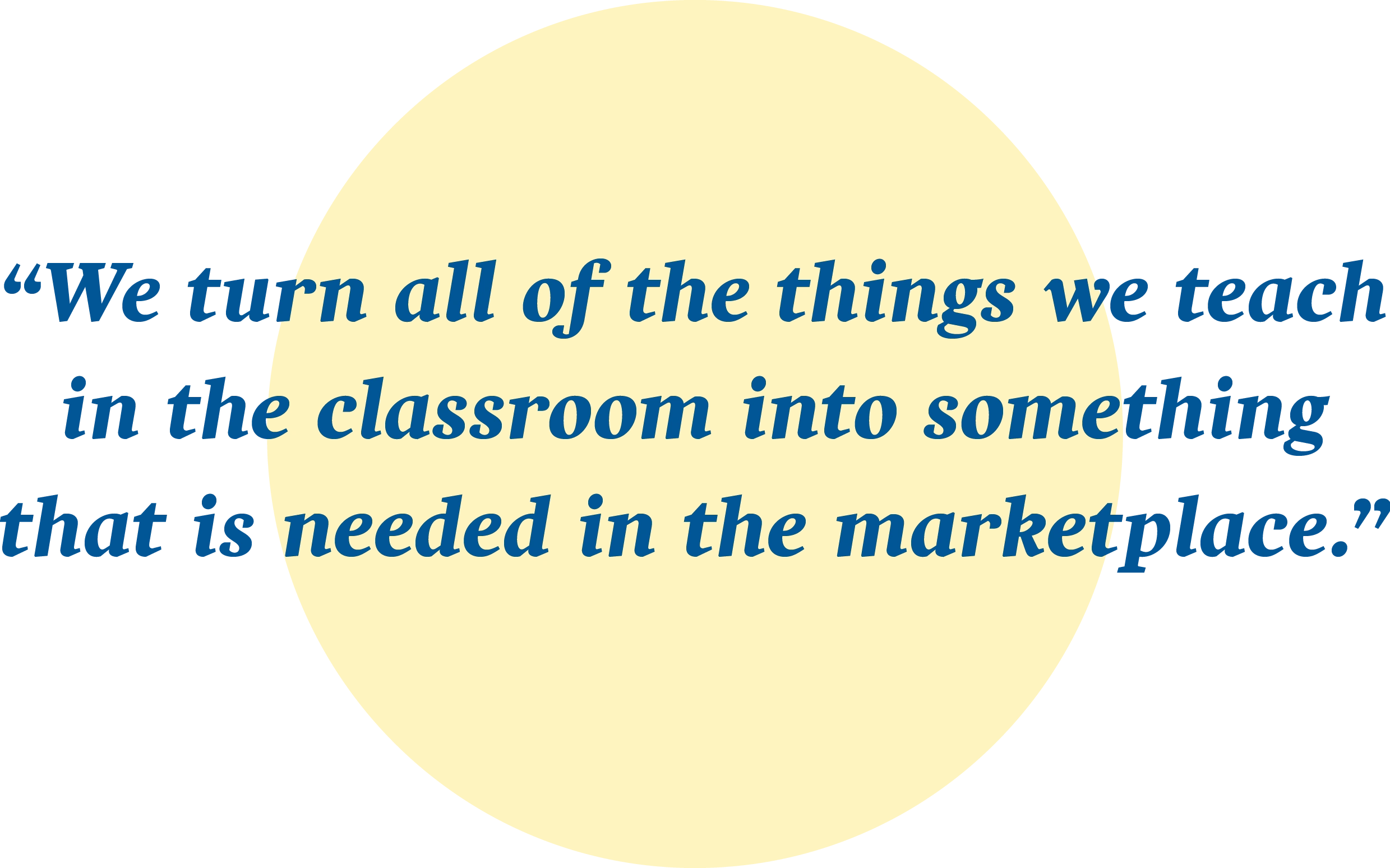
“It would be easier to give quizzes or an exam, but when we think about the value we want to provide employers, this is where you get that real payoff,” she said. “We turn all of the things we teach in the classroom into something that is needed in the marketplace.”
That vision solidified when Drake’s Chief of Staff, Nate Reagen, approached her to partner with a marketing class to help promote the Dogtown neighborhood. The cross-campus collaboration began in the fall 2024 semester with a small group and expanded in spring with a new cohort of 25 students.
Throughout the semester, students collaborated in an agency-style structure, taking on designated roles in areas like project management, market research, and branding. Through close collaboration, students executed unique strategies showcasing the revitalized Dogtown brand identity.
The lessons learned from the course are already paying off, helping students like Caitlin Judkins land her first post-graduate marketing role.
“It was something that I was able to use throughout my interview process,” said Judkins. I don’t think there are many opportunities like this at other schools, so that really set me apart from other candidates.”
Judkins added that while she’d taken other project-based courses at Drake, Professor Mannetter’s course provided the most realistic post-graduate workforce experience, given its fast pace and collaborative structure.
“While this class was definitely a challenge at times, I think it helped decrease the learning curve that I would have faced on the job.”
Although Professor Mannetter’s reimagined course continues to evolve, one element remains constant: her commitment to equipping the next generation of marketers with the practical skills needed to excel.
“Fundamentally, that’s the purpose of higher education,” said Mannetter. “That’s why I teach at Drake, because I think we can do amazing things with our students.”
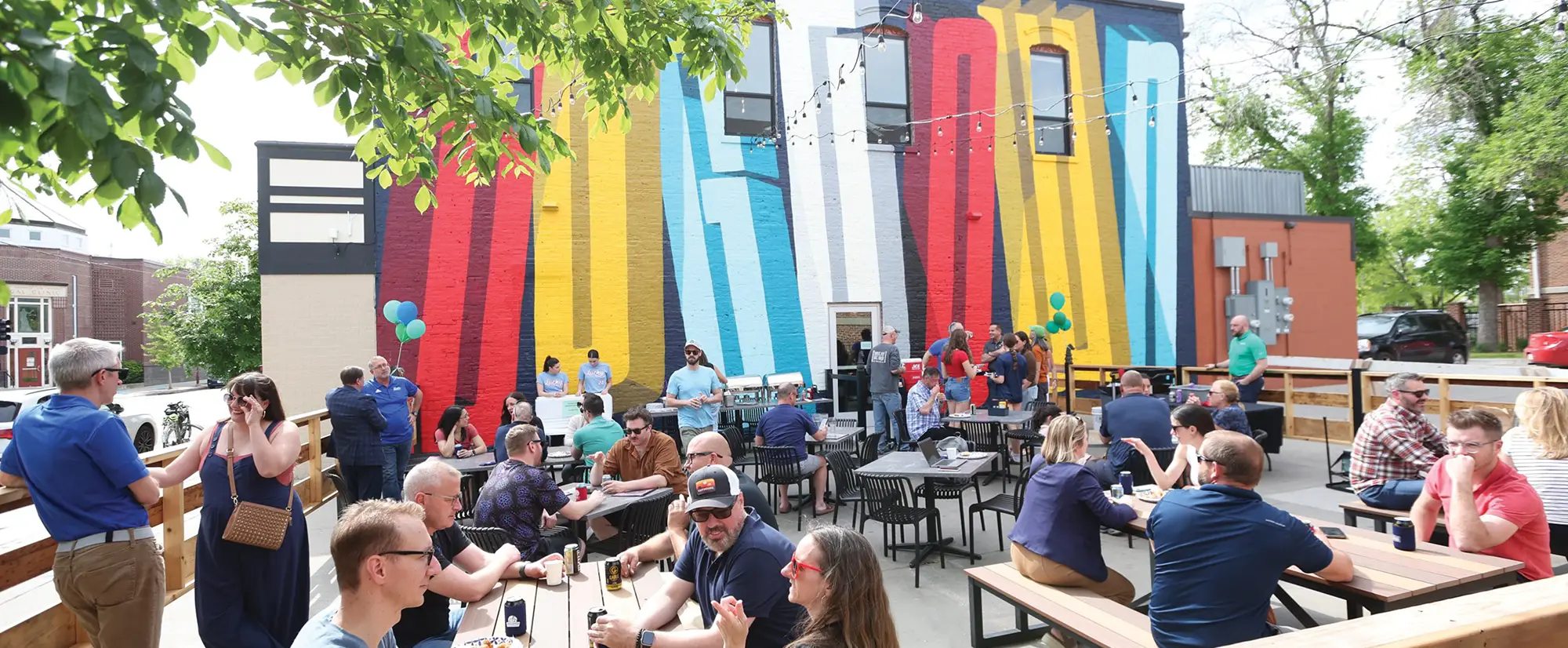
Sit, Stay, and Play in the Drake Neighborhood

For the Music Lover

For Family Friendly Fun
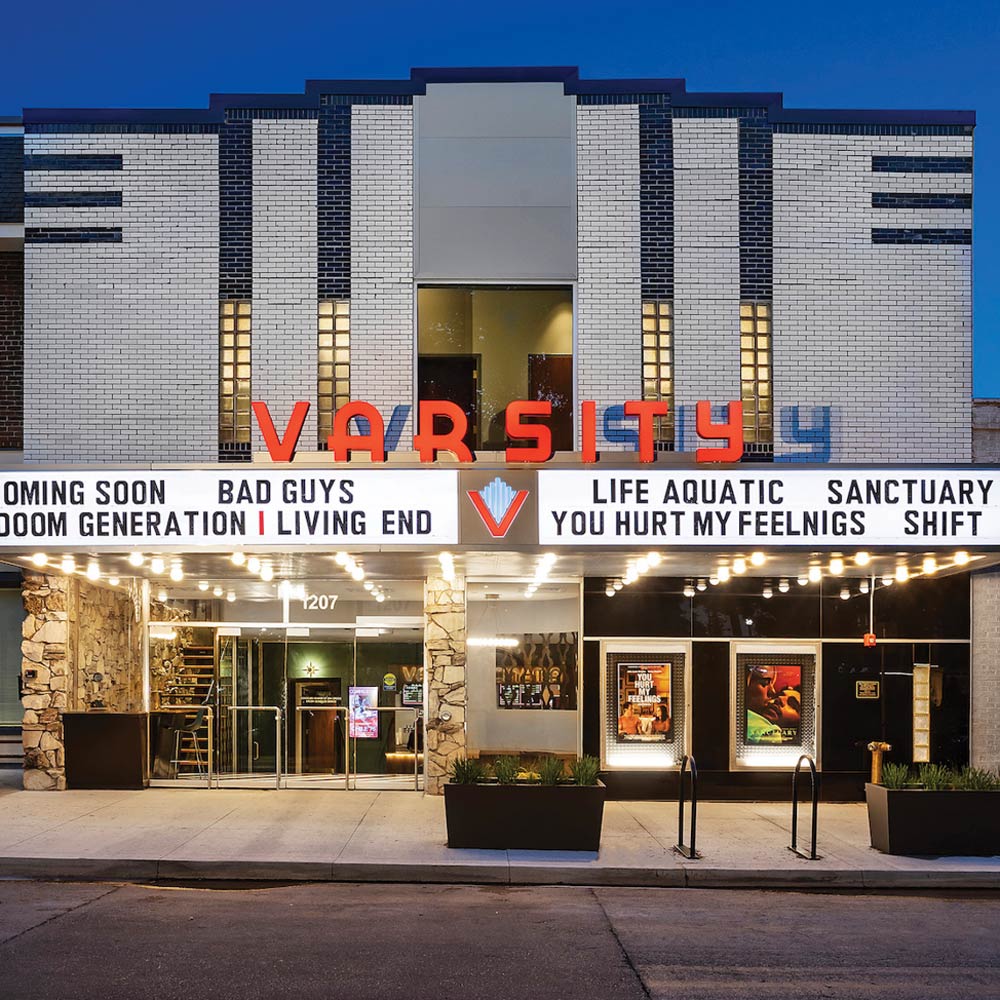
For the Culture Connoisseur

Afterward, venture over to one of Dogtown’s newest businesses, Nos Books, and browse their meticulously curated collection of diverse reads. Spanish for ‘us,’ the family-owned bookstore celebrates the stories honoring our unique pasts and collective futures.

End the evening with a theatre performance, classical concert, or gallery exhibition through Drake’s Fine Arts program. Many events are free or affordably priced, making it easier than ever to support emerging student artists as they showcase their world-class talents. With events happening regularly during the school year, be sure to check their calendar to see what’s on.
For the Sports Fanatic
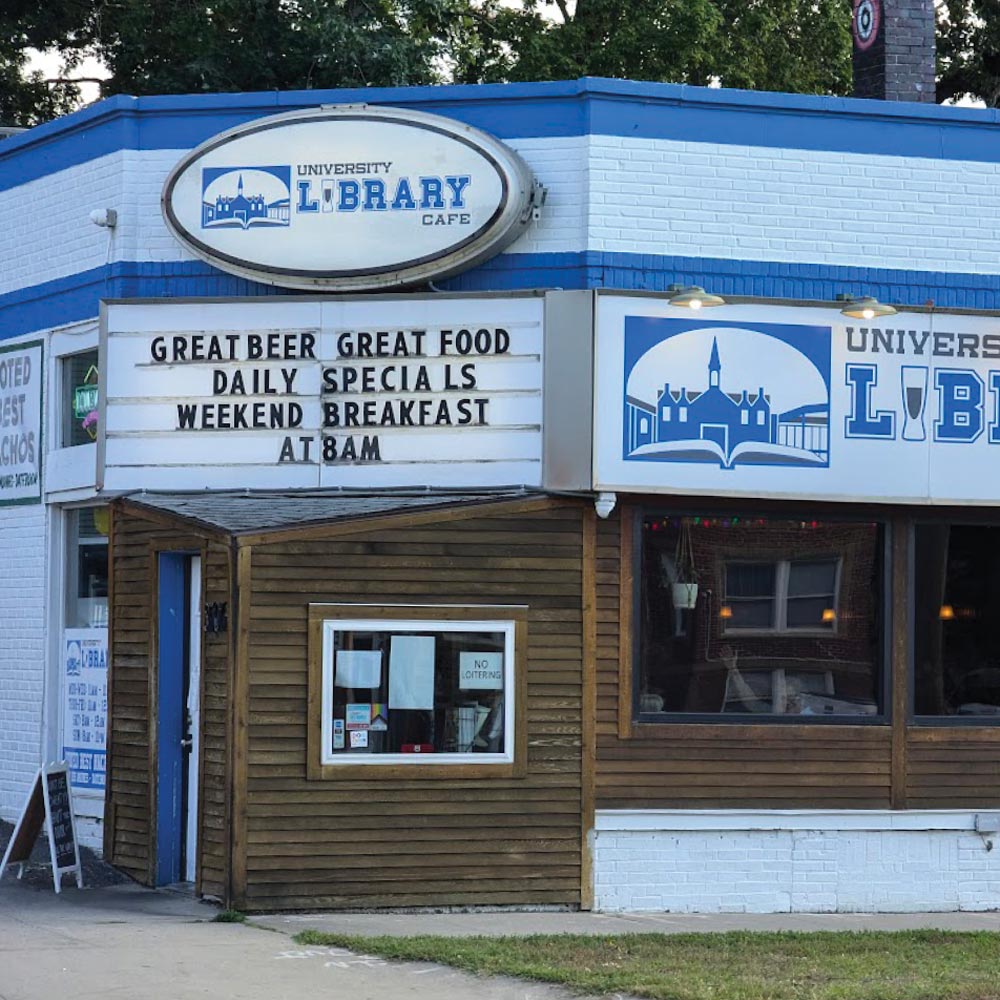
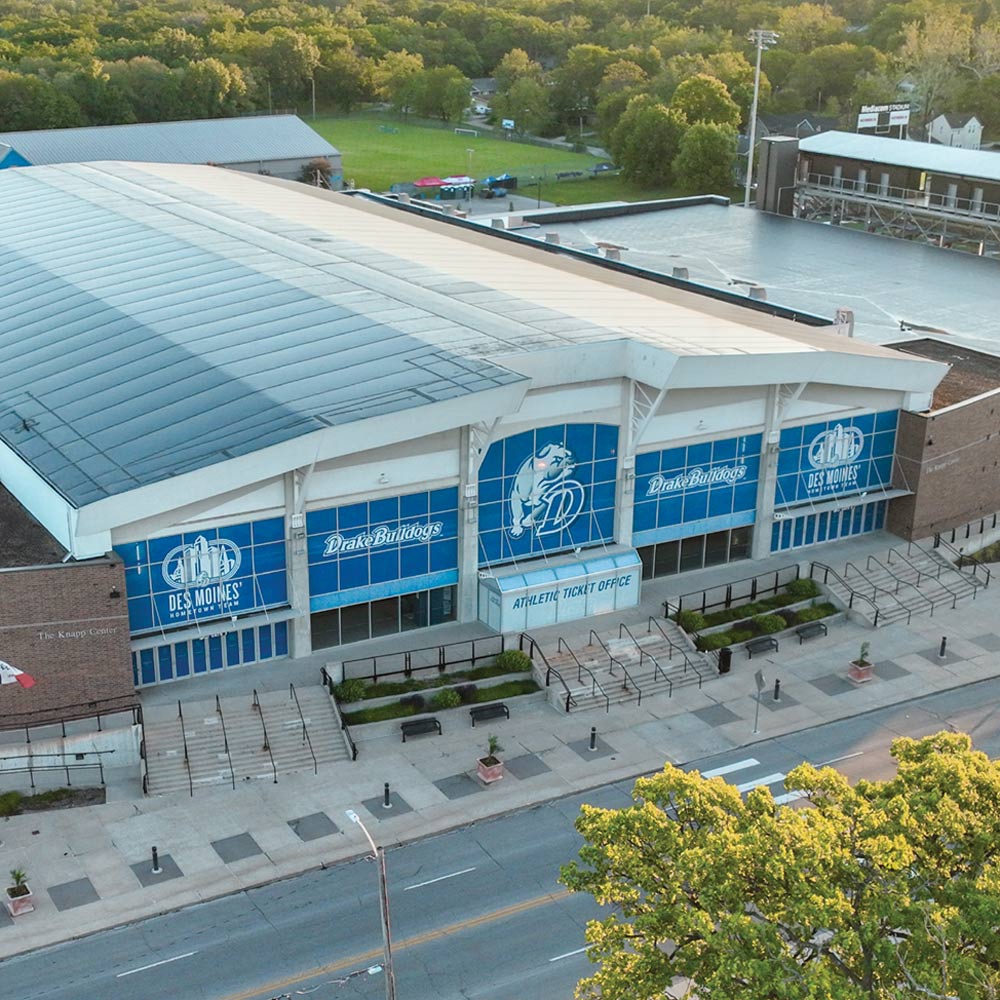
Spotlight on Dogtown Business Owners
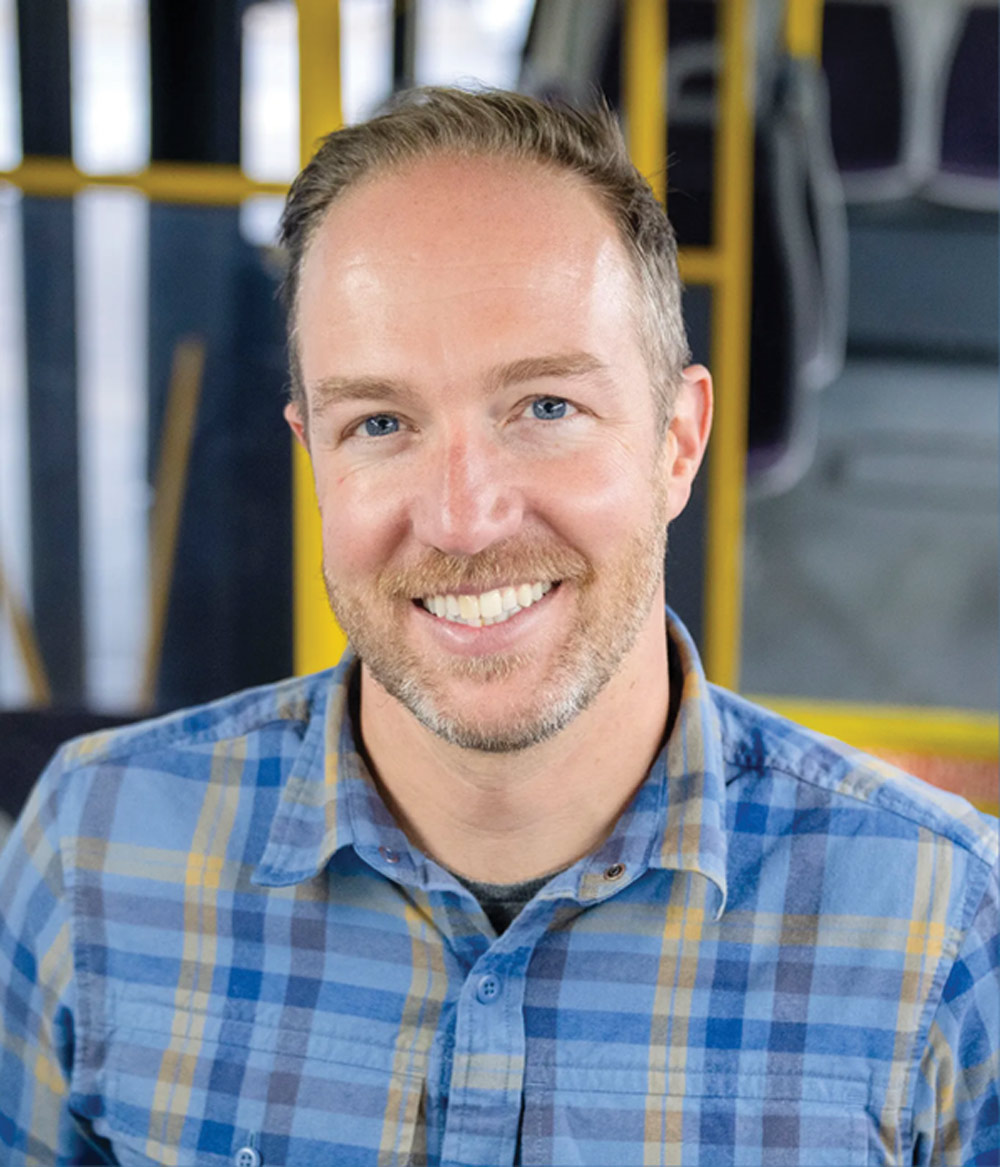
Why Dogtown: “We knew that Drake was trying to change its stance towards the neighborhood and really be more of a community partner and invest in projects and support businesses. We felt the potential. The eastern part of campus is now becoming kind of the cultural and economic center of the neighborhood again, and we’re right at the heart of that. So we’re happy to do our part to help grow that.”

“We just happen to be people who really like being close to the University and have kind of adopted Drake as a home school for us,” said Davis.
Go-to menu item: Pepperoni Popper
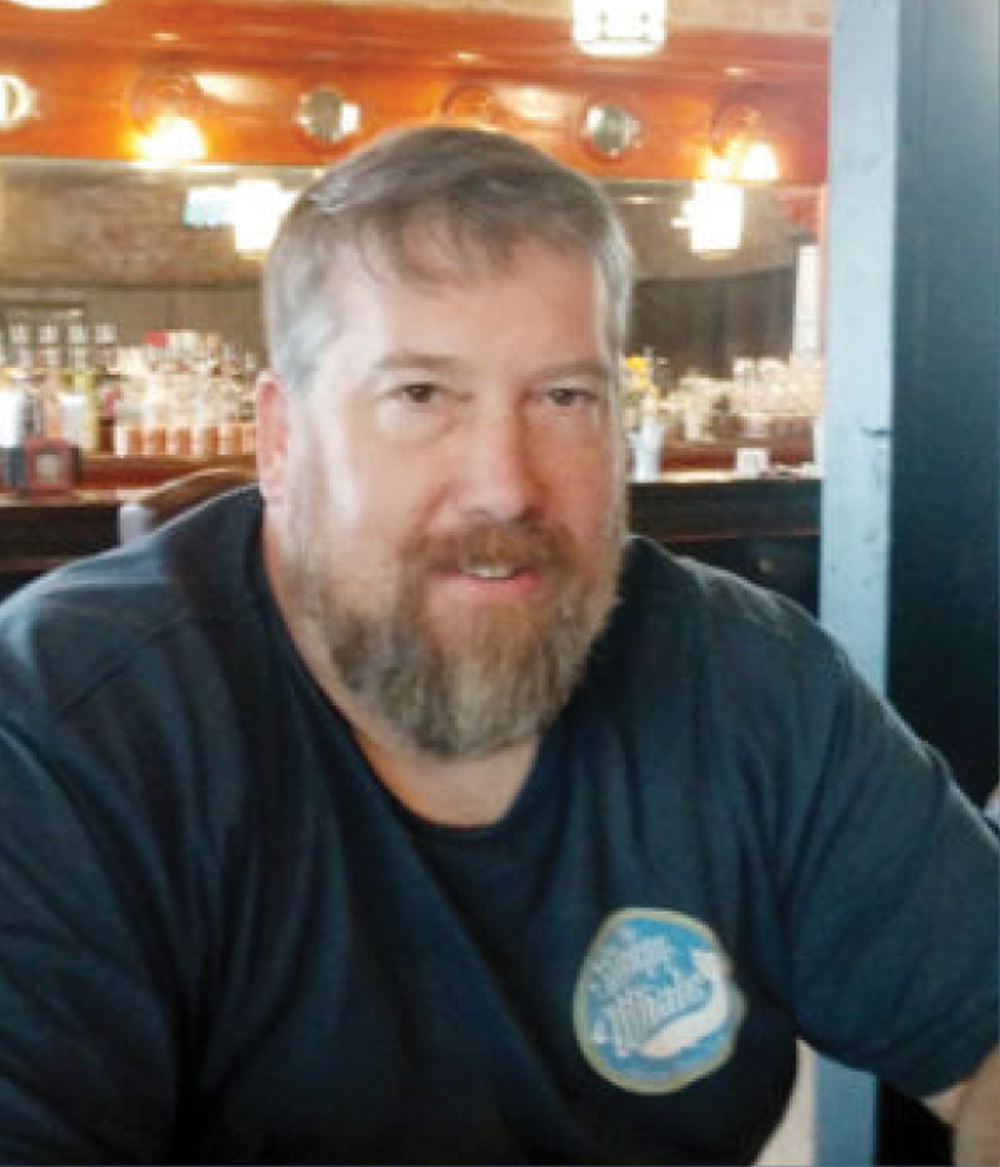
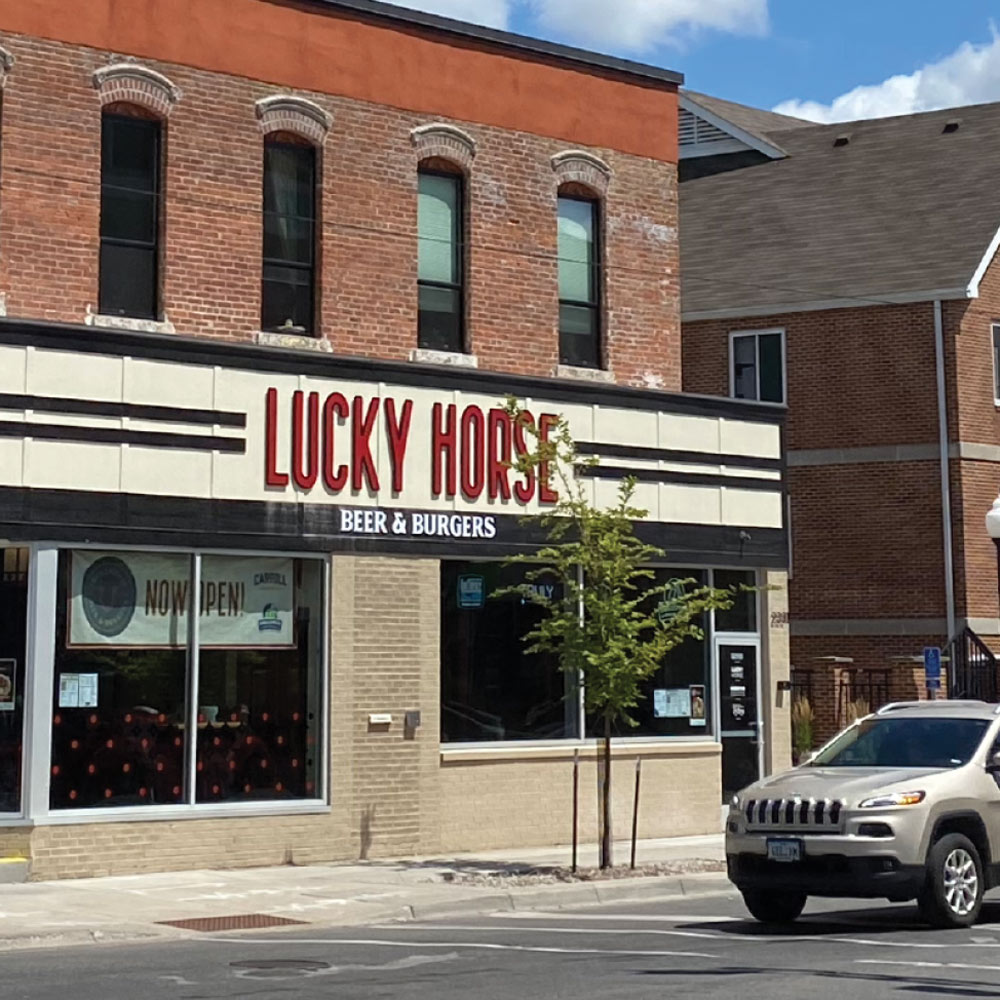
Why Dogtown: “I live in the neighborhood and know people at the University. I want to be part of the neighborhood and to be that place that people think of as, ‘Well, we’re going to be in town, where do you want to meet up?’ I hope that Lucky Horse continues to come up in that conversation.”
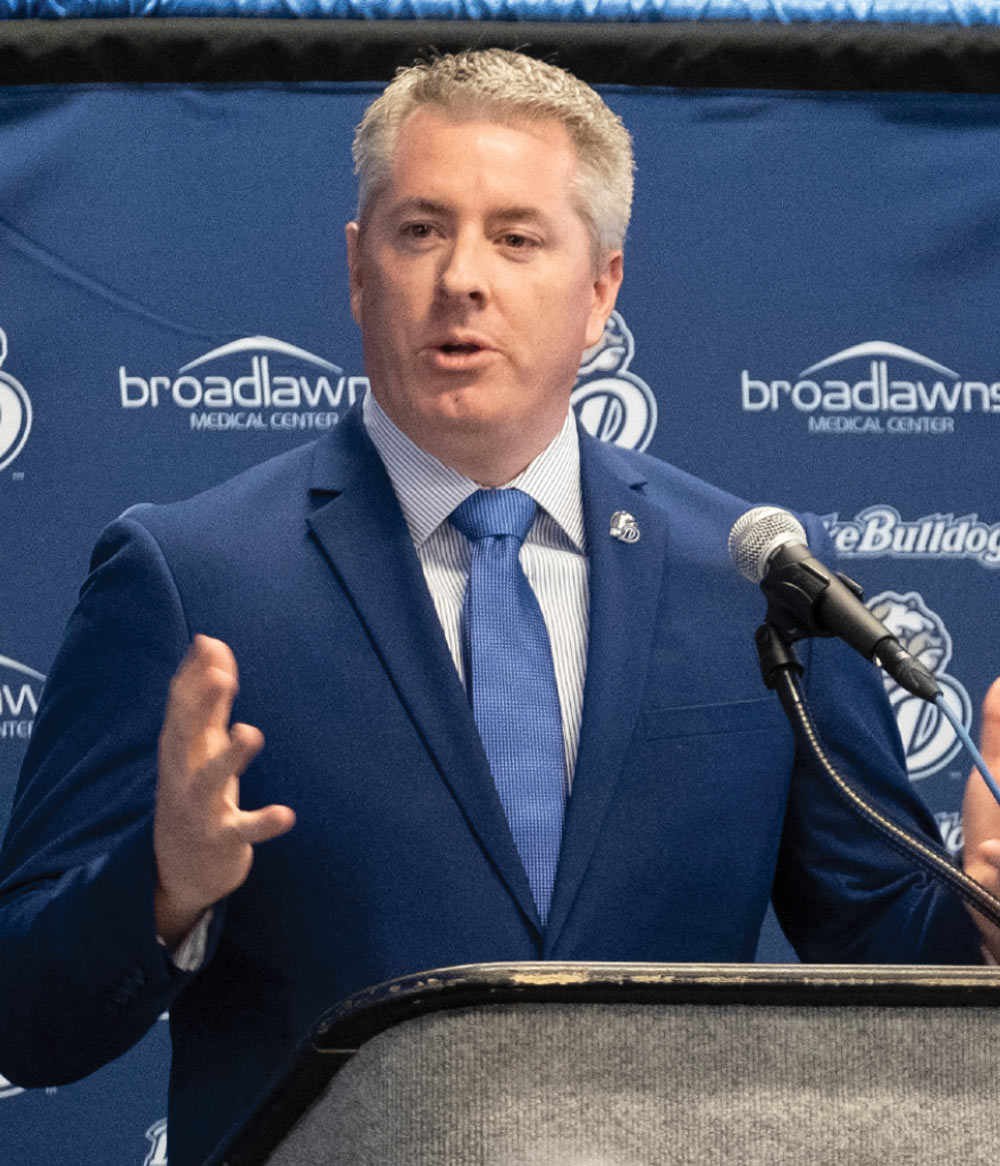
“You actually have to engage with your fellow citizens and the community, and this was a really good event to do that,” said Bruning.
Go-to menu item: The Dogtown Burger or Italian Flatbread paired with a Frozen Old Fashioned
Virtual Learning, Real Connections
Everclass
Recent episodes feature Athletic Director Brian Hardin on NIL, leadership, and the future of college sports, Noreen Otto on how craft beer is shaping community and policy, and David Lubbers, former ESPN producer, on the art of storytelling and life behind the camera. Whether you’re curious about athletics, industry trends, or journalism, the Everclass Podcast connects you to big ideas and Bulldog voices.





Virtual Learning, Real Connections
Everclass
Virtual Learning, Real Connections
Everclass
In Memoriam
-
1940s
Glenn W. Sedgwick, BN’48,
St Louis, MO - Donald D. Friar, BN’49,
Overland Park, KS - Charles W. Dickson, Jr., FA’49,
Des Moines, IA -
1950s
Rolland W. Nelson, LA’50,
Des Moines, IA - Richard R. Colby, BN’50,
Washington, IA - Marilyn Stephens, LA’50,
Northbrook, IL - Marion A. Akes, ED’51,
Osceola, IA - Anjean Chrystal, ED’55,
Jefferson, IA - Diane I. Miller, LA’55,
Perry, IA - Elizabeth Lundbeck, ED’57,
Lakeville, MN - Darrell Bobzin, ED’57,
West Des Moines, IA - Orville J. Dunkin, MSE’57,
Pella, IA - Carole L. Ward, LA’57,
West Des Moines, IA - William C. Berry, BN’58,
Bellaire, TX - James B. West, LA’58, JD’60,
West Des Moines, IA - Frederfick W. Coleman, ED’58,
West Des Moines, IA - Philip L. Pittman, BN’59,
Albuquerque, NM - Janis K. Erland, ED’59,
Lawrence, KS - Merrick C. Hayes, BN’59, JD’60,
Hilton Head Island, SC - Francis Raibley, BN’59,
Seneca, IL -
1960s
David D. Sampel, LA’60, MSE’66,
Johnston, IA - Karen F. Hodgkinson, ED’60,
Lakeland, FL - G. Norman Coder, LA’60, LW’65,
Fort Worth, TX - William S. Johnson, BN’60,
Aurora, CO - Paul D. Andersen, FA’60,
Hattiesburg, MS - Roy Shaw, LA’60,
Rancho Villejo, TX - Guido Marchetti, ED’61,
Romeoville, IL - Judith J. Halamka, MA’61,
Columbiaville, MO - Kenneth “Allen” Fann, PH’61,
West Des Moines, IA - Carol Kavadas, LA’61,
Ankeny, IA - Laurence Shepard, BN’61,
Johnston, IA - Sue Camp, ED’61,
Rock Island, IL - Shirlie Katzenberger, FA’61,
Des Moines, IA - Ivan F. Dusek, FA’61,
Willmar, MN - John T. Ward, LA’62, JD’64,
West Des Moines, IA - James E. Moore, ED’62,
Sioux City, IA - Diane L. (Zeigler) Wright, ED’63,
Richmond, VA - Karen S. (Shirbroun) Forsyth, ED’63,
Anchorage, AK - Dolores M. Beck, ED’64,
Guthrie Center, IA - Brenda K Harshbarger, ED’65,
Twin Falls, ID - Charles E. Pellino, LA’65,
Sun Prairie, WI - Rita A. Sherman, LA’65,
Mount Kisco, NY - Maurice E. John, LA’65,
Louisville, KY - Ann G. Bindner, ED’65,
Spirit Lake, IA - DeAnne F. (Don Carlos) Dorn, ED’65,
Yuma, AZ - Kathryn Capron Forward, ED’66,
Atlanta, GA - Gary Ladewig, BN’66,
Bowling Green, KY - Bruce H. Roof, MSE’66, EdS’69,
Knoxville, IA - Linda S. Seyfarth, ED’67,
Shoreview, MN - Wesley J. Mika, ED’67,
Arlington Heights, IL - Sandra S. Prendergast, FA’67, MSE’91,
Newton, IA - John R. Addy, LA’67,
Perry, IA - Lynne Knox, ED’68,
Hopkins, MN - Donna Raurick, ED’68,
Atlantic, IA - Kathleen T. Letz, ED’68,
West Des Moines, IA - Carolyn L. Hasselbrink, ED’68,
Phoenix, AZ - Douglas D. Getter, BN’69, MBA’71,
Webster City, IA - Marlene J. Werner, ED’69,
Iowa City, IA - Margie V Papenausen, LA’69,
Suwanee, GA -
1970s
James D. Jess, MSE’70, EdS’73, EdD’77,
West Des Moines, IA - David Mallow, FA’70,
Altadena, CA - Ann D. Tharnish, LA’70, MSE’75,
Johnston, IA - W. Dean Eastman, ED’70,
Vero Beach, FL - Jack L. Jones, EdS’71,
Council Bluffs, IA - Kirke C. Quinn, BN’72, JD’75,
Boone, IA - Patricia Rose Harris, ED’72,
Crest Hill, IL - Frederick A. Schwoerer, MSE’73,
Libertyville, IL - Joanne E. Dohrman, MSE’73,
Northfield, MN - James M. Box, JD’73,
Ottumwa, IA - Mark I. Cohan, MA’73,
Urbandale, IA - Ruth A. Marrs, ED’73,
Camdenton, MO - Judie A. Horka, MSE’73,
Des Moines, IA - Robert C. Thomson, JD’73,
West Des Moines, IA - James D. Stamm, LA’74,
Naperville, IL - Robert L. Hammond, JD’74,
Okoboji, IA - John G. Mullen, JD’74,
Davenport, IA - Janet L. Harvey, JD’74,
Sumner, IA - James W. Ramey, JD’75,
Cedar Hill, TX - Murray B. Gotsdiner, LA’75, JD’79,
Clive, IA - Diann M. Peyton, MSE’76,
Des Moines, IA - Wayne Newkirk, JD’78,
West Des Moines, IA - Peter J. Coniglio, JD’78,
Fairfax, VA - Beth Higdon Trout, JD’79,
Minneapolis, MN - Kevin F. Tracy, BN’79,
Roswell, GA -
1980s
Dianne L. Loy, ED’80,
Des Moines, IA - Kenneth V Frey, MSE’81,
Norwalk, IA - Gregory R. Watts, LA’81,
Houston, TX - Marcus A. Kainz, FA’82,
Newton, IA - Chris J. Granias, MM’82,
Mounds View, MN - Michael V. Hope, ED’82,
Waukee, IA - Steven J. Timmins, BN’83,
West Des Moines, IA - John C. Werden, JD’84,
Des Moines, IA - Robert J. Monachino, LA’84,
Chicago, IL - Sharon A. (Nippert) Simmons, MS’84,
San Francisco, CA - Paul J. Sheedy, JO’84,
Deer Park, IL - Janice E. Quass, MA’87,
Ankeny, IA - Robert Burlingame, AS’88,
Des Moines, IA -
1990s
Boyd L. Kuester, MA’93,
Coralville, IA - Eric S. Keiser, AS’93,
Sycamore, IL - Melissa K. Hamma, JD’97,
Des Moines, IA - Nadine E. Lujan, JD’99,
Champlin, MN -
2000s
Melissa D. Parkin, MSE’07,
Davenport, IA - Brent C. DeNeice, ’09,
Iowa City, IA -
2010s
Michael S. McLeran, LW’17,
Phoenix, AZ -
Faculty/Staff
Ramesh C. Dhussa, Professor Emeritus,
West Des Moines, IA
Achievements
-
1950s
Patricia (Nelson) Meisel, FA’59, MME’60, Owatonna, MN, has been inducted into the Music Hall of Fame for Austin High School in Austin, MN to honor those who are graduates of Austin High School and who have excelled in the field of music.
-
1970s
George F. Davison, Jr., JO’71, JD’79, Des Moines, IA, has served as the commencement speaker for the 136th Commencement of the Missouri Military Academy in Mexico, MO, of which he is a 1968 graduate.
- Debra S. Klein, LA’73, Arlington Heights, IL, published mystery novel titled, “Serving Up the Truth.”
- Christopher J. Risewick, ’74, Des Moines, IA, has been inducted into the Iowa Business Hall of Fame.
- Bruce A. Green, JD’75, Primghar, IA, has retired as Primghar City Attorney after a 40-year career in that role.
- Nick A. Gradisar, JD’76, Pueblo, CO, has been inducted into the Pueblo South High School Alumni Hall of Fame.
- Nicholas Colletti, JO’77, Grapevine, TX, has been named the Director of Development at the Wilkinson Center.
-
1980s
Jane Hasek, MS’80, MSN’00, was awarded the Junior Achievement of Eastern Iowa Business Hall of Fame 2024 Laureate.
- A.J. Johnson, III, MPA’81, Urbandale, IA, has retired from the City of Urbandale after a 15-year career as City Manager.
- Janece “Jan” B. Clough, FA’83, Macomb, IL, had a solo art exhibit entitled “Looking and Thinking” at the Western Illinois University Art Gallery from February 25, 2025 to April 4, 2025.
- Glen G. Hall, BN’83, Ankeny, IA, has been posthumouly awarded a Live United Leader Award from the United Way of Central Iowa in honor of his exceptional efforts in giving, advocating and volunteering to create lasting change in Central Iowa.
- Glen T. Dacy, FA’84, Arlington Heights, IL, has been named Vice President of News Content and Streaming at Fox’s Chicago local news stations WFLD (Fox) and WPWR (MNT).
- James A. Nussle, JD’85, Stoughton, WI, has retired as President and CEO of America’s Credit Union, the national association for credit unions, after over a decade leading the association.
- Anna (Filippelli) Purdum, PH’89, Pacific Palisades, CA, stepped into a new role as Vice President of Global Market Access at Orca Bio.
-
1990s
Rob Tekolste, BN’90, has been promoted to President of Sammons Financial Group.
- Brent Mardis, BN’91, has been promoted to Senior Vice President & Chief Development Officer at Sammons Financial Group.
- Johnny C. Taylor, Jr., MA’91, JD’92, Alexandria, VA, received an honorary Doctorate of Humane Letters degree from Western Governors University.
- Michael J. Elston, AS’91, Woodbridge, VA, has been named Vice President, Labor Relations for the United States Postal Service.
- Mike Mock, AS’92, JD’95, has been promoted to President of Sammons Wealth Management Group.
- Joan E. Harris, AS’92, Minneapolis, MN, has joined Ogletree Deakins’ Minneapolis office as special counsel.
- James A. Duea, MSE’92, Urbandale, IA, has been named as a new Assistant Director at the Iowa Girls High School Athletic Union.
- Tim C. Schott, MST’92, MSE’99, MSE’00, EdS’11, Des Moines, IA, has been named the new Principal of Samuelson Elementary School in the Des Moines Independent Community School District in Des Moines, IA.
- Paige E. (Riggs) Fiedler, JD’94, Urbandale, IA, has been named to the Simpson College Board of Trustees.
- John P. Steddom, MSE’95, Pella, IA, has been hired as the new associate principal at Oskaloose Elementary School in Oskaloosa, IA.
- Galen G. Howsare, EDs’95, Urbandale, IA, was awarded the 2025 Rotary District 6000 Guardian of Integrity Award.
- August S. Bassani, PharmD’96, Fulshear, TX, has been named Chief Executive Officer of Professional Compounding Centers of America (PCCA) in there U.S. business unit.
- David I. Hansen, JD’97, has been named to the new Central Iowa Advisory Board of MidWestOne Financial Group.
- Alan Cubbage, LW’ 97, was inducted into the Alumni Hall of Achievement at Northwestern University’s Medill School of Journalism, Media, Integrated Marketing Communications.
- Thomas G. Kane, BN’98, Chicago, IL, was named to the 2025 Barron’s “Top 1,200 Financial Advisors” list.
- Darcy M. (Tague) Doty, ED’98, BN’04, ED’11, ED’23, Urbandale, IA, started a new position as Vice President, Motor Vehicle Administration Operations & Customer Experience at the American Association of Motor Vehicle Administrators (AAMVA).
- Kimberly K. Scarsi, PharmD’99, Omaha, NE, has been promoted to Chair of Pharmacy Practice at University of Nebraska Medical Center.
-
2000s
Sarah B. (Saxer) Todd, PharmD’00, Atlanta, GA, has been promoted to Director of Pharmacy for Emory University Hospital and Emory Orthopedics and Spine Hospital.
- Dr. Dominic A. Formaro, Jr., AS’00, Altoona, IA, has been named a new general surgeon at Ottumwa Regional Health Center.
- Ann W. (Wagner) Dieleman, MBA’00, Kansas City, MO, has been named to the Simpson College Board of Trustees.
- Justin D. Ohl, BN’01, MPA’06, MSE’21, Waukee, IA, has been promoted to Activities Director at Waukee Northwest High School in Waukee, IA.
- Rick J. Drabek, MBA’02, Ankeny, IA, has been named the new Internal Audit Director by the Des Moines Independent Community School District in Des Moines, IA.
- Rep. Brian J. Meyer, JD’02, Des Moines, IA, has been selected as Iowa House Democratic minority leader.
- Amy G. (Geigley) Cain, MST’04, MSE’19, Des Moines, IA, has been named the new Principal of Pleasant Hill Elementary School in the Des Moines Independent Community School District in Des Moines, IA.
- Natasha “Tess” A. Davis, AS’05, Carlisle, IA, has been hired as the new Director of Teaching and Learning for Newton School District in Newton, IA.
- Tambi L. (Greene) Tyler, MSE’06, Des Moines, IA, has been named the new Principal of North High School in the Des Moines Independent Community School District in Des Moines, IA.
- Larry J. Carlson, MSE’06, Van Horne, IA, has been named the new Principal at MOC-floyd Valley Middle School in Orange City, IA.
- Sarah L. Nachazel, MSE’08, Iowa Falls, IA, has been named the new Northeast Hamilton Elementary School Principal in Blairsburg, IA.
- Praveen V. Bannikatti, MAT’08, Des Moines, IA, has been named the new Principal of Lincoln High School in the Des Moines Independent Community School District in Des Moines, IA.
- Jonathan E. Brendemuehl, JO’08, MPA’10, Des Moines, IA, has been named the Director of the Broadlawns Medical Center Foundation.
- Nicole A. Werner, AS’09, and Anthony B. Roark, AS’09, Jefferson, SD, celebrated the third anniversary of their craft brewery, Jefferson Beer Supply.
- Adam C. Gregg, JD’09, Urbandale, IA, delivered the keynote address at Central College’s 2025 Spring Commencement Ceremony.
- Curt S. Steger, JD’09, Carroll, IA, has been appointed and approved by the Carroll County Board of Supervisors as the new county attorney of Carroll County in Iowa.
- Kelly L. (Dorman) Ruden, MSE’09, MSE’19, West Des Moines, IA, has been named the new Principal of Lovejoy Elementary School in the Des Moines Independent Community School District in Des Moines, IA.
-
2010s
Cole A. Lindholm, Urbandale, IA, has been named the new president and CEO of Hope Ministries after a 25-year career with the nonprofit that serves those experience homelessness, hunger, abuse, or addiction in Central Iowa.
- Tonya M. Moe, MSE’10, Cedar Rapids, IA, has been named Assistant Director of the Iowa Girls High School Athletic Union.
- Casey P. McDermott, AS’11, MS’15, Malcolm, IA, has competed in the Elite Women’s Team Competition at the 2025 Bank of America Shamrock Shuffle in Chicago, IL with Crown Running Team out of Dubuque, IA and placed 11th.
- Heather R. Bruce, AS’12, BN’12, Ankeny, IA, has been named to the new Central Iowa Advisory Board of MidWestOne Bank.
- Brandi R. (Henderson) Otto, MSE’12, EdS’16, Ankeny, IA, has been named the new Principal of Jackson Elementary School in the Des Moines Independent Community School District in Des Moines, IA.
- Amber M. Deardorff, MPA’12, Ames, IA, has been named the President and CEO of Mary Greeley Medical Center in Ames, IA.
- Courtney Chabot Dreyer, JD’12, Polk City, IA, has been appointed to the Board of Directors for Bank Iowa, one of the leading independent ag banks and the second-largest family-owned bank in the state of Iowa.
- Dustin M. Mueller, JD’13, Des Moines, IA has been named to the new Central Iowa Advisory Board of MidWestOne Financial Group.
- Daniel A. Pelletier, PharmD’13, De Wit, IA, started a new position as System Manager Specialty Pharmacy Operations at CommonSpirit Health.
- Gabriella “Abby” (Bedore) Delaney, JO’13, Altoona, IA, has been named a 2025 40 Under 40 Emerging Community Bank Leader by Independent Banker magazine.
- Robin M. Goodman, BN’14, Stockton, CA, has been named the new Women’s Tennis Associate Head Coach at University of Tennessee in Knoxville, TN.
- Brian C. Wall, PharmD’14, Gaithersburg, MD, welcomed as Vice President of Professional Affairs for the Iowa Pharmacy Association.
- Cindy R. Bassett, MSE’14, Ames, IA, has been named the new Director of Student Services at Boone Community School District in Boone, IA.
- Elizabeth A. Cady, PharmD’14, Hillsboro, IL, has received the 2025 Early Transformative Teaching Award from the AACP Women in Academia Special Interest Group, as well as the Southern Illinois University Edwardsville School of Pharmacy SIUE Excellence in Teaching Award and the SIUE SOP Teacher of the Year Award.
- Aaron W. Ahrendsen, JD’15, Carroll, IA, has been appointed and approved by the Carroll County Board of Supervisors as the Assistant County Attorney for Carroll County in Iowa.
- Raymond J. Starks-Taylor, AS’16, BN’16, JD’19, Arlington, VA, has been named a 2025 Virginia Rising Star in Business Litigation by Super Lawyers®.
- Reed C. Fisher, AS’17, JO’17, Boulder, CO, finished the 2025 Chicago Bank of America 13.1 Half Marathon in 5th place. Reed was also named to the USATF National team for the 2025 World Athletics Championships, where he will be one of three American men competing in the marathon.
- Austin R. Strawhacker, MPA’17, Des Moines, IA testified in front of the United State Senate Committee on Small Business and Entrepreneurship in a hearing titled “Golden Age of American Innovation: Reforming SBIR-STTR for the 21st Century.”
- Angela S. De La Riva, MPA’18, Indianola, IA, has been selected for and graduated from the Community Connect leadership program from Lead DSM that inspires and teaches participants that leveraging their purpose improves their lives and our community.
- Sara N. (Jensen) Kent-Schenider, AS’19, Des Moines, IA, has been selected for and graduated from the Community Connect leadership program from Lead DSM that inspires and teaches participants that leveraging their purpose improves their lives and our community.
- Kevin Kelly, MCL’19, Dublin, Ireland, has placed 2nd in the inaugural Dublin City Half Marathon, which had over 12,000 participants over all categories.
-
2020s
Jeremy Sievers, MA’20, married Felicia Coe.
- Josmi C. Joseph, PharmD’20, Des Plaines, IL, has started a new position as Ambulatory Care Pharmacist at Ascension.
- Kelly M. Current, AS’20, Urbandale, IA, has been selected for and graduated from the Community Connect leadership program from Lead DSM that inspires and teaches participants that leveraging their purpose improves their lives and our community.
- Adam W. Fogg, BN’22, Baltimore, MD, has competed at the 2025 World Indoor Athletics Championships in Nanjing, China at the 1500 meters.
- Jack A. Zettl, BN’22, Nashville, TN, has competed at the 2025 Bank of America Shamrock Shuffle in Chicago, IL finishing 81st place out of 23,733 runners.
- Caroline A. Gander, PharmD’22, Loves Park, IL, has received her Board-Certified Infectious Diseases Pharmacist certification from the Board of Pharmacy Specialties.
- Peyton J. Haas, AS’23, JO’23, Ankeny, IA, has been selected for and graduated from the Community Connect leadership program from Lead DSM that inspires and teaches participants that leveraging their purpose improves their lives and our community.
- Laura D. Schultz, PH’24, Waukee, IA, has been hired by the Greater Des Moines Partnership in Des Moines, IA, as their Content and Social Media Specialist.
- Lily V. Bassett, AS’24, Des Moines, IA, has been selected for and graduated from the Community Connect leadership program from Lead DSM that inspires and teaches participants that leveraging their purpose improves their lives and our community.
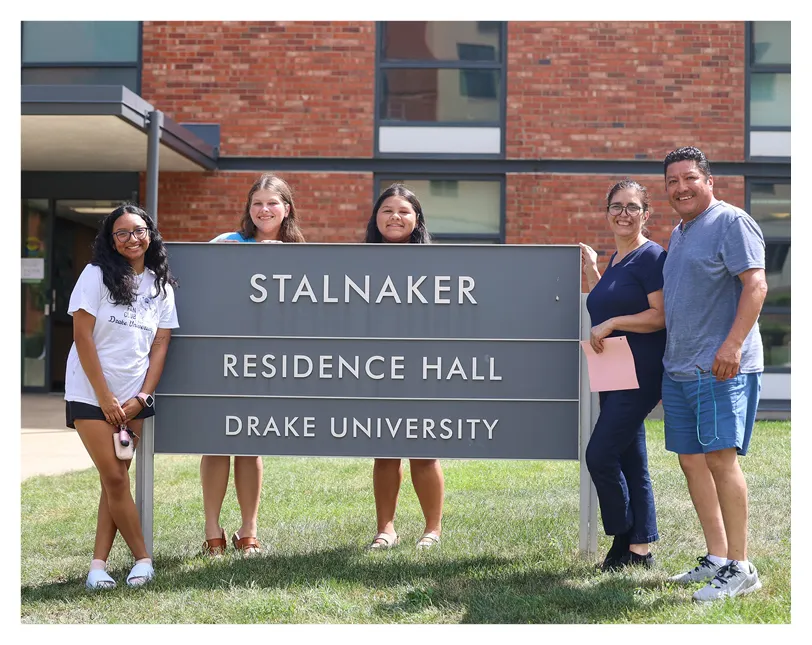
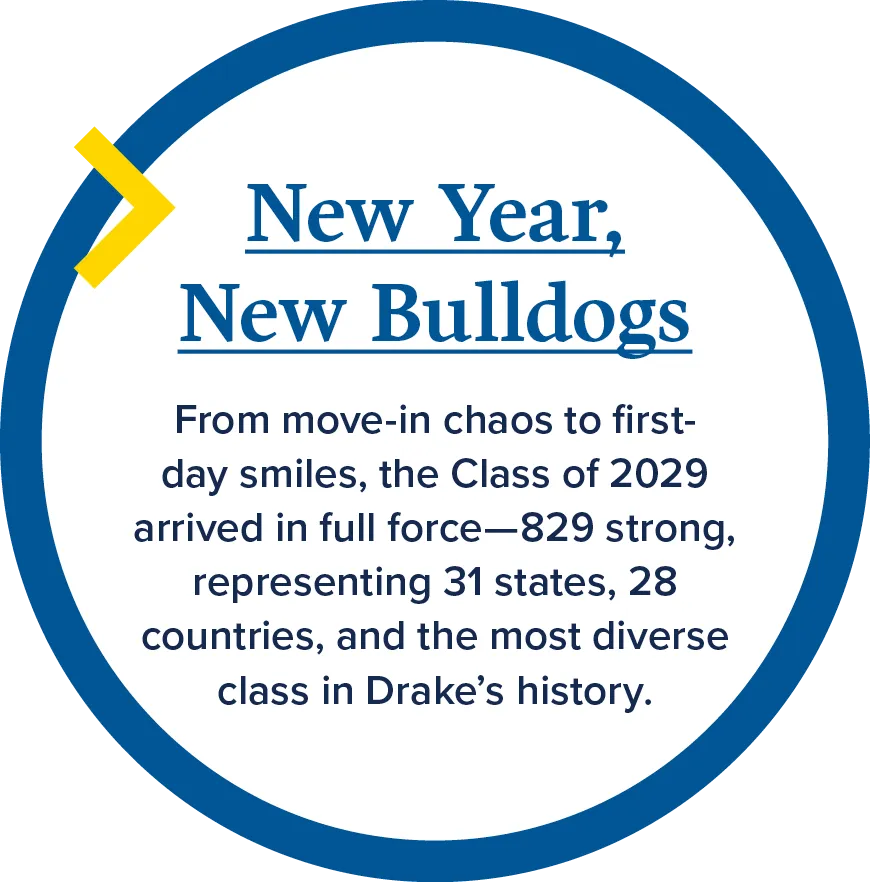
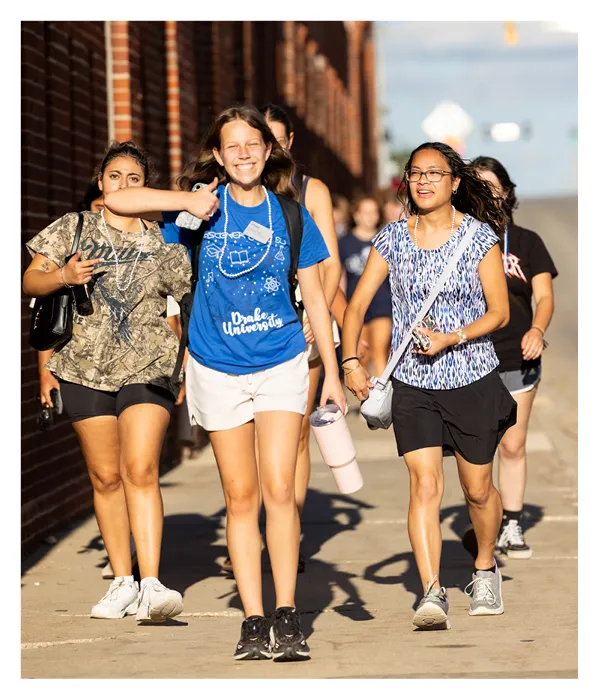
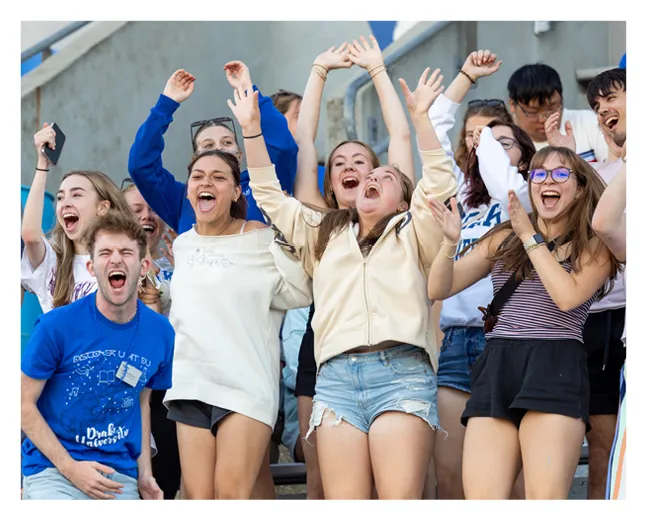
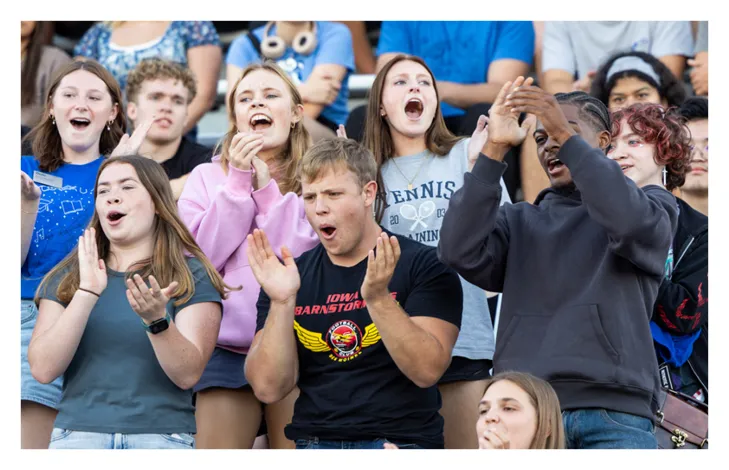
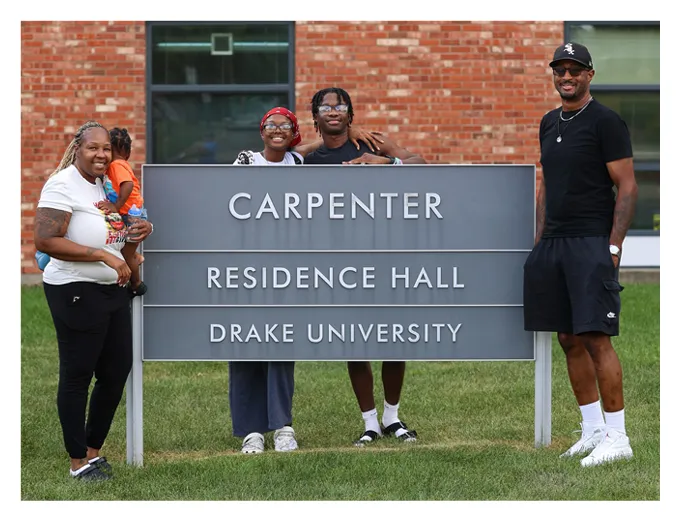
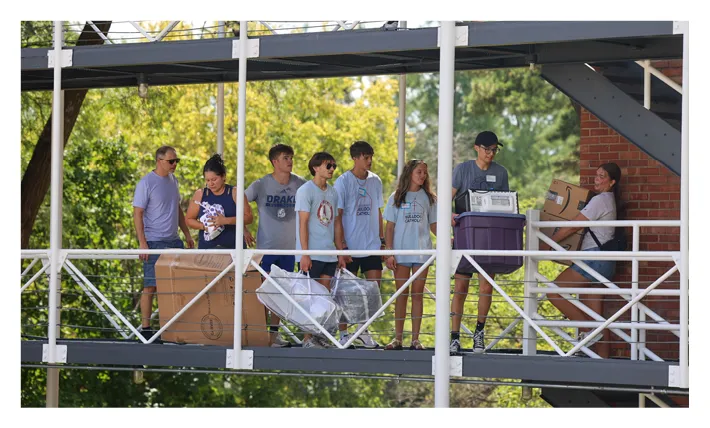
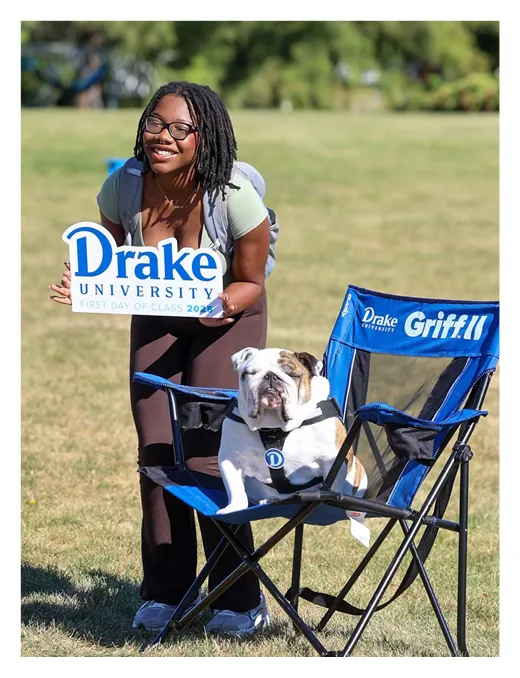
Relays Rewind

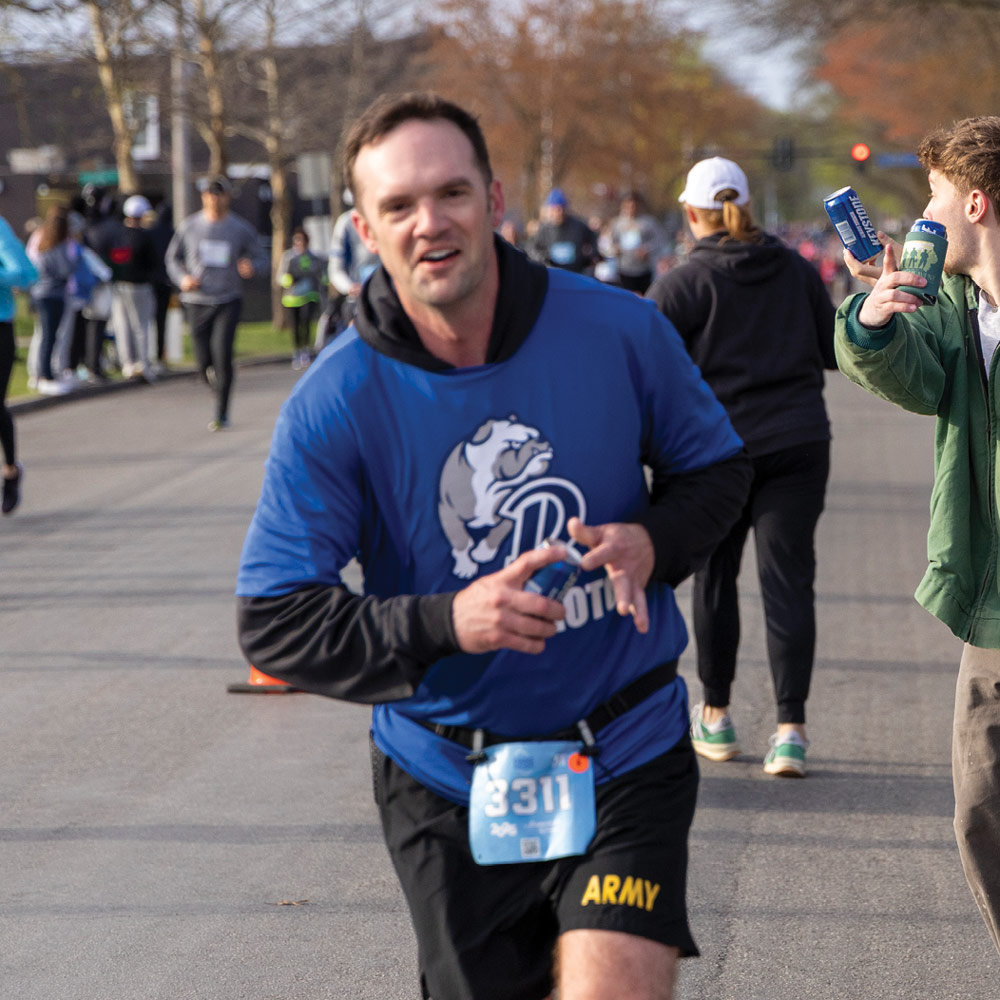
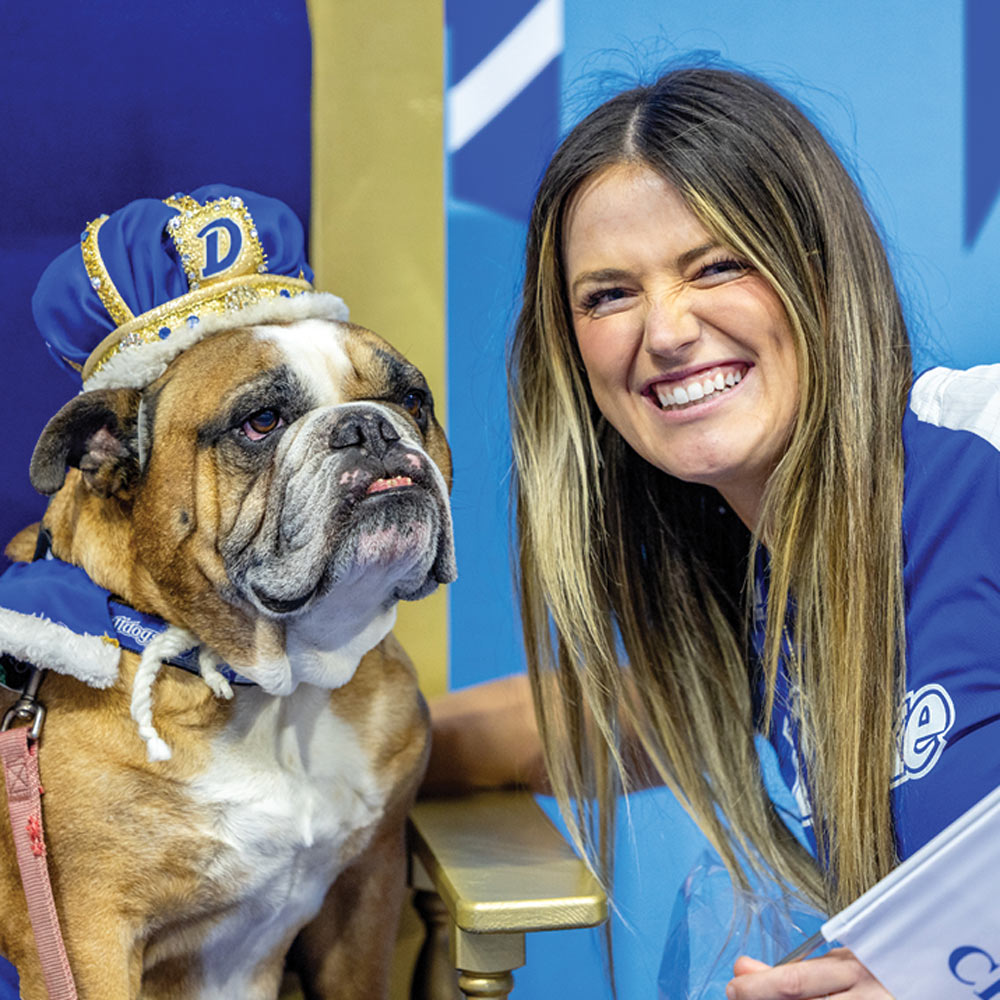
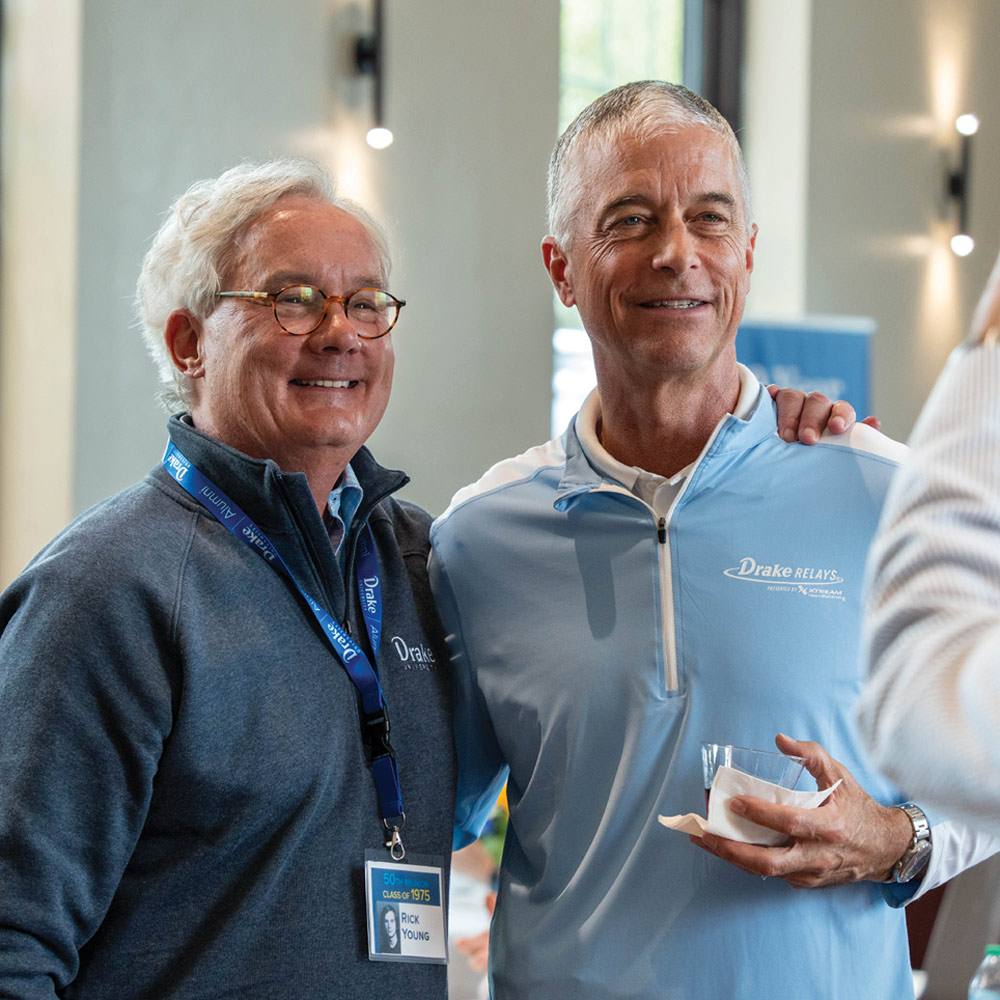
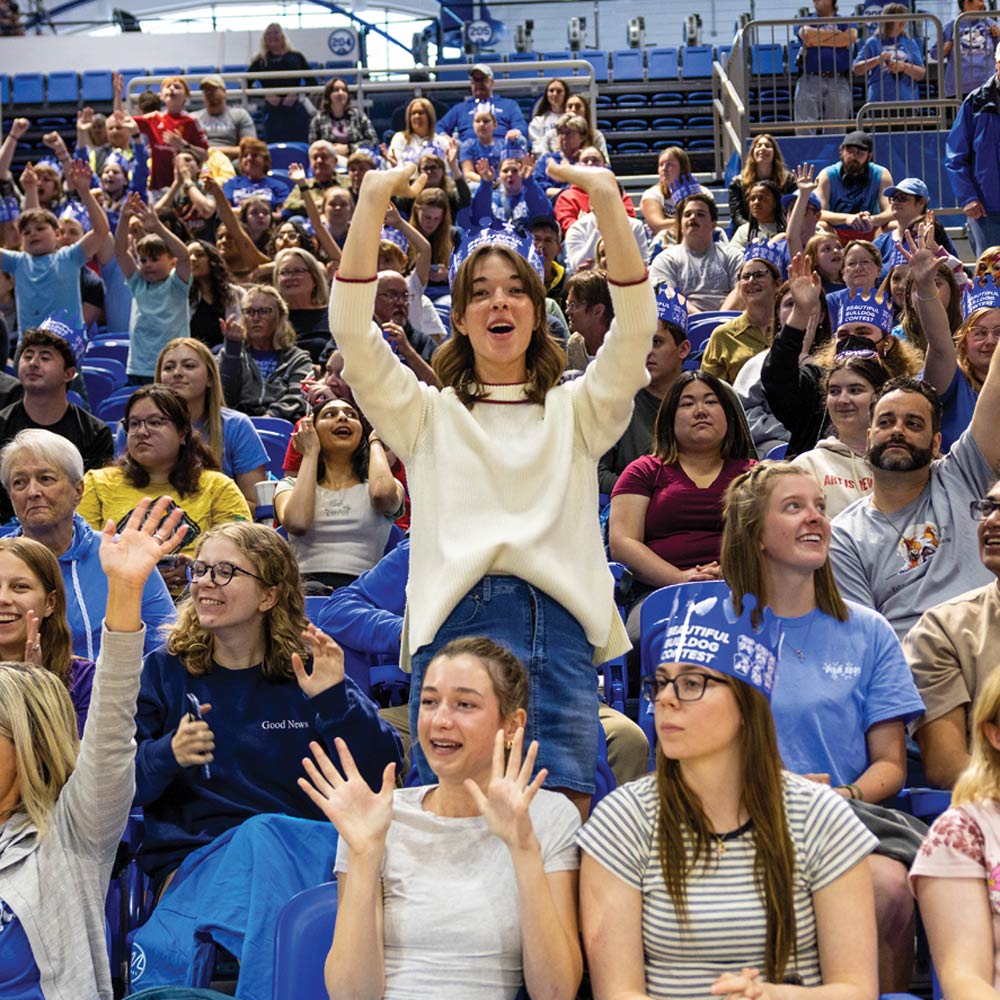
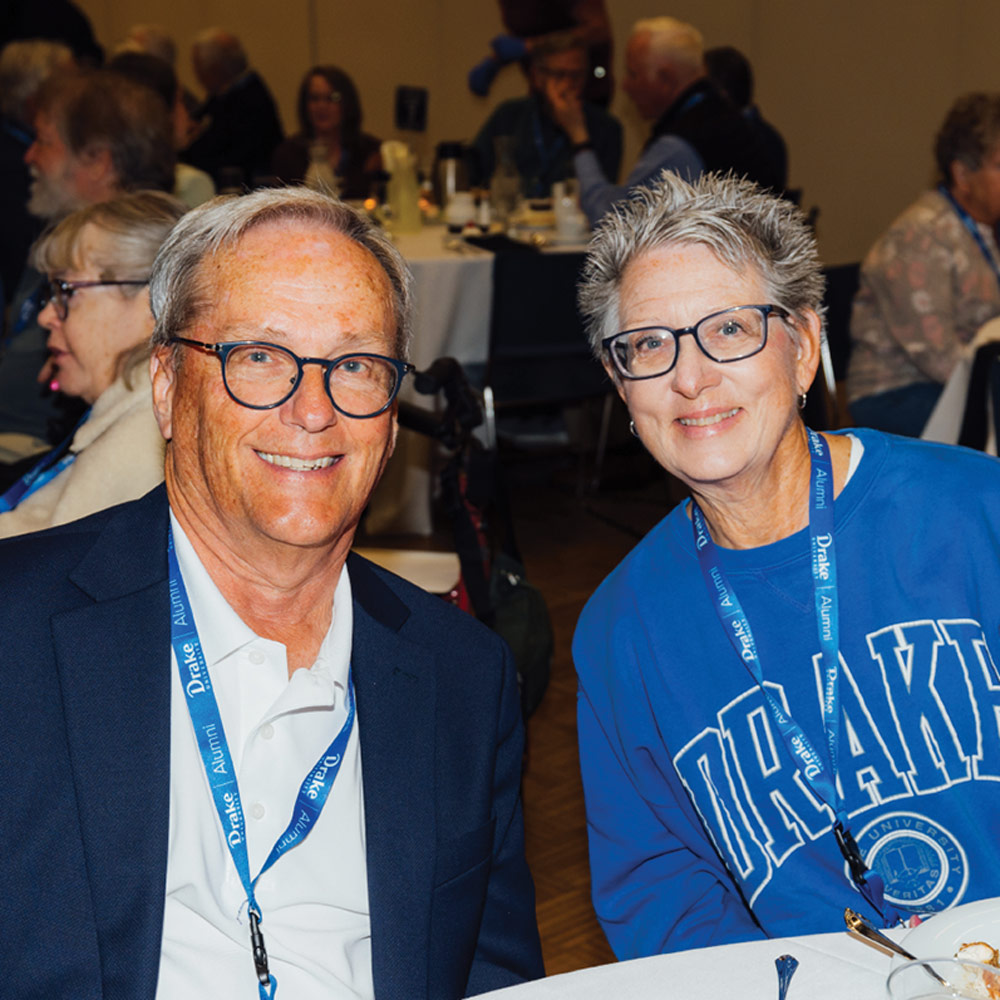
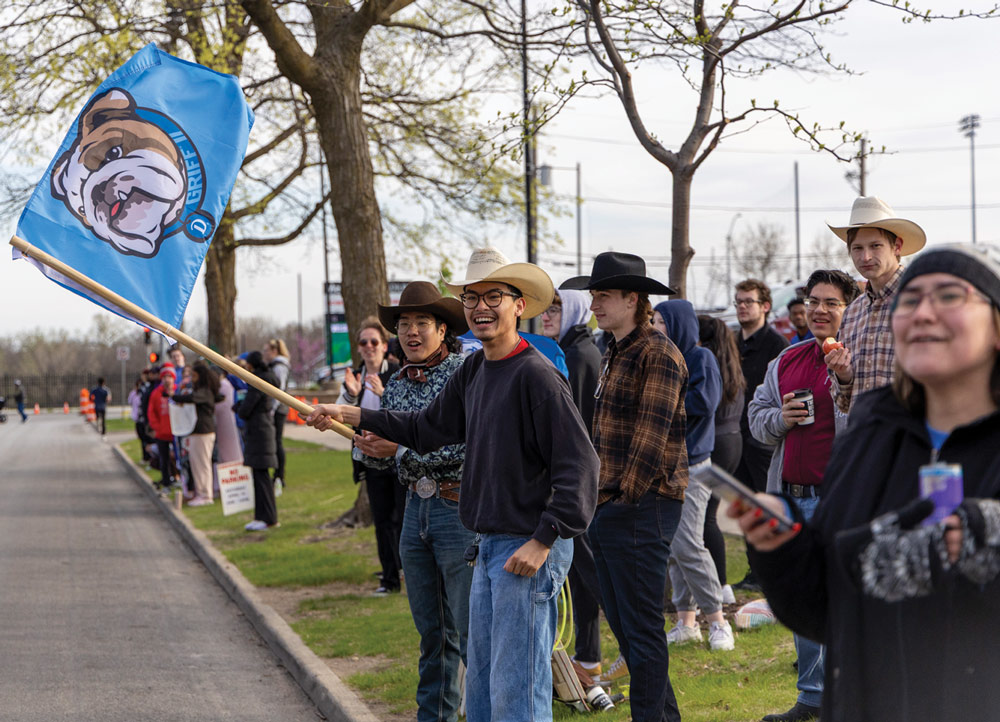
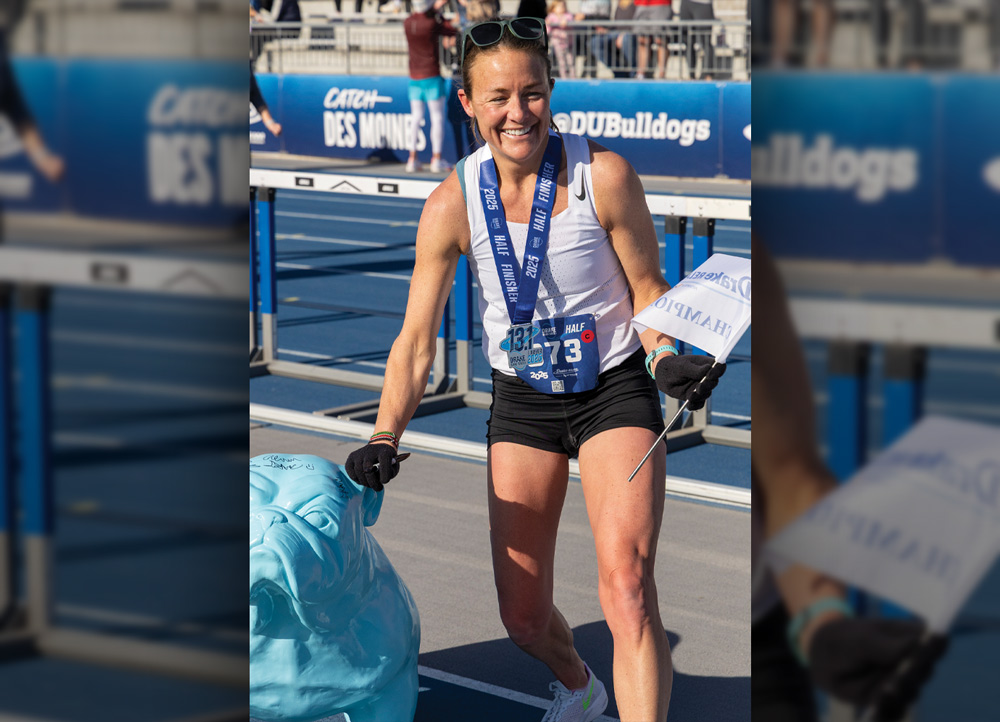
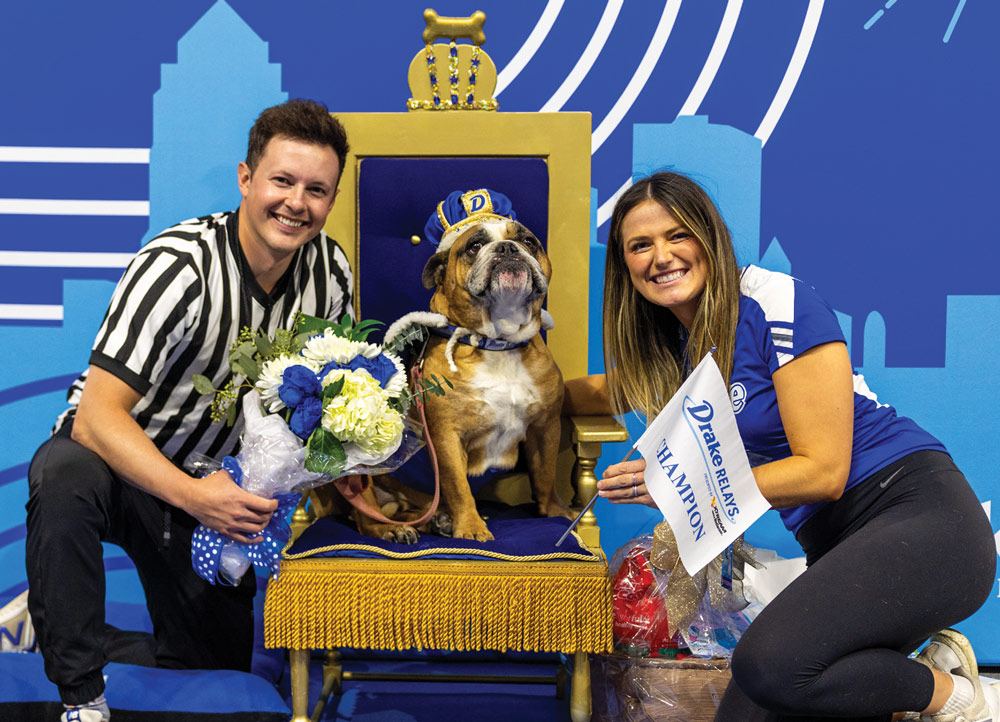
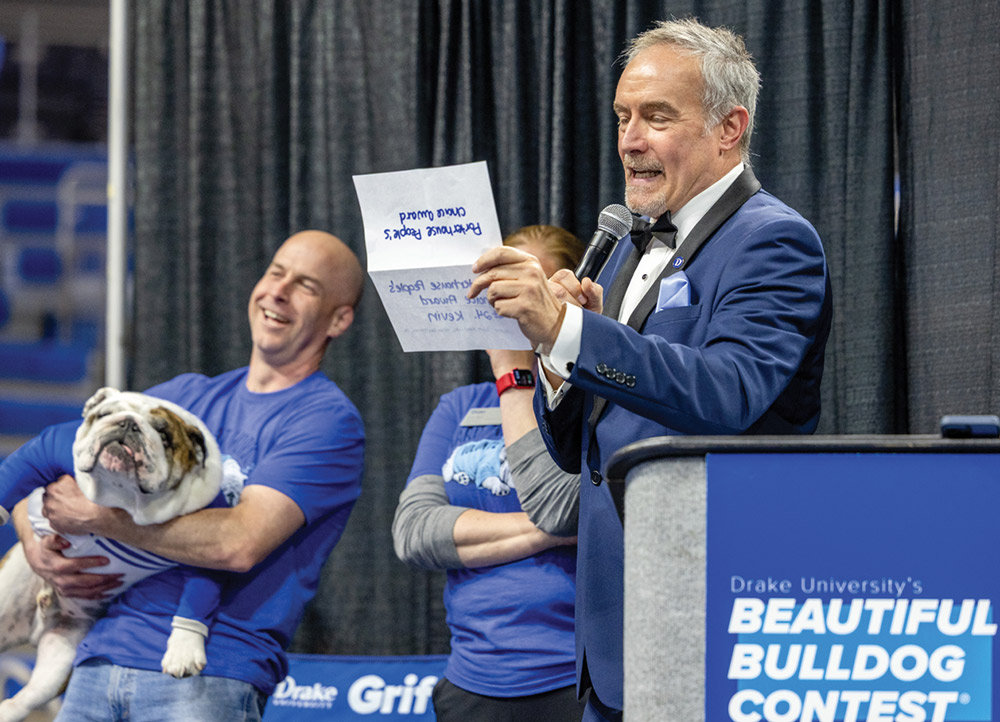
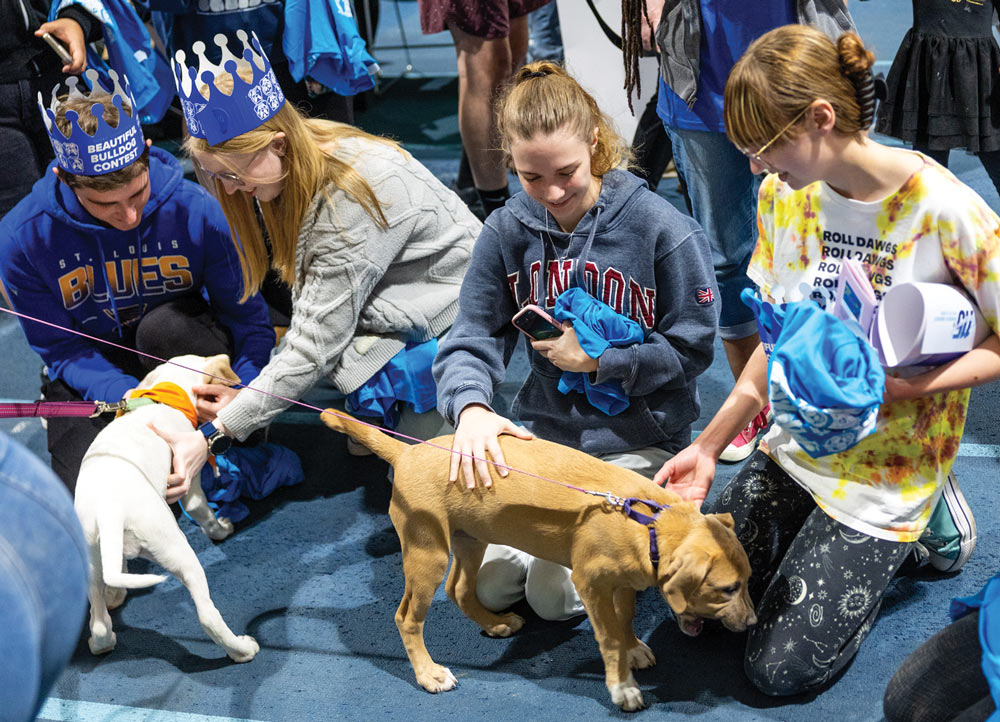
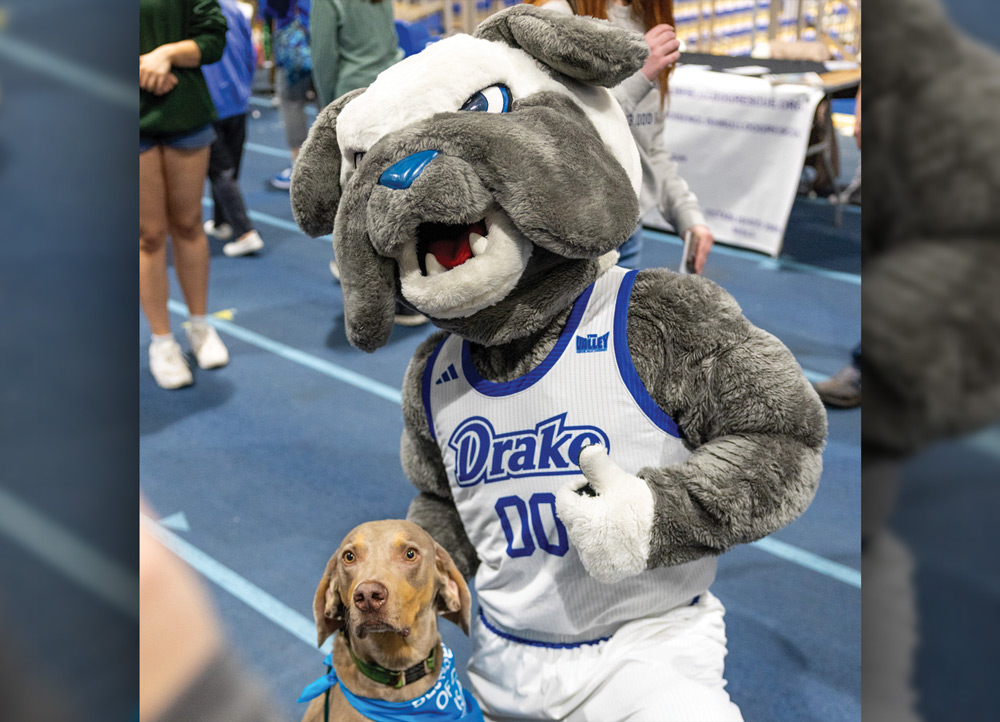
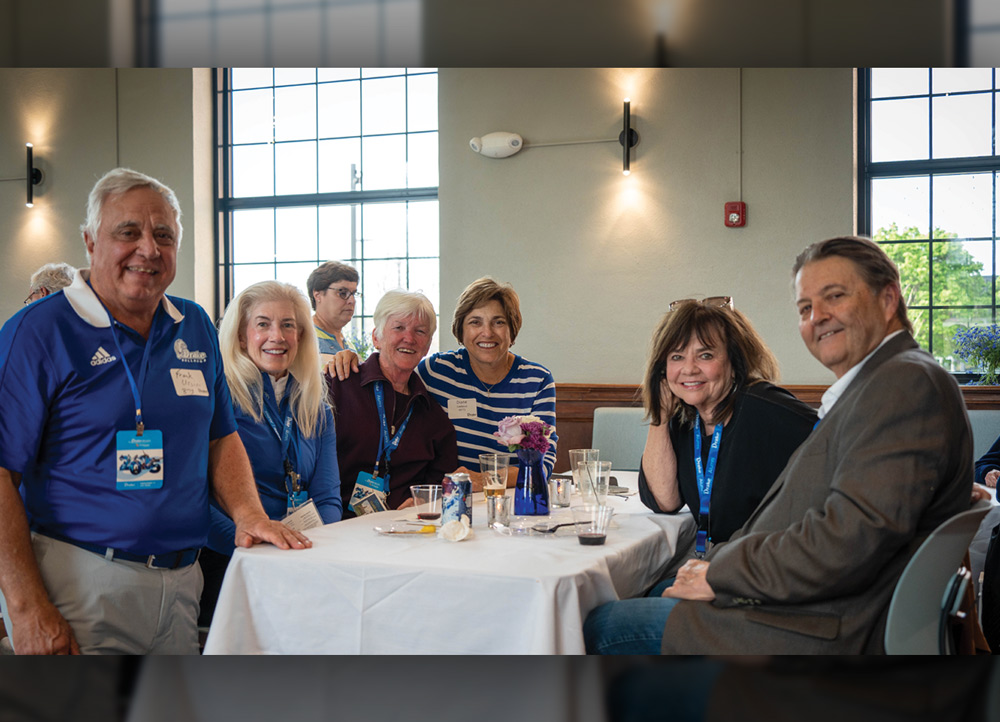
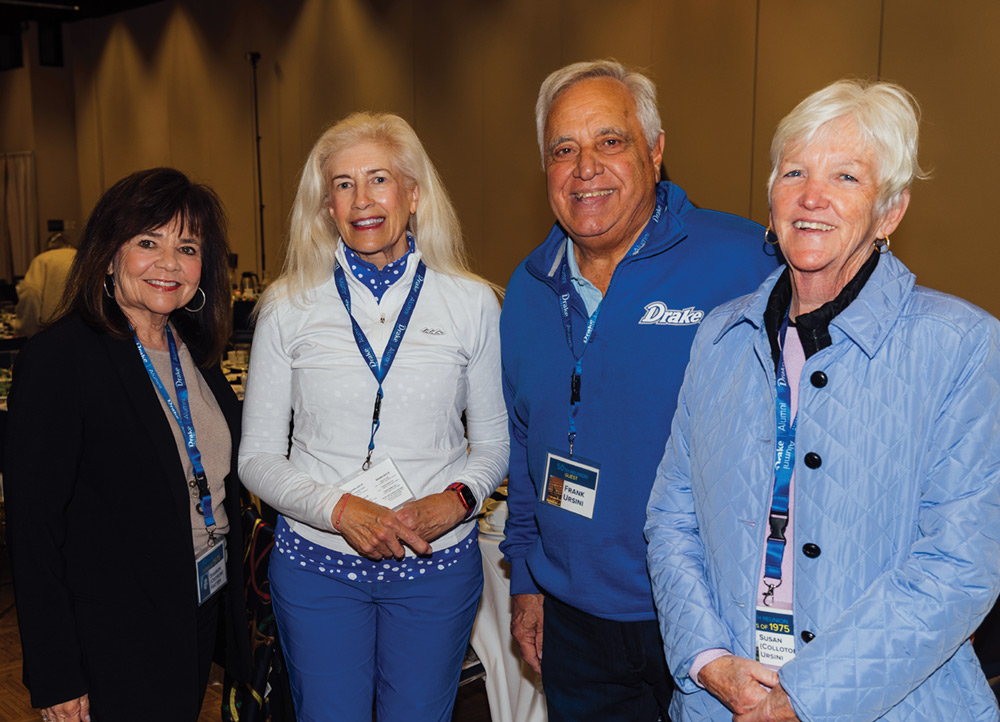
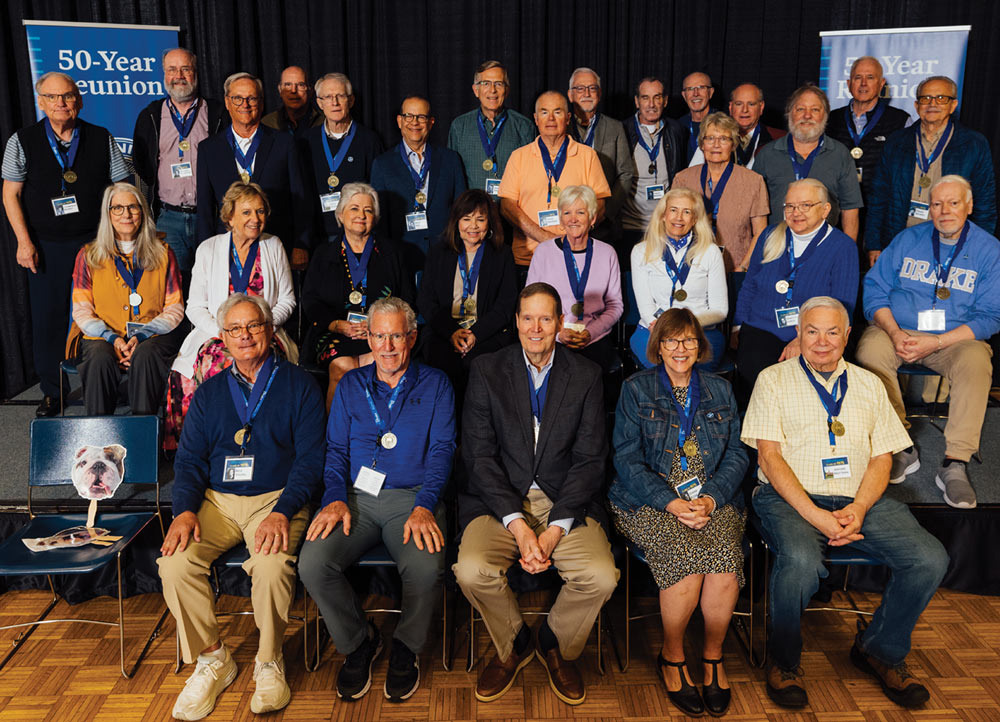
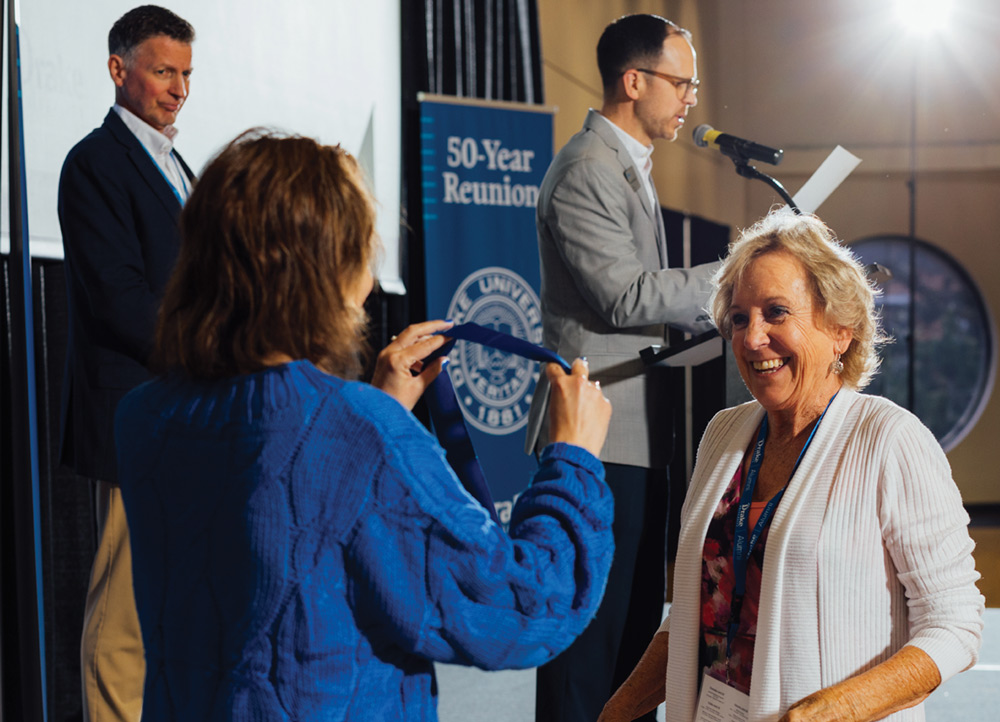
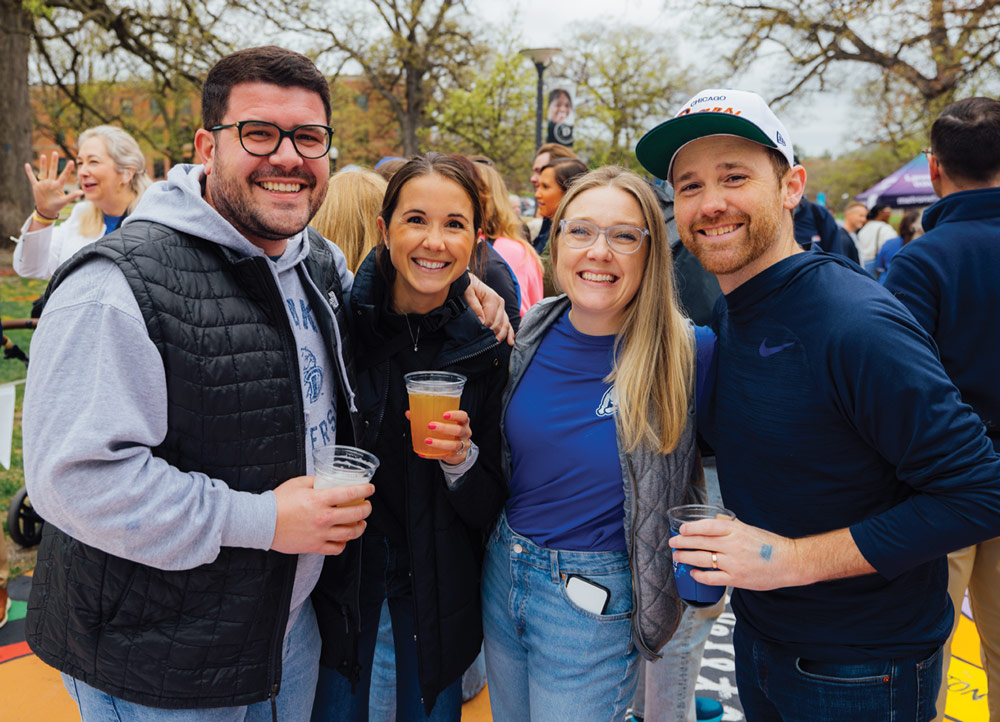
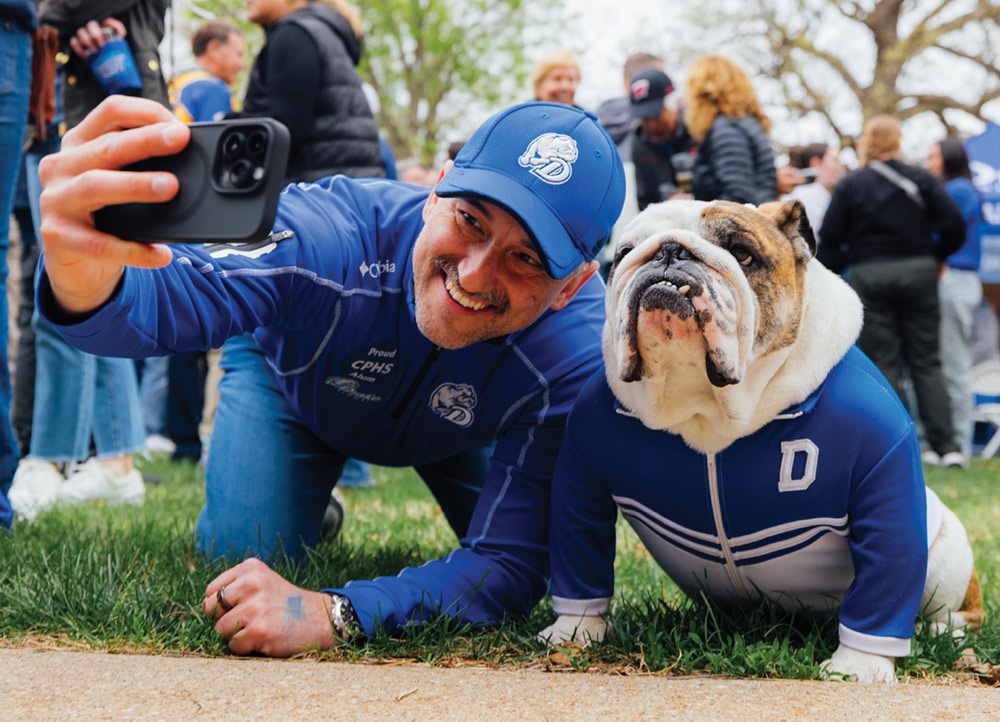
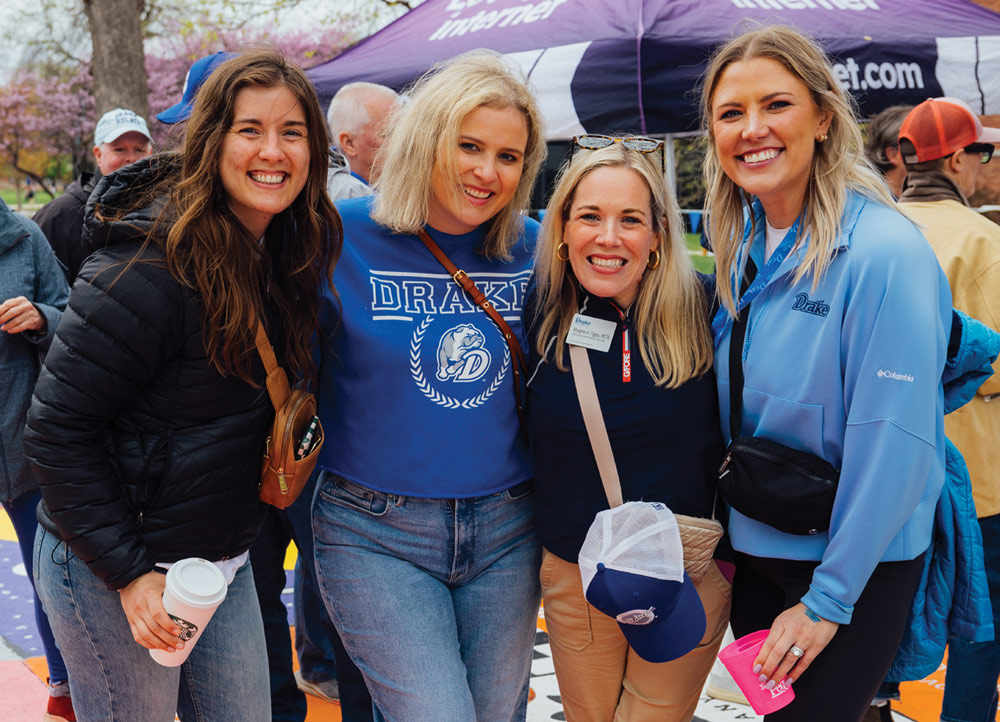

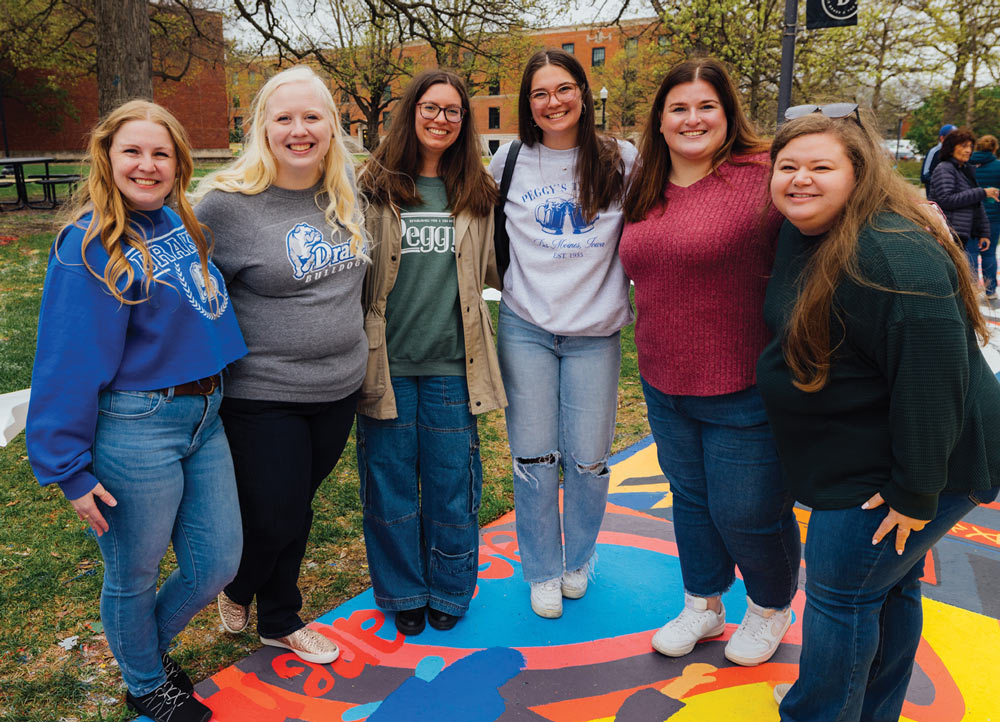

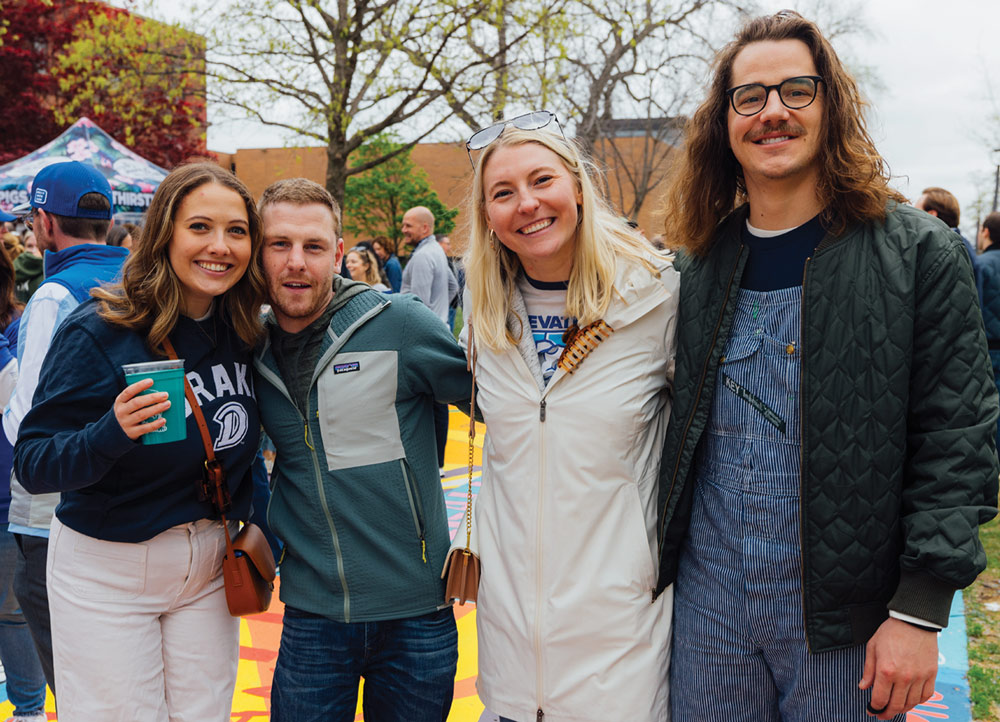
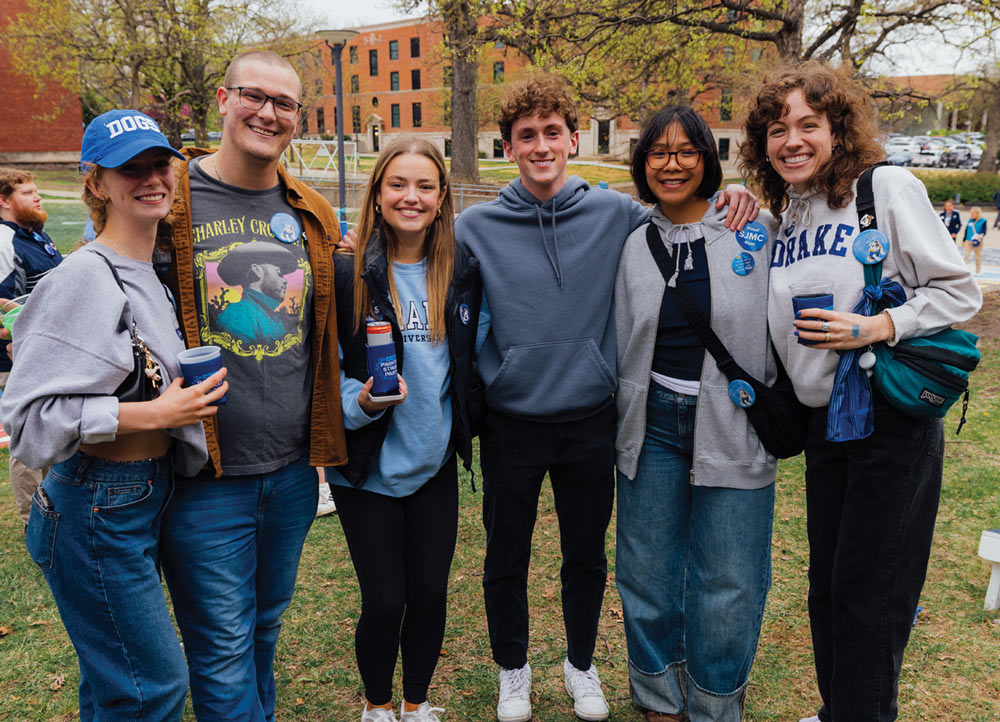
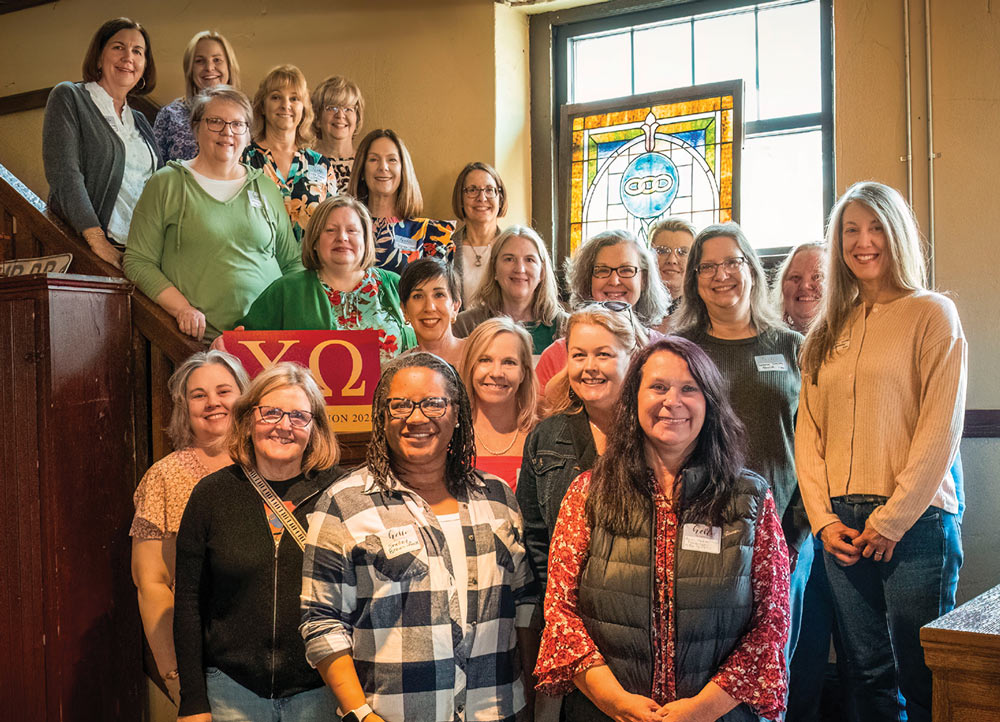
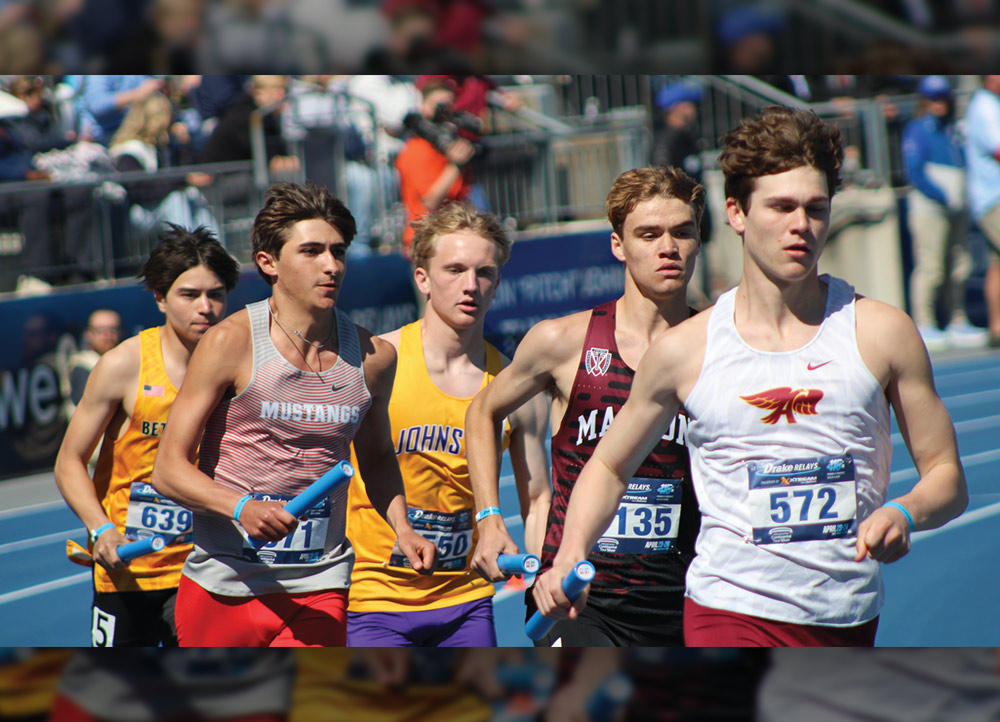
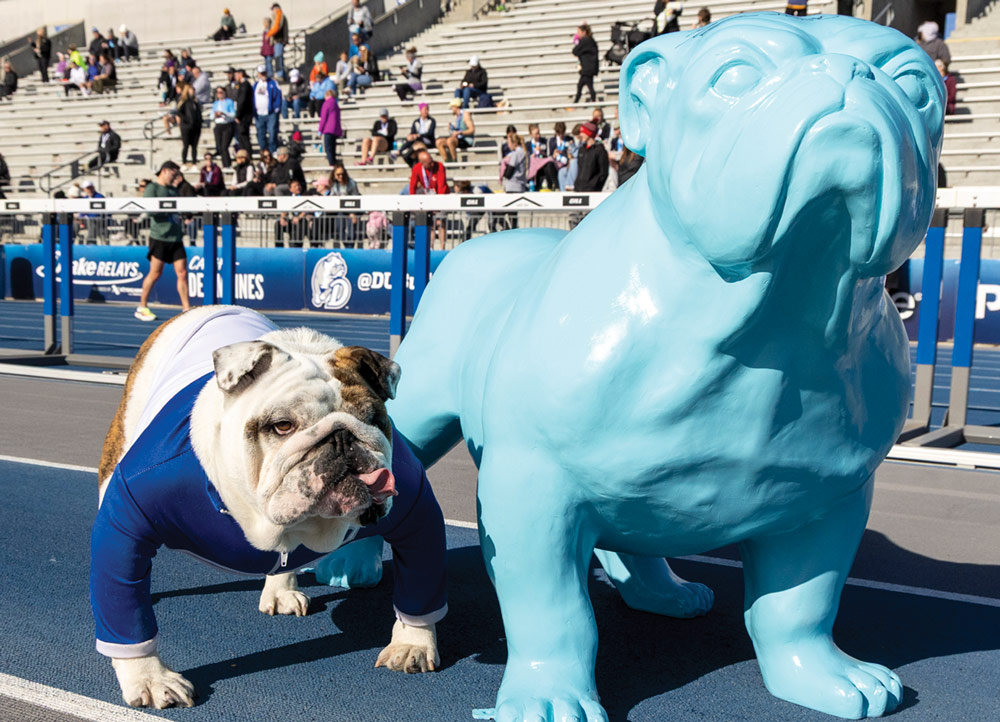
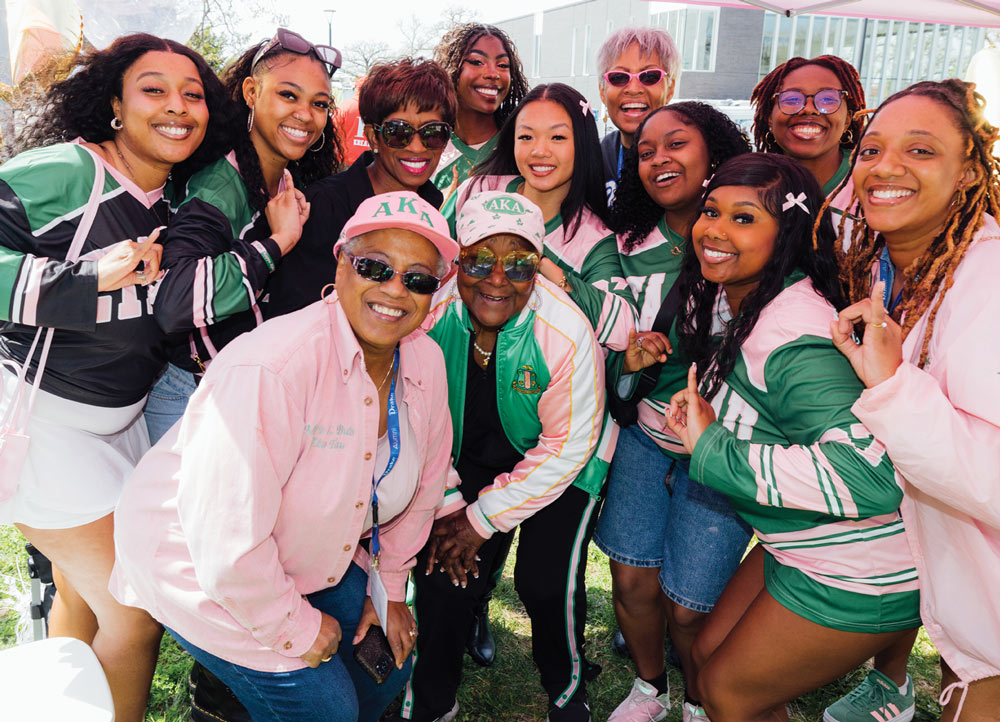
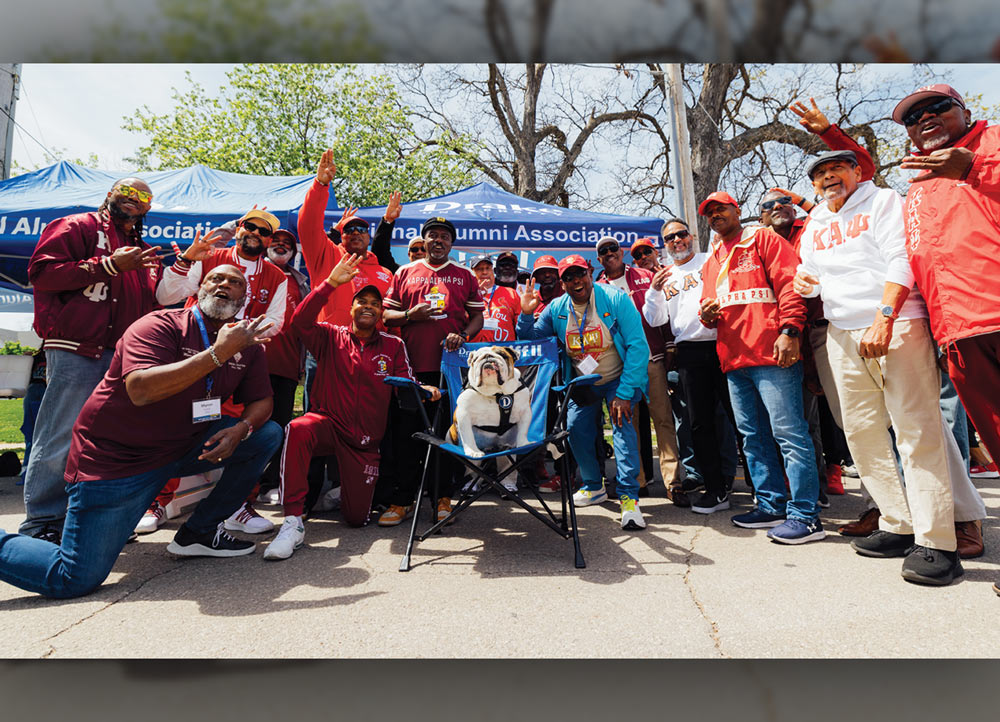
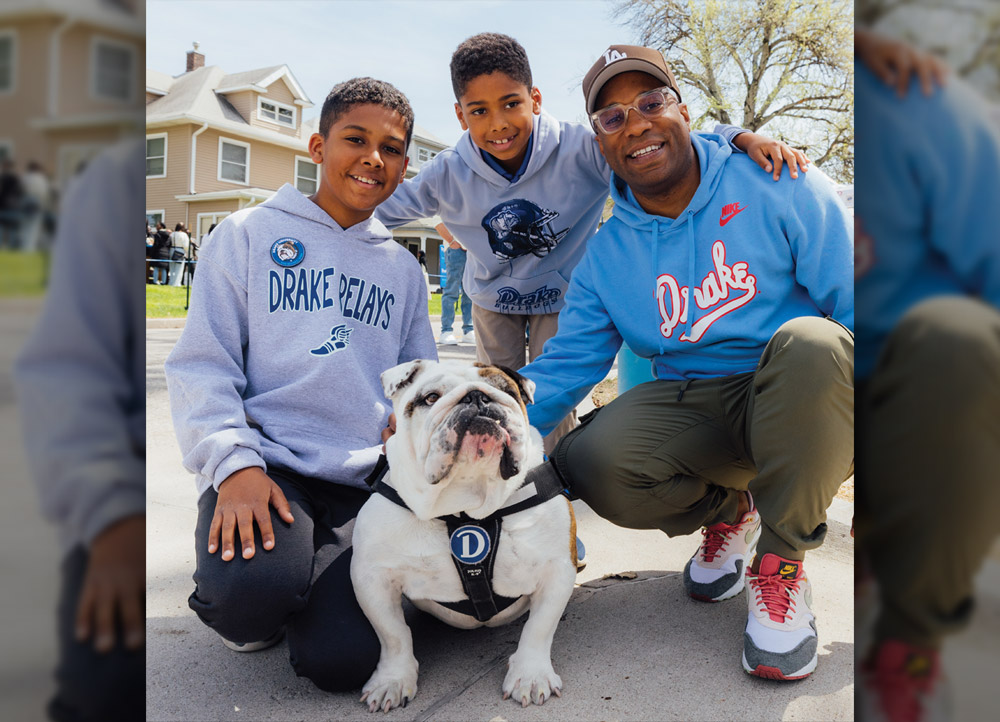
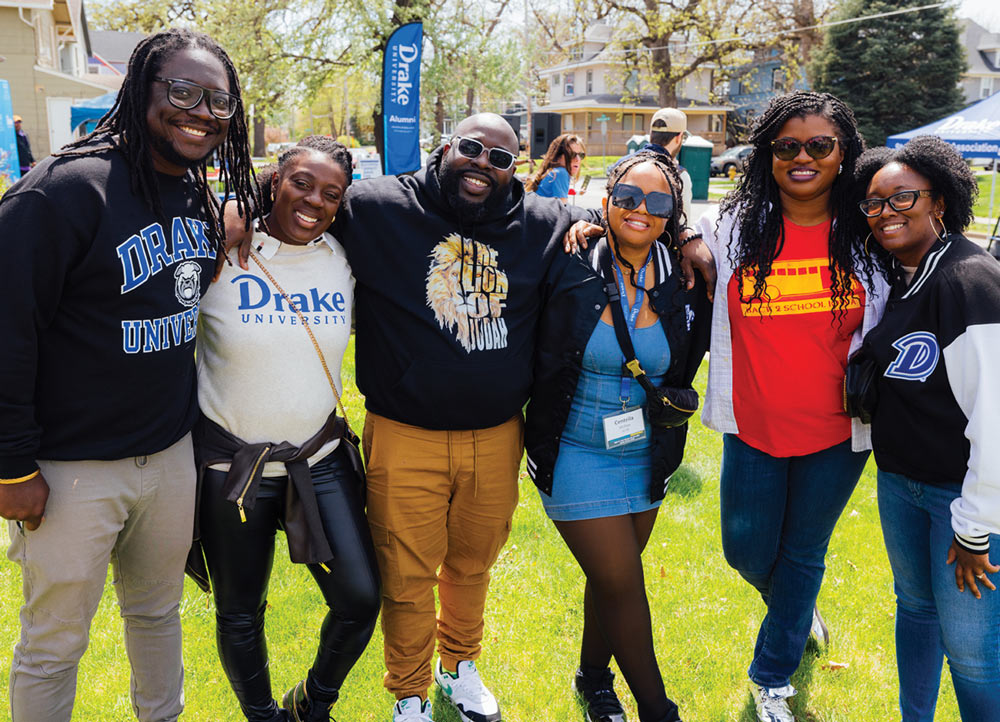
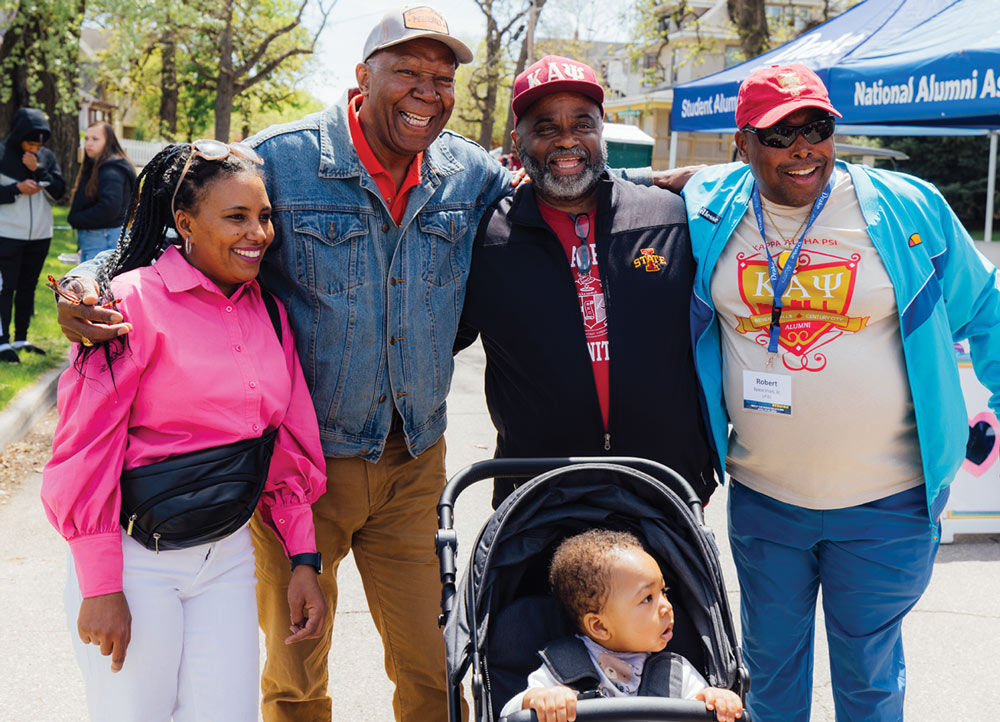

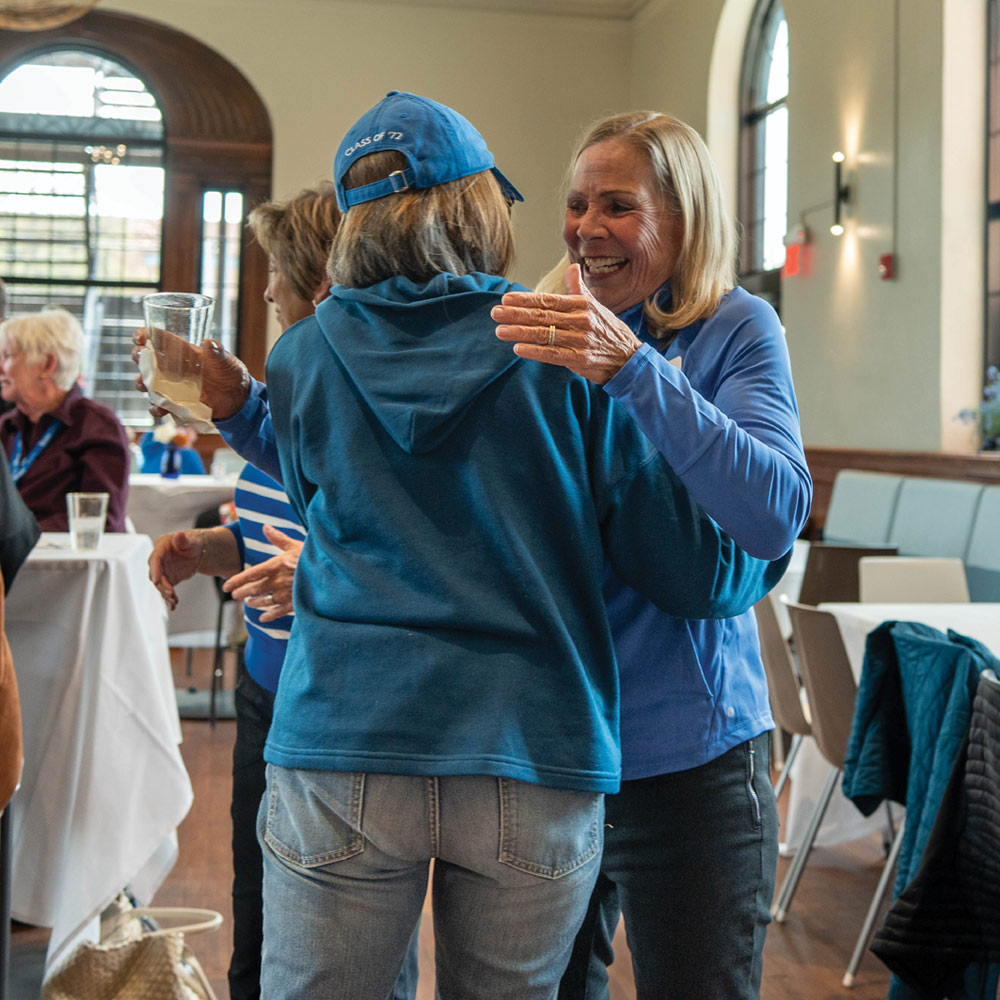
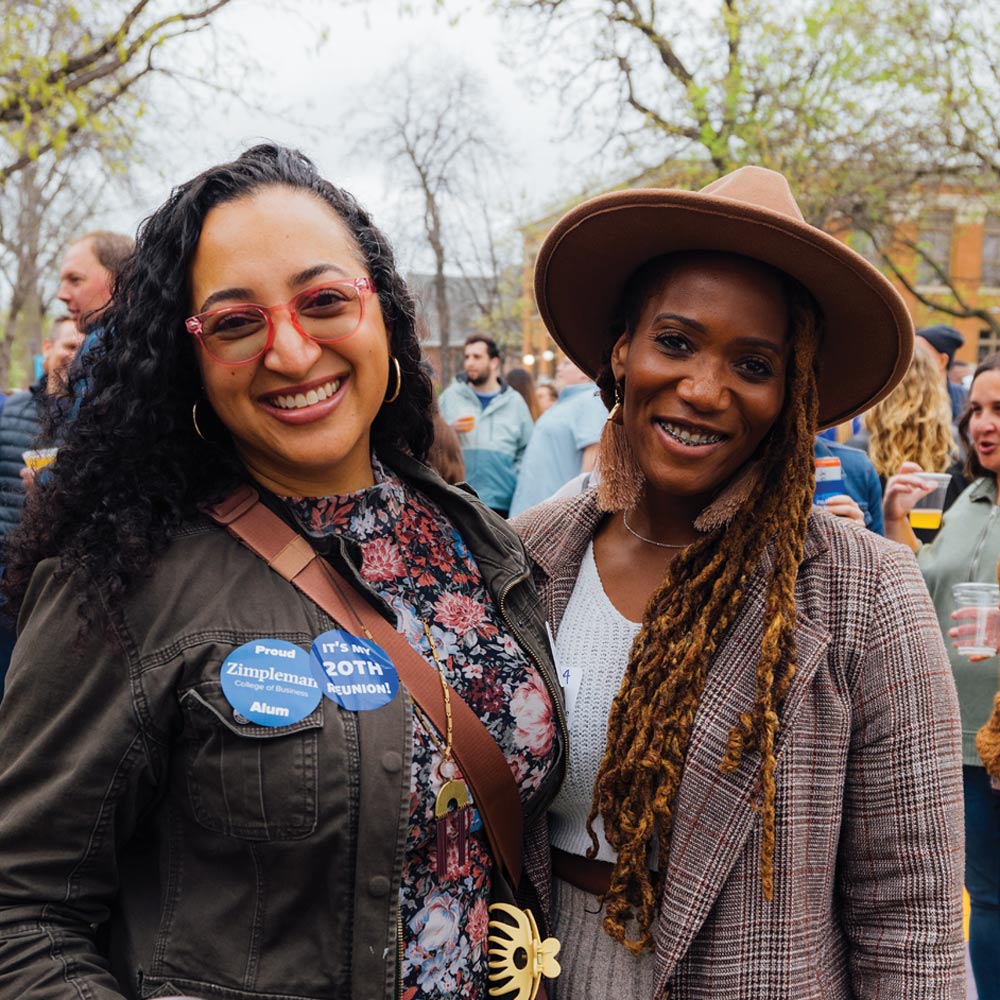
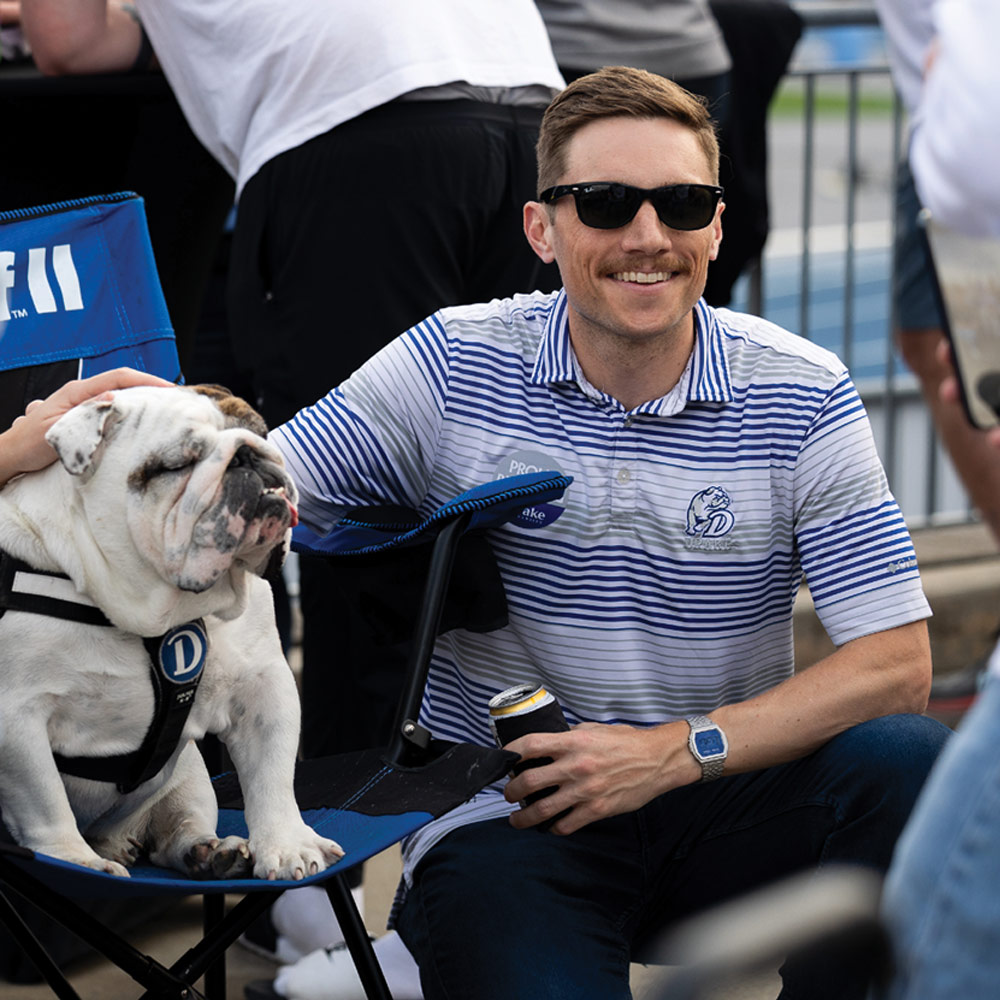


Watch the Third Annual Bucksbaum Lectureship in Business


Claim Your Copy of MONOPOLY: Des Moines Edition


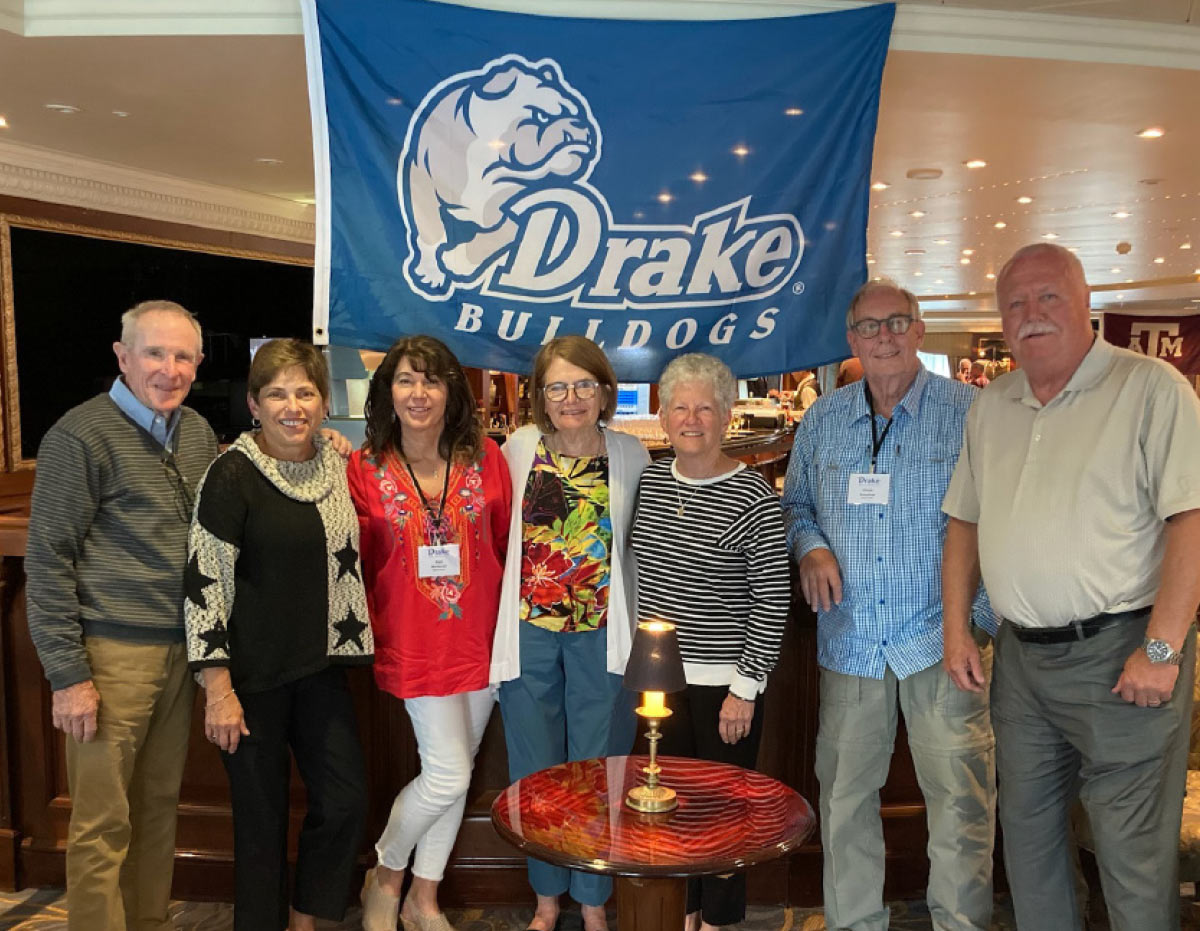
Celebrating 50 Years of Drake Pride—At Sea
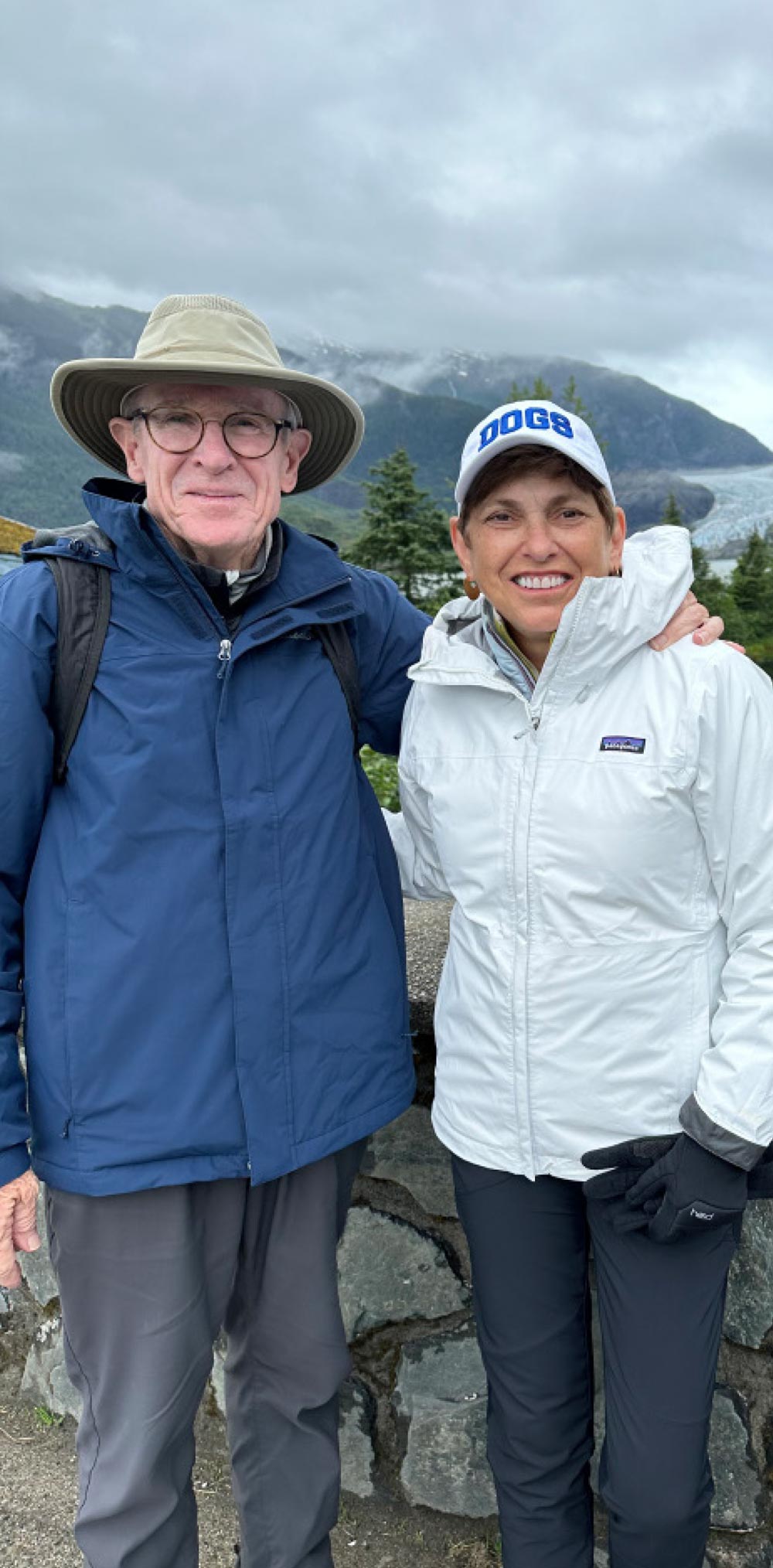
Drake’s Osher Lifelong Learning Institute Celebrates 20 Years of Success with New Lecture Series Honoring the Rays
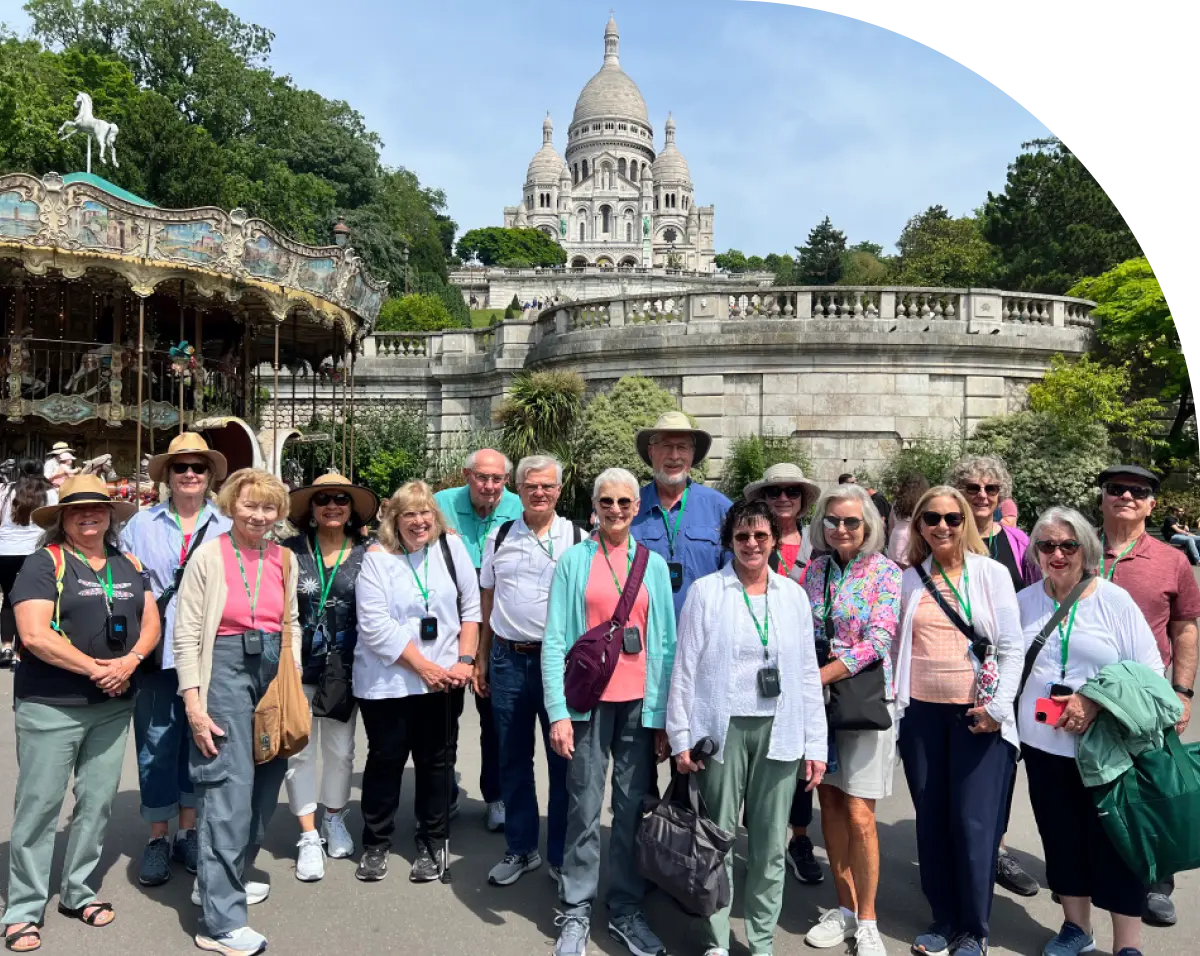
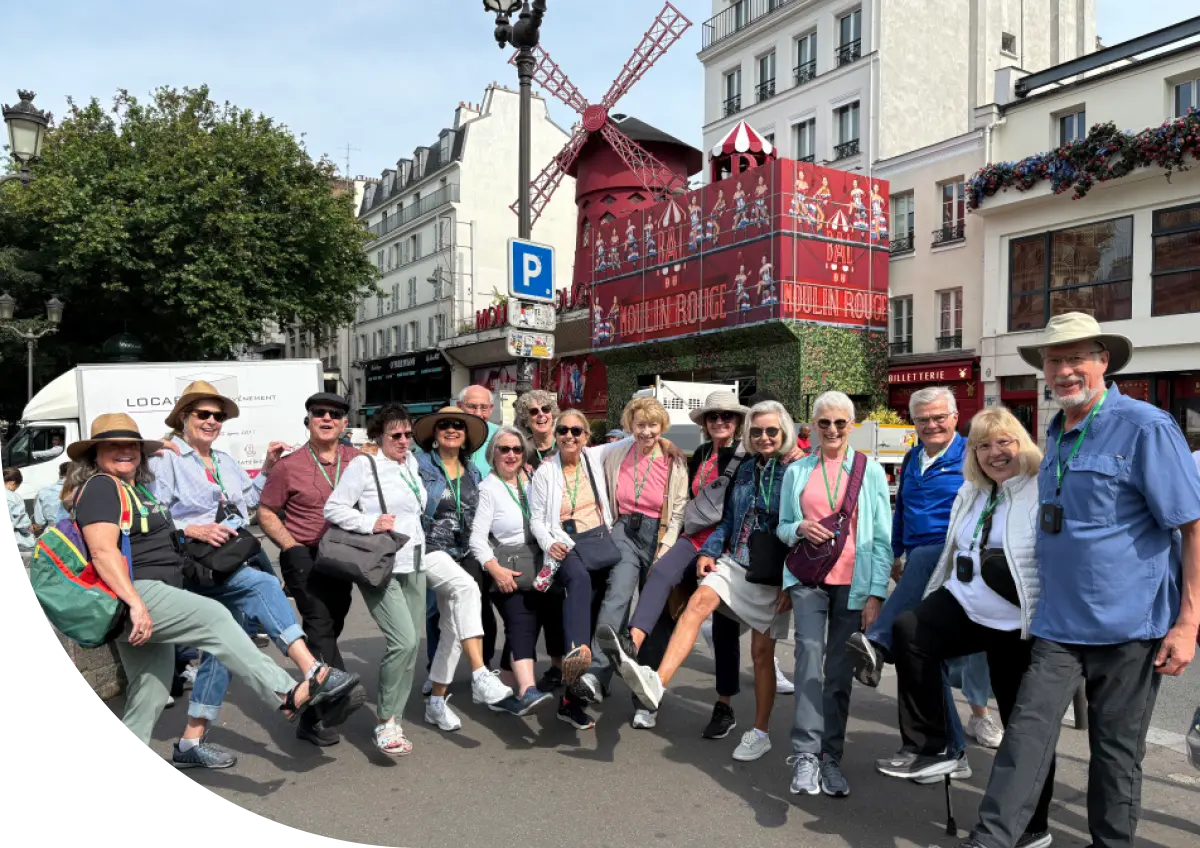
Established in 2004 in honor of Governor Robert D. Ray and his wife, Billie, OLLI has evolved into one of the most respected lifelong learning programs in the country with more than 1,000 members who hail from 19 states. Courses are taught by Drake faculty and community members and range in topics from science and technology to wine tasting and water aerobics.
“The purpose of OLLI at Drake University is to offer a wide variety of non-credit courses, lectures, and social events that stimulate the mind and enrich the lives of our members,” said Tracy Beck, who has been the director of OLLI at Drake for six years. “The best part of the program is there are no tests or grades. Our members are just learning for the fun of it, and often combining their love for learning with travel excursions and social events.”
In June 2025, more than 20 OLLI members traveled to Paris and Normandy where they marveled at the twinkling lights of the Eiffel Tower, attended a mass at Notre Dame Cathedral, cruised the Seine River, explored the Palace of Versailles, and indulged in some of the best cheeses and ciders in the world.
This fall, OLLI further expanded its programming with the launch of the Governor Robert D. and Billie Ray Lecture series. The launch was celebrated with an inaugural lecture on Sept. 26, Robert D. Ray 97th birthday. Ambassador Kenneth Quinn, president emeritus of the World Food Prize Foundation and a popular OLLI instructor delivered the keynote.
While membership is at an all-time high, Beck said there is always room for more. “Registration is now open for our spring courses, which includes interesting and fun topics in bike rides, political panels, world affairs, and culinary adventures. Courses are offered in person, hybrid, and Zoom, expanding our reach to more members all over the world.”
OLLI membership is open to all individuals 50 and better for the cost of $75 per academic year.
Deans’ Corner



 Alanah Mitchell
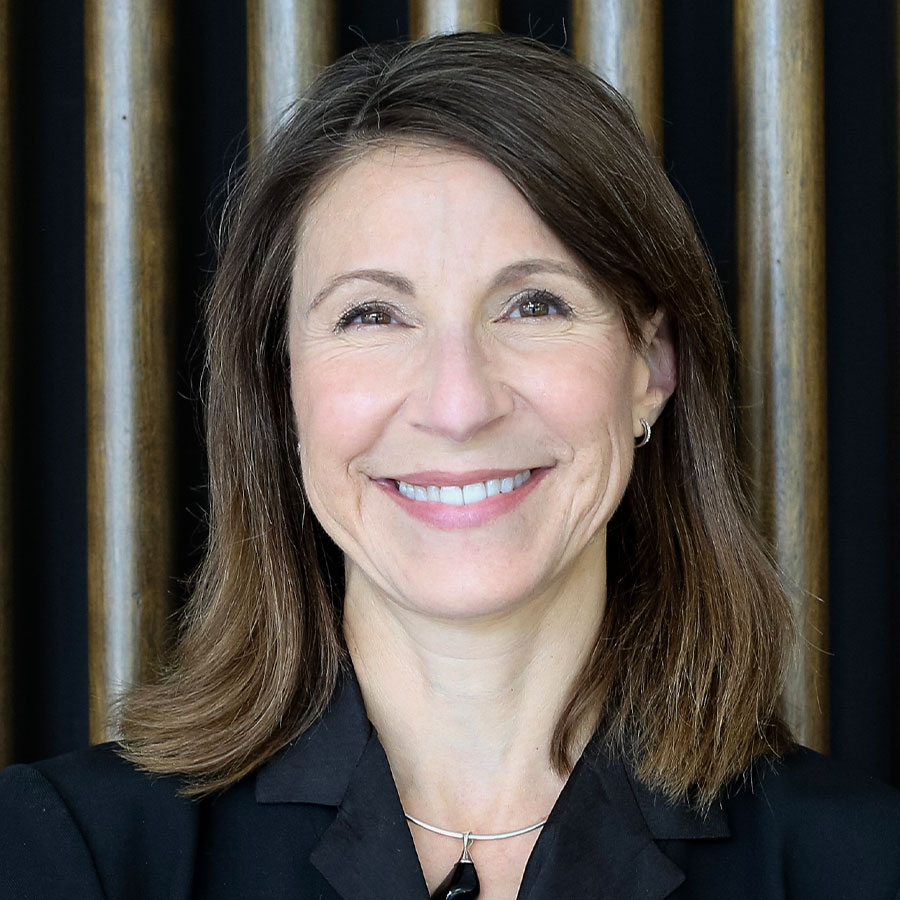
Catherine Staub
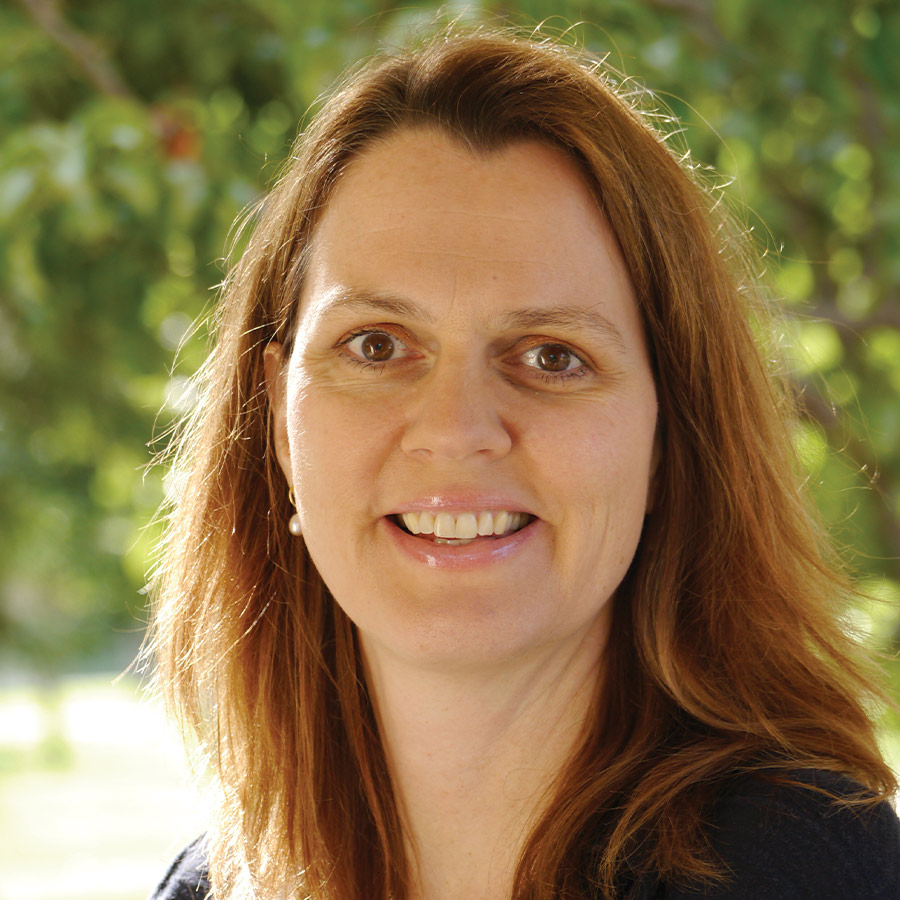
Gesine Gerhard
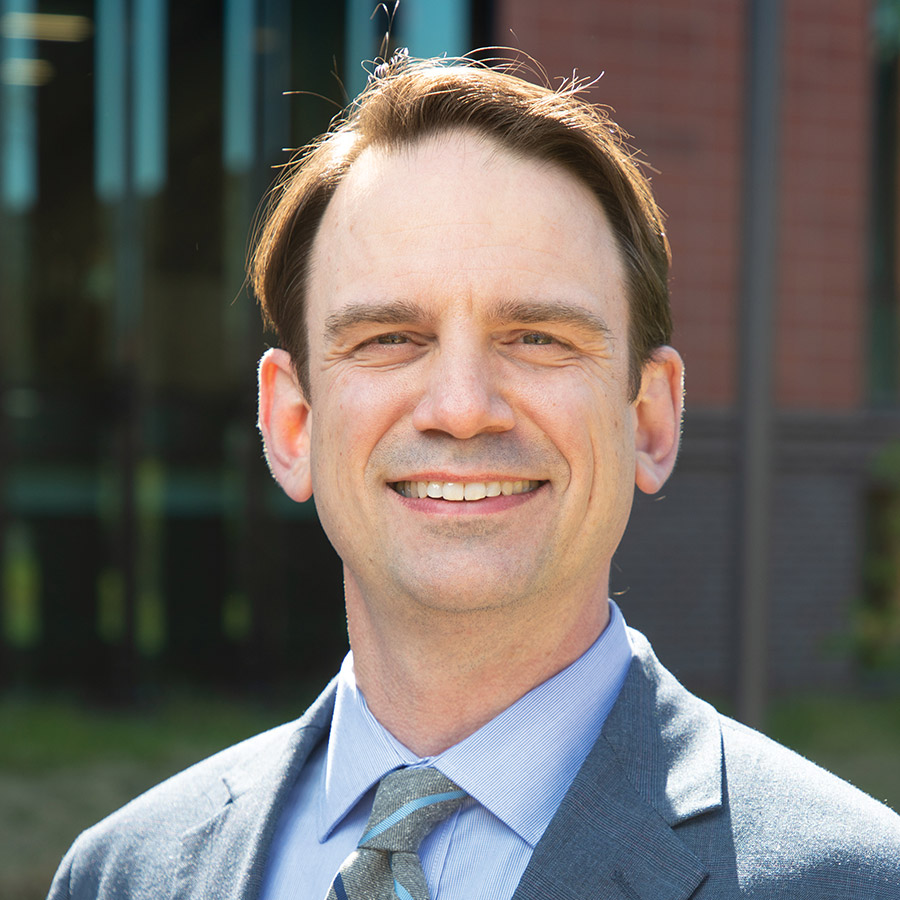
Ryan Wise
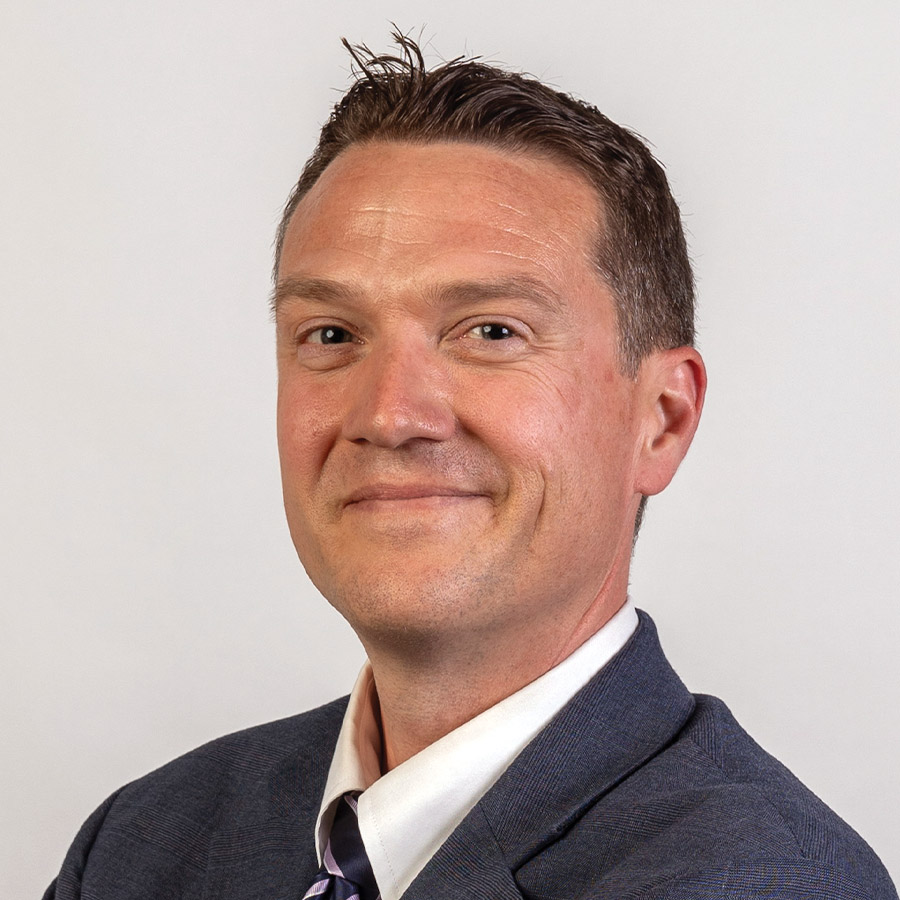
Eric Maki
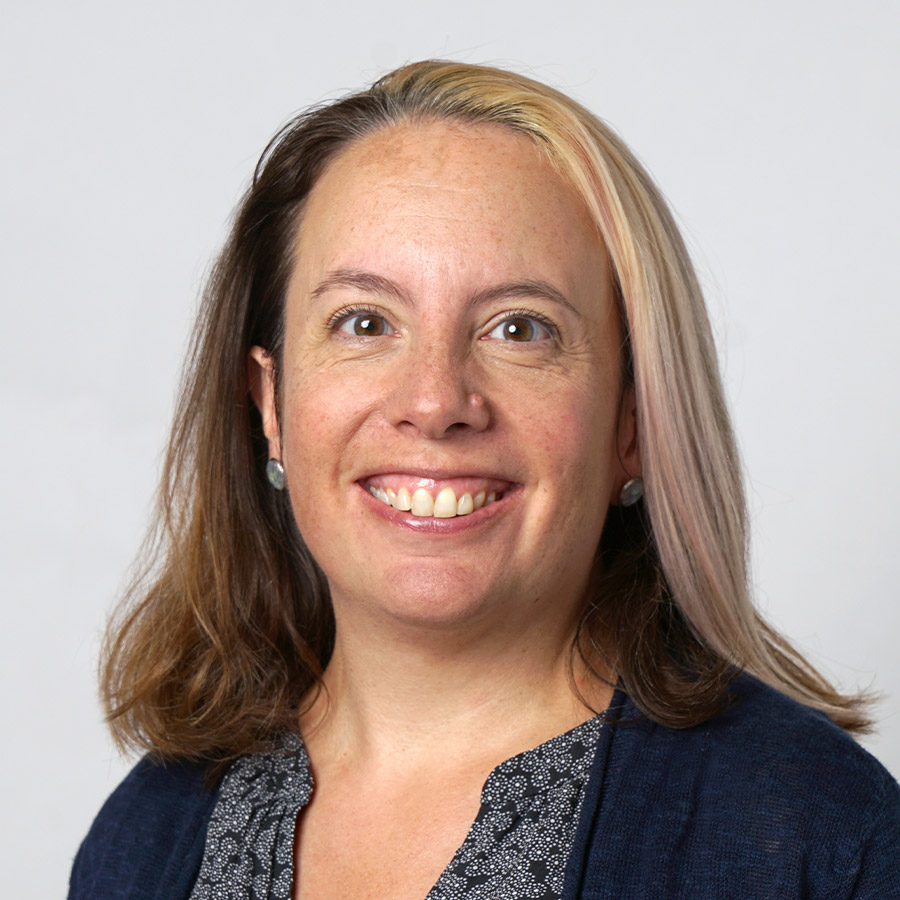
Megan Brown
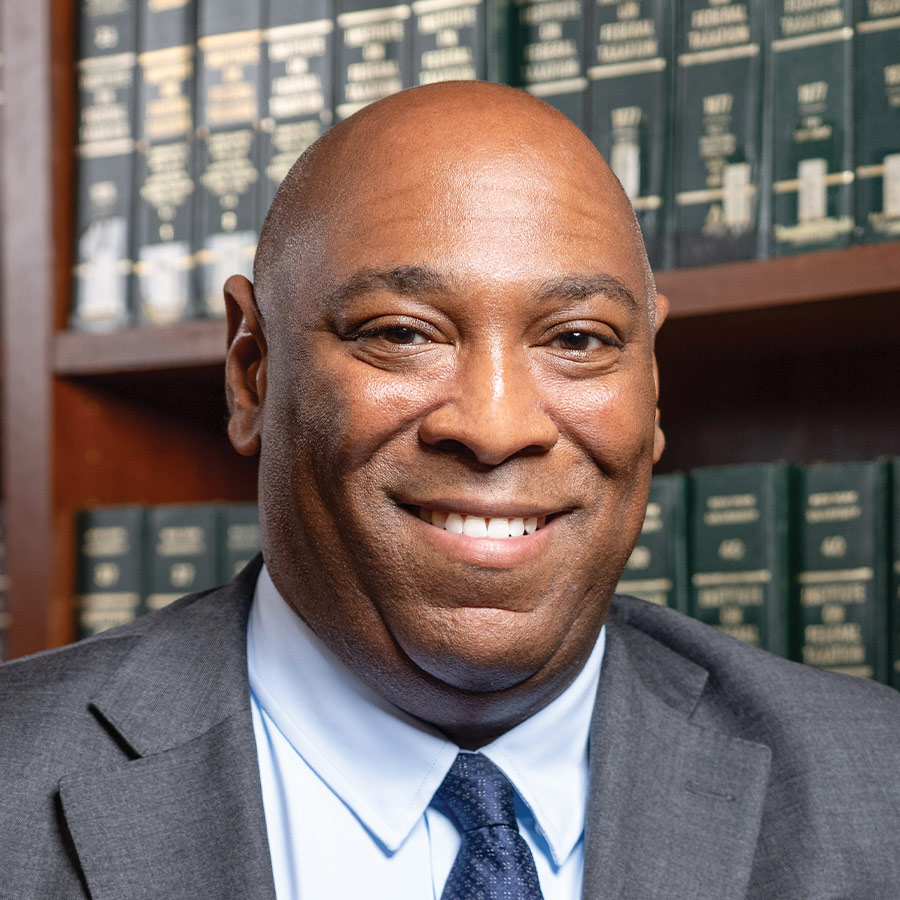
Roscoe Jones
Teri Koch
Drake Stadium’s Enduring Legacy
Drake Stadium opened on October 10, 1925, with the Bulldogs defeating Kansas State in a football game. Drake Stadium was designed to be the home of Drake University football and, famously, the annual Drake Relays: “America’s Athletic Classic.” Even before that, incredible athletes gathered to compete as early as 1910 when the University hosted the first Drake Relays at Haskins Field, the precursor to Drake Stadium.
“The Drake Relays are unique in Iowa; it’s the only annual sporting event where fans can consistently see Olympic gold medalists perform,” said Mike Mahon, former sports information director at Drake University. “With over a hundred years of history dating back to 1910, it’s a given that rain or shine, athletes will deliver world-class times and distances amidst vibrant pageantry.”
Drake Stadium has hosted the Drake Relays, Drake football games, and a variety of high school football games. The high school contests often included rivalry games between teams like West Des Moines Valley High School and Dowling Catholic High School. The stadium also served as the home field for Des Moines Roosevelt High School’s football team for several years.
In 1989, one of the biggest changes in the stadium’s history was an update to the track surface. Drake installed a new blue tartan track surface and the “Blue Oval” was inaugurated. At the same time, the track was renamed “The Jim Duncan Track” in honor of the longtime Drake Relays public address announcer. Duncan began announcing the Drake Relays in 1951 and served in that role until 1989.
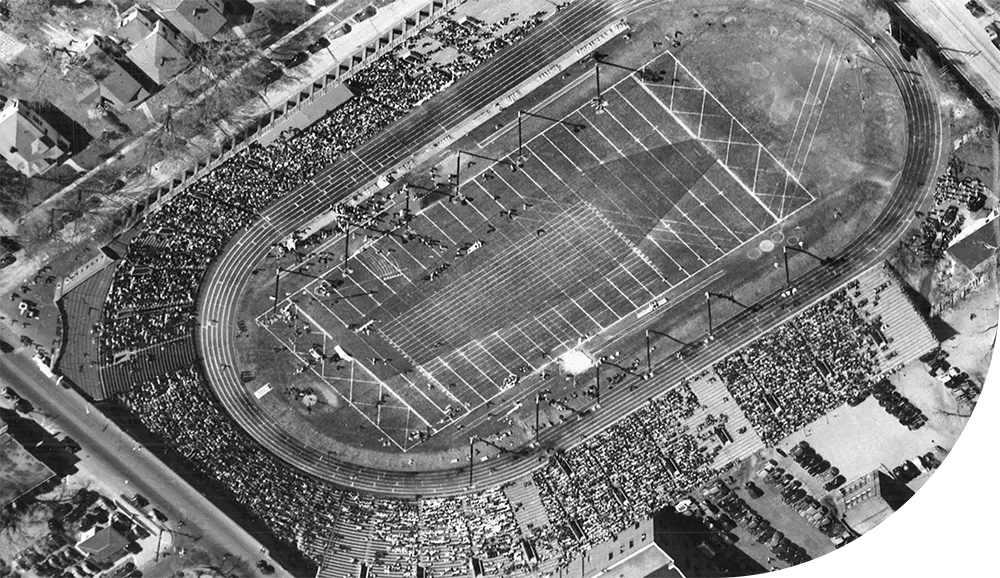
Years before Jim Duncan announced his first Drake Relays, former President Ronald Reagan broadcast the Drake Relays for WHO Radio. Reagan worked as a sports announcer for WHO Radio in Des Moines from 1933 to 1937.
Today, Mike Jay carries on the storied tradition of exceptional announcers of the Drake Relays at the stadium. Jay has been behind the microphone at Drake Stadium for nearly 20 years of Drake Relays and boys and girls high school state track and field meets.
Significant Renovation
- Widening track lanes from 42 to 48 inches
- Installing a new video scoreboard to the north of the stadium
- Changing the field from grass to turf
- Raising the field to the same height as the track
- Improving the seating, concessions, restrooms, and press box
- Adding a dedicated throwing event area north of the stadium
The stadium enhancements adjusted the capacity from approximately 18,000 to 14,557, allowing for the expanded lanes, athlete safety, and better viewing for throwing and running events.
“Those old 42-inch track lanes, before the stadium renovation, were tight,” said Mahon. “Now, at a full 48 inches, we’ve given these athletes the space they deserve. Even a great runner like Michael Johnson, with his 200-meter mastery, would point out the squeeze on those turns. It’s truly a night-and-day difference, much more accommodating for world-class speed.”
The horseshoe-type stadium design makes it possible for fans to be close to the athletes.
“When you get a capacity crowd, it just makes the athletes perform to the best of their ability,” Mahon said. “That explains why there are so many records set every year, whether it be state track meets, Drake Relays, USA Track and Field Championships, or the NCAA Outdoor Track and Field Championships.”
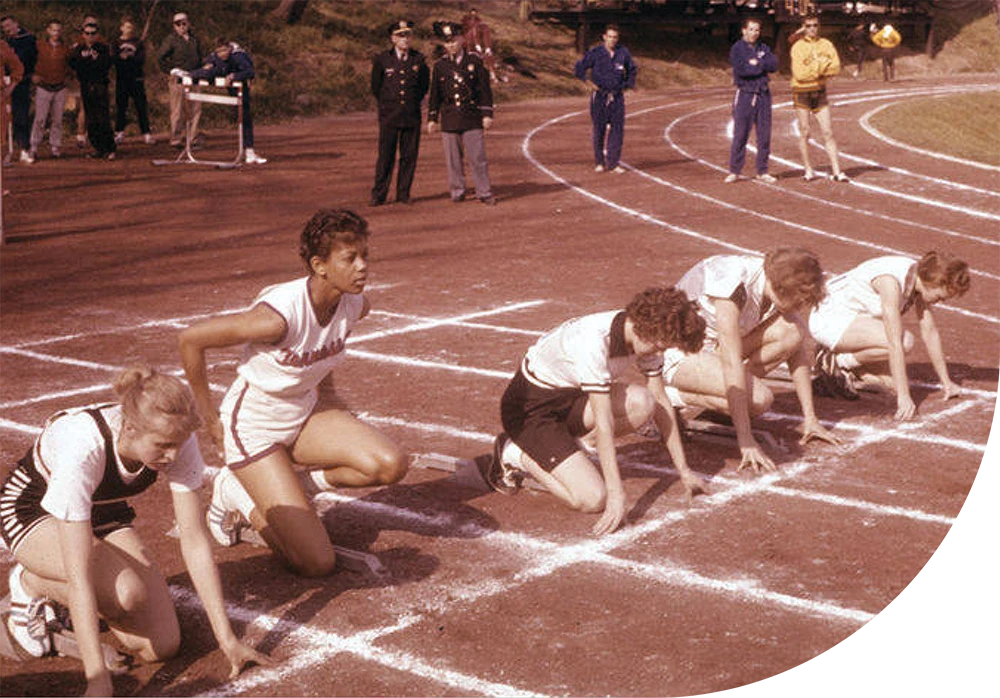
Renovation Leads to National Events
“You saw all the top collegiate athletes from around the country, and because 2008 was an Olympic year, that had special meaning,” said Mahon. “Many people don’t realize how lucky we are to see future Olympic stars perform as collegiates.”
Famous Athletes at Drake Stadium
- Wilma Rudolph: In 1961, she ran in the first Drake Relays event for women—the 100-meter dash.
- Susie Favor Hamilton: Set records in 1998 (800 meters), 2000 (1500 meters), and 2002 (3000 meters).
- Shelby Houlihan: Won eight Drake Relays titles as a high school runner.
- Karissa Schweizer: Holds a Drake Relays record in the 5,000 meters from 2018.
- Merlene Ottey: Won four individual titles at the Drake Relays.
- Gwen Torrence: Earned the title of Drake Relays Female Athlete of the Century; won eight Drake Relays titles, more than any other female performer.
- Jesse Owens: Named the Drake Relays Athlete of the Half-Century in 1959.
- Carl Lewis: The Olympic track star won the 100-meter dash at the Drake Relays in 1994. Before running, he helped shovel snow from his lane on the Blue Oval.
- Michael Johnson: Set World and American records in 1996 in the 200-meter dash.
- Wilt Chamberlain: The Hall of Fame basketball player competed in the 1957 Drake Relays in the high jump, tying for first place.
“Being there on the scene to witness a world record—that’s a memory you’ll have for the rest of your life,” said Mahon.
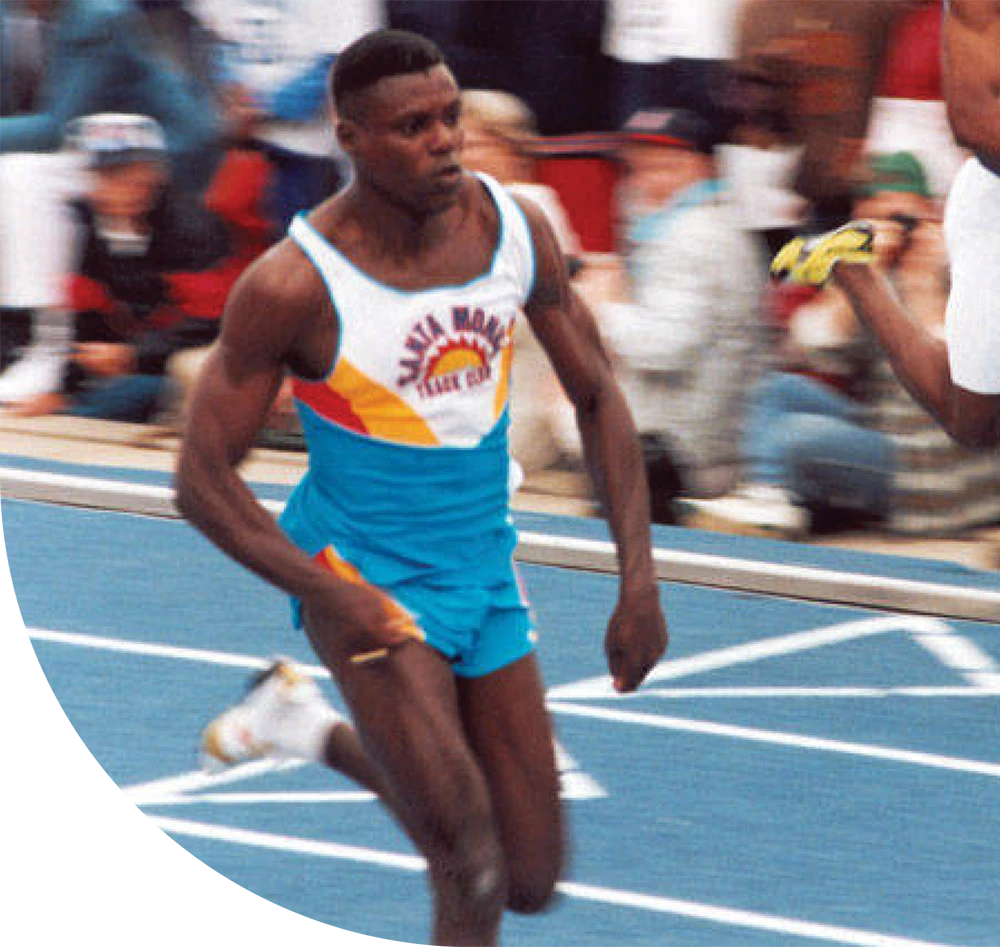
High School Track and Field Highlights
“One year, Tim Dwight was part of three records and won four events at the state meet,” said Schoffner. “At least one of them was a relay, and he set records in three. The only event he didn’t set a record in was the 200, and he had already set the record the year before. You always wanted to see him get the baton behind, just to watch him eat up the ground on the runners ahead of him.”
Another memorable Iowa high school track athlete, according to Schoffner, was Adam Haluska from Carroll High School, a basketball player who won four high school track events as a senior.
Countless other high school athletes have graced the Big Blue Oval during their careers—too many to recognize in the pages of this magazine.
Drake University remains committed to continued improvements and updates to keep the stadium a world-class venue for track and field events and Drake football games.
Big-Time Football
The following football teams played at Haskins Field or Drake Stadium. The first Drake football game played at Haskins Field was against the University of Iowa on October 8, 1904.
- Arizona
- Colorado
- Illinois
- Iowa
- Iowa State
- Kansas
- Kansas State
- Louisville
- Mississippi State
- Missouri
- Nebraska
- Notre Dame
- Oklahoma
- Oklahoma State
- Ole Miss
Drake Stadium Exhibit on Display
Drake University will host an exhibit featuring memorabilia, historical artifacts, and pictures from the 100-year history of Drake Stadium. The exhibit will be displayed in Cowles Library until May 2026. Benedict Chatelain, Reference & Instruction Archivist and Assistant Professor of Librarianship, prepared the materials and is overseeing the exhibit.


Historic
Highlights
1910
Drake University hosted the first Drake Relays at Haskins Field, the precursor to Drake Stadium. Haskins Field was named after Norman Haskins, a donor who provided the land and funds for its construction.
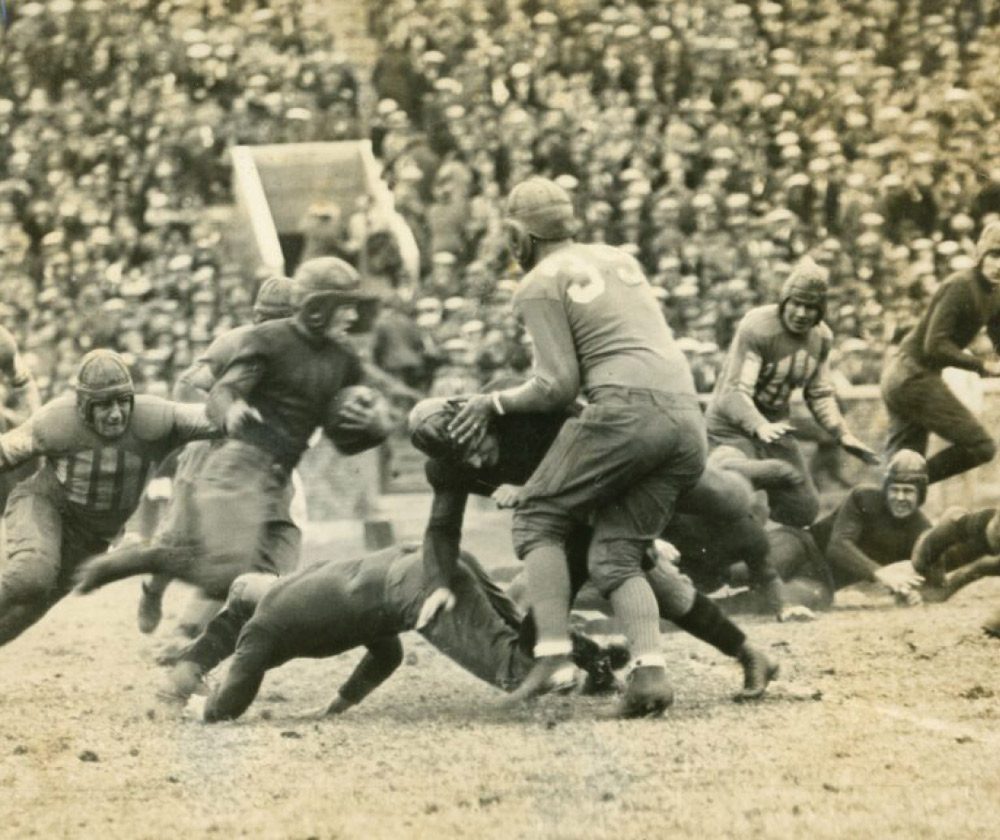
1928
Drake is the first college to install permanent stadium lighting. Drake defeated Simpson College in the first night game at the stadium.
1933–1937
Ronald Reagan broadcasted the Drake Relays for WHO Radio.
1935
Jesse Owens won the 100-meter race and long jump at the Drake Relays. He went on to win four gold medals at the 1936 Berlin Olympics in Germany.
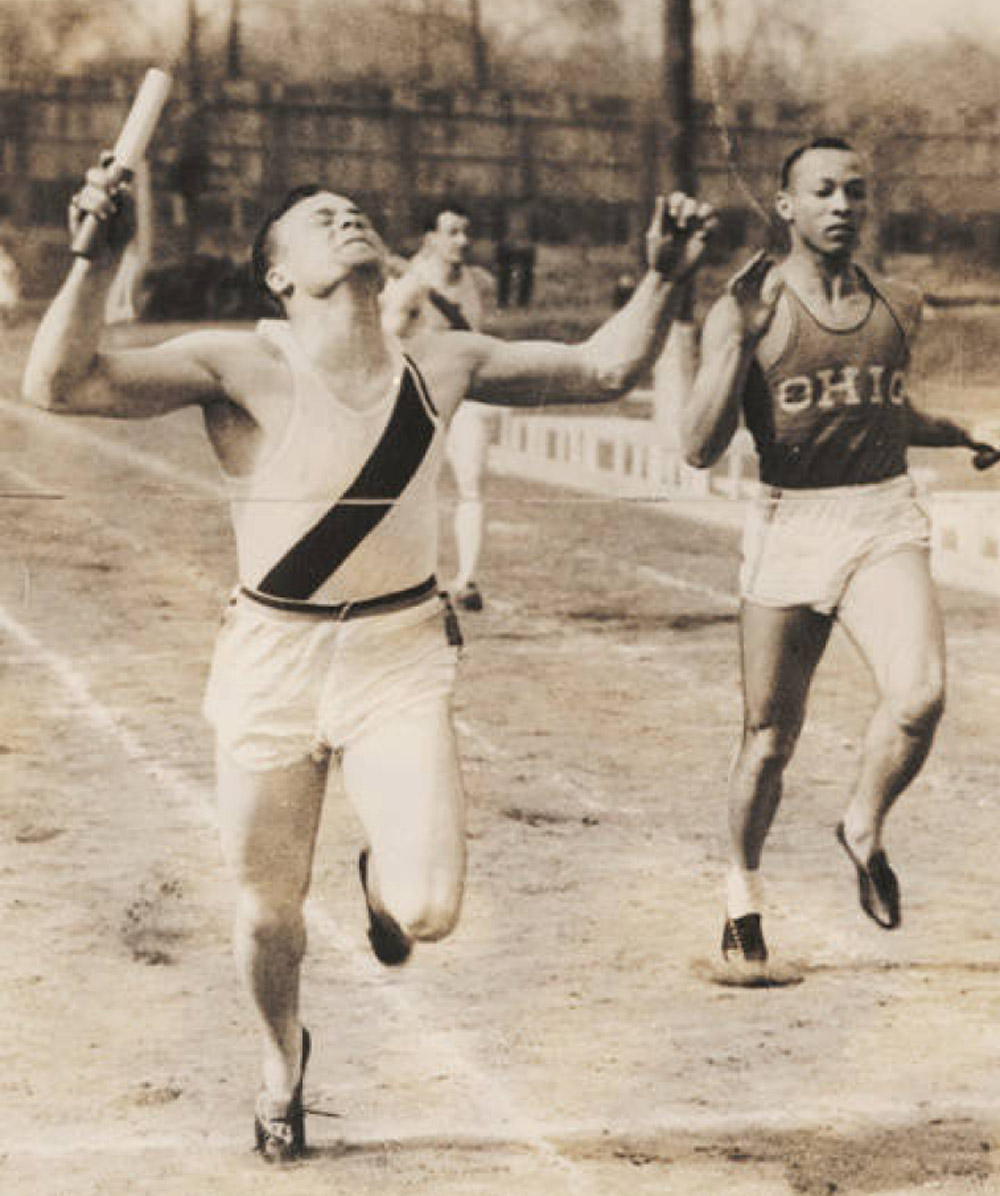
1969
A new synthetic red brown tartan track replaced the red, crushed brick cinder track.
1979
Steve Scott ran the first outdoor sub-four-minute mile at the Drake Relays.
1989
The track oval is renamed Jim Duncan Track in honor of the beloved announcer who served as the voice of the Drake Relays from 1951 to 1989. The Jim Duncan Track is resurfaced in Drake blue and earned the “Blue Oval” nickname.
1994
Carl Lewis won the 100-meter dash at the Drake Relays.
2000
William “Billy” Cundiff kicked a Drake record and Pioneer Football League record 62-yard field goal against San Diego. Cundiff played in the NFL and made six field goals in a single game for the Dallas Cowboys.
2005
Drake hosted the first-ever Iowa High School Boys and Girls State Track & Field meet.

2006
The football field at Drake Stadium is officially named “Johnny Bright Field.”
2008
Drake hosted the NCAA Outdoor Track and Field Championships. Drake also hosted the championships in 2011 and 2012.
2025
The 115th Drake Relays at Drake Stadium.
1925
Drake played Kansas State on October 10 in the football home opener at the newly constructed Drake Stadium. The stadium was originally designed for 18,000 attendees. Fans saw Drake beat Kansas State, 19-0, and later that season, the Bulldogs beat Nebraska, 14-0, to close out the home football schedule.
1926
On three consecutive Saturdays, Drake played home games in Drake Stadium against Oklahoma, Ole Miss, and Kansas. The Bulldogs beat Ole Miss, 33-15, and Kansas, 13-0.
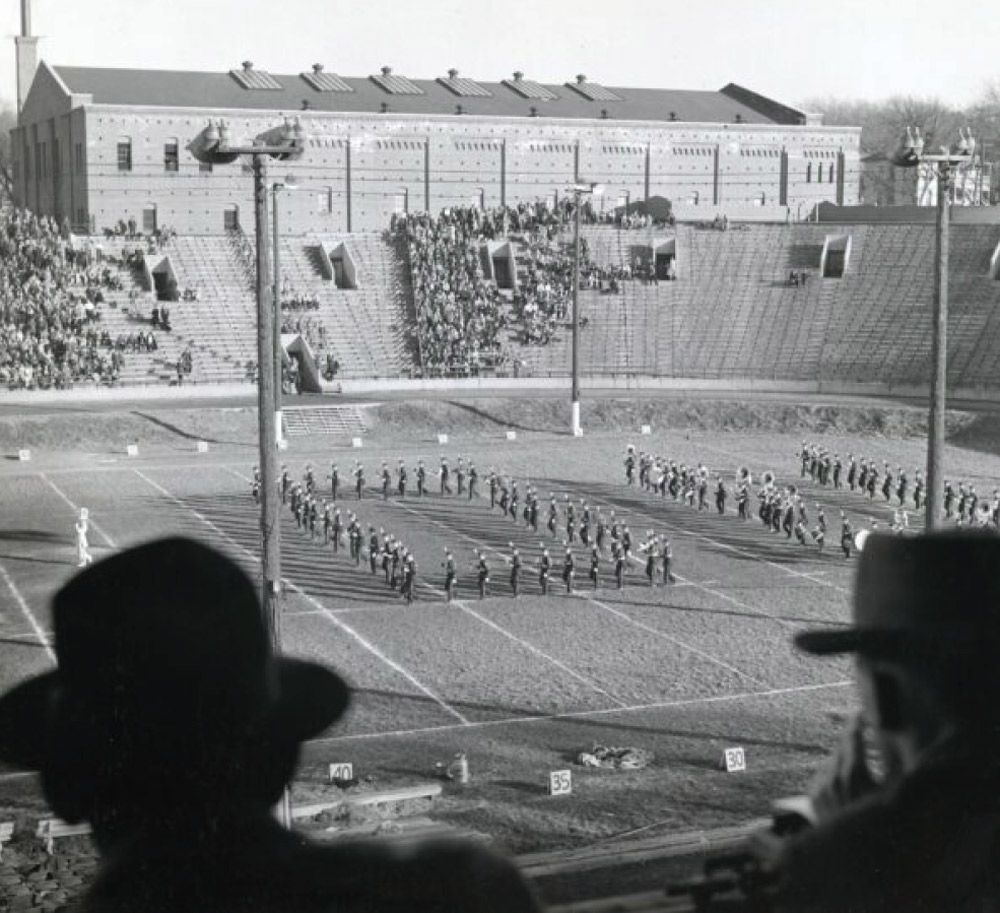
1948–1951
Johnny Bright played football at Drake University. The All-American Drake football player and Heisman Trophy candidate went on to play in the Canadian Football League (CFL). Bright was inducted into the College Football Hall of Fame and the CFL Hall of Fame.
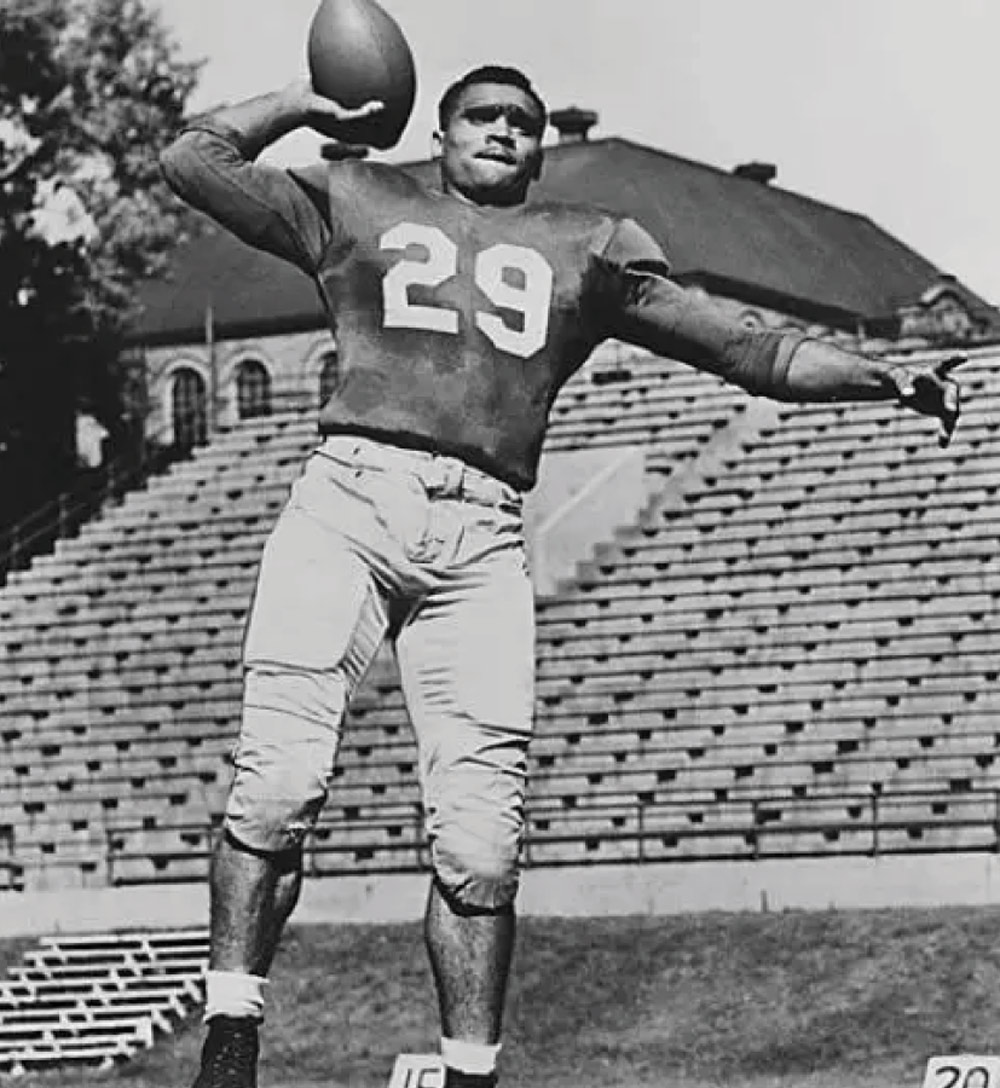
1970
Drake hosted the NCAA Championships for the first time. Legendary Steve Prefontaine captured the first of seven NCAA career titles by winning the 3-mile run.
1981
The Drake football team finished its season with 10 wins, capping one of its most successful seasons.
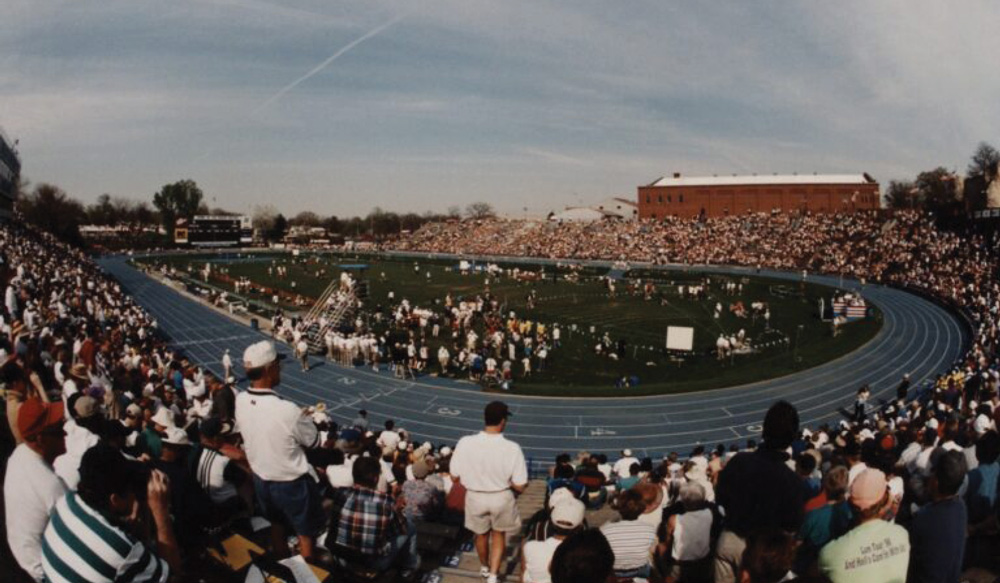
1996
Michael Johnson won the 200-meter Special Invitational at the Drake Relays. Johnson went on to win the gold medal in the 200-meter and 400-meter races at the Atlanta Olympics.
2001
Florida Atlantic was the last NCAA Division 1 (FBS) team to play Drake at Drake Stadium, with the Bulldogs earning a 31-7 victory.
2005–2006
Drake completed a $15 million renovation project. A new throwing area was created north of the stadium, and the surface area of the stadium was flattened. Previously the infield sat several feet lower than the track surface.
2006
Drake Stadium hosted the first Reggie’s Sleepout in honor of Reggie Kelsey, a young man who aged out of the foster care system and eventually died homeless in Des Moines.
2019
Drake hosted the USA National Championships. Drake also hosted the championships in 2013, 2018, and 2019. At the four-day 2019 USA National Championships, one world record, three American records, and 18 Drake Stadium records were set.
Bulldog Shop




- Vertical Flag – Fly the Centennial colors at home, tailgates, and beyond.
- Adidas Polo – Wear the Centennial with pride, on game day or every day.
- Rally Towel – Wave it high and carry the tradition with you.
- Can Coolers – Raise a cold one to 100 years of history—available in Drake blue and sky blue.
Bulldog Shop
- Vertical Flag – Fly the Centennial colors at home, tailgates, and beyond.
- Adidas Polo – Wear the Centennial with pride, on game day or every day.
- Rally Towel – Wave it high and carry the tradition with you.
- Can Coolers – Raise a cold one to 100 years of history—available in Drake blue and sky blue.
The Golden Era

One searingly hot Des Moines day in 2007, Brian Hardin stepped foot onto the Blue Oval. It had been a while.
Hardin, a Drake Relays champion during his high school days in West Des Moines, had competed at the Relays all four years while attending Marquette. But now, five years after college, the pressure was really on: He had brought his girlfriend back for a tour of Des Moines—and Drake Stadium.
The one-time champ kicked off his sandals. He took off for a lap. Halfway around home stretch it hit him: this track feels really hot. As he ended the lap, he looked down: The track’s iconic blue rubber had seared his feet—and stuck into it in tiny bits.
“And now I’ve got pieces of the blue track embedded in my foot,” says Hardin, now the director of Drake Athletics nearly 20 years later. “I didn’t graduate from Drake, but I’m literally always walking on the Blue Oval.”
Since taking over Drake Athletics in 2017, Hardin has overseen what Drake University President Marty Martin calls “the golden era of Drake Athletics.” In 2024, Drake won the Missouri Valley Conference All-Sports Trophy with student-athletes achieving a cumulative GPA of over 3.5—a first in MVC history. In May, Drake Athletics finished third in the All-Sports standings for a third straight year, a first for any private school.
Now, as Hardin seeks to extend that unprecedented excellence amid ever-shifting dynamics in college athletics, he says Drake Athletics can’t be afraid to reinvent itself, even as it stays true to its values and its community.
“We will evolve as a department with the changing times,” he says, “but we can’t lose sight of those distinct aspects that have helped make Drake so special.”
Going Through A Renaissance
Hardin has Drake in his soles, yes, and his blood, too: His parents both graduated from the School of Education in 1973. Hardin returned to Des Moines with his wife, Cara—the then-girlfriend who witnessed his fateful lap around the Blue Oval—and their three sons. That came after serving as deputy athletics director at Marquette University, with prior stints at Marquette, Ball State, and Notre Dame.
“When I first got here, just being truly honest, I was surprised by the level of apathy that surrounded Drake Athletics,” Hardin says. “I felt we needed to give alumni reasons to be proud to be associated with Drake.”
Under Hardin’s leadership, alumni have quite a few reasons to feel proud:
Drake’s men’s and women’s basketball teams both won consecutive conference tournaments in 2023 and 2024, the first MVC school ever to do so (the men won their tournament again this year).
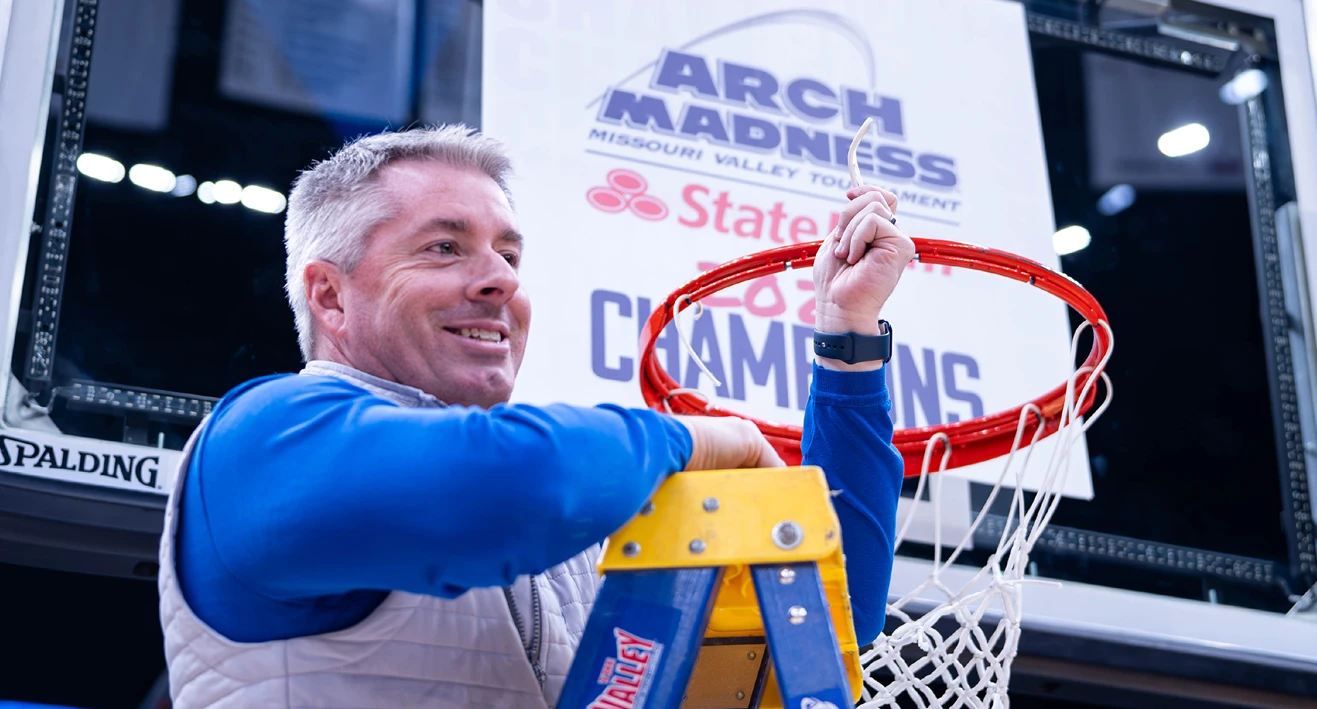
Meanwhile, the men’s track and field team had 10 total All-Americans from 2021 to 2024 including three in 2021, the most in any year by Drake since 1965. The women’s soccer team won the MVC regular-season title in 2023.
“That led right into us winning the Missouri Valley Conference All-Sports Trophy,” Hardin says.
Not bad for a relatively scrappy staff of 85 coaches and employees—about a third the size of some Big 12 schools Drake faces, he notes. But Hardin stops short of calling this a “golden era” for Drake: “That’s not for me to say.”
What Hardin will say: success for Drake doesn’t come from the highest-profile student-athletes with the most lucrative endorsement deals. To hear Hardin explain it, success doesn’t come from seeking success at all.
“Success is you against somebody else. Excellence is becoming the best version of yourself,” Hardin says. “If we can just strive to become the best version of ourselves, the outcomes will take care of themselves.”
The best version of Drake Athletics, as Hardin sees it, is in student-athletes bettering themselves in character, in academics and, yes, as recent years show, in competition. It’s in Drake establishing itself as the “hometown team” of Des Moines, of alumni returning to pack Drake Stadium for football and the renovated Knapp Center for hoops. It’s in embracing what makes Drake uniquely Drake.
“We’re very open about it,” Hardin says. “There are plenty of schools where you can go major in your sport, but that’s not going to work here. You’re going to be challenged academically, athletically, and socially at Drake—on a team competing for championships, getting a first-class education, and living in a thriving community that’s been going through a renaissance.”
Golden era or not, Hardin knows there’s more work to be done. But every year, on a clear spring day during the Relays, he finds himself back on the Blue Oval, taking it all in: the energy of crowds, the focus of the athletes, the history of everyone—himself included—who’s competed there. It’s all part of a growing momentum he knows can carry him and every Bulldog, past and present, into Drake’s future.
Bulldog Excellence, By The Numbers
- Missouri Valley Conference All-Sports Trophy: Won first-ever MVC All-Sports Trophy in 2024, with a historic 3.5+ cumulative GPA.
- Basketball Dominance: Men’s and Women’s teams first to sweep both MVC tournaments consecutively (2023, 2024).
- NCAA Championship Appearances: Twelve programs combined for 34 appearances.
- Coaching Excellence: Eleven coaches earned 15 Conference Coach of the Year awards; six hired by Hardin.
- Facility Enhancements: Major upgrades to Knapp Center, new 4,000-seat Mediacom Stadium, and Cathy and Steve Lacy Sports Medicine Suite.
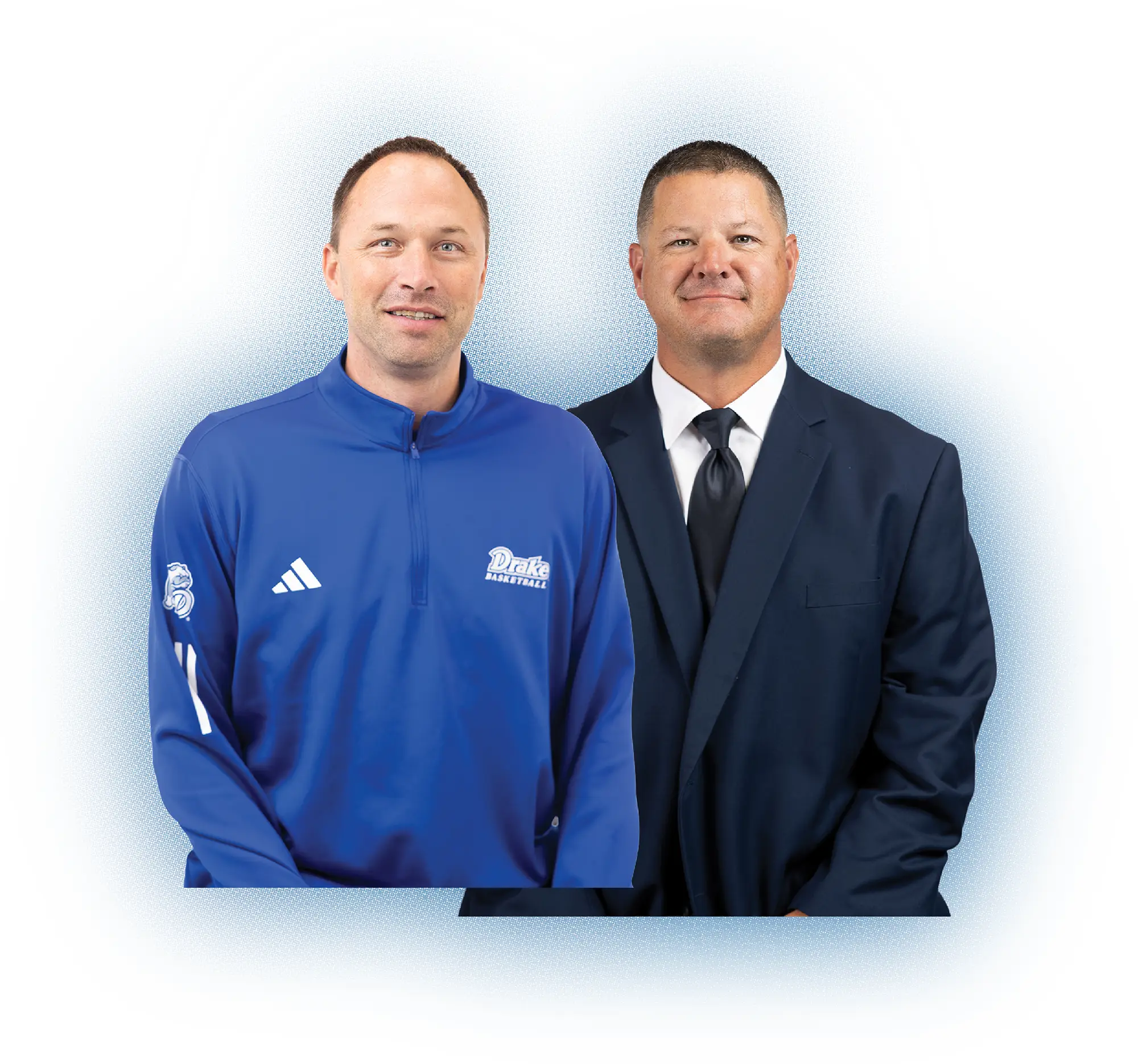
Head Coach,
Drake Men’s Basketball
Head Coach,
Drake Football
The Next Chapter
Q: What drew you to Drake University and the men’s basketball team?
Eric: I was at a good place, but I wanted to continue challenging myself by playing in the Missouri Valley Conference. I also had great admiration for what Darren DeVries accomplished in turning the program around, and then what Ben McCollum did this past year. The excitement, energy, and spirit of Drake basketball are really on the rise, and that was very appealing. Ultimately, it came down to ensuring alignment with the administration and decision-makers, making sure they shared the same vision and process as I did.
Q: How do you plan to build on the recent success of the men’s basketball team?
Eric: To have sustained success, I believe it’s crucial to build your program on character and a strong foundation. We won’t compromise on our standards or the character traits we recruit: honesty, respect, selflessness, communication, and competition. We discuss these five traits daily, and it’s a holistic approach to help our young people learn, grow, and achieve their goals and dreams. We’ll work incredibly hard, have fun, learn from our mistakes, and enjoy the process.
Q: What are your immediate goals for the program this upcoming season?
Eric: Our goal is to surround ourselves with incredible people, and we feel we’ve done that. When putting this team together, it was important to find guys who believed in the process of success and wanted to be Drake Bulldogs. Now, we’re putting in the effort every day and prioritizing connecting as a team. I believe we’ve assembled an extremely talented roster, but talent alone doesn’t win. So, our daily goal is to get more connected.
Q: How will Drake be different from other schools in the Missouri Valley, especially in your style of play?
Eric: Our style is a little different, especially on the offensive end. We’re much more motion-oriented and faster-paced than most teams in the Valley. We’ll try to increase possessions in almost every conference game beyond what most opponents are used to. Defensively, we’re a bit more conservative; we want to stay in a good rebounding position, stay in our gaps, and limit the other team to one shot. Our pace of play will be unique to the Valley.
Q: What does it mean for you to lead the Drake football program, especially as someone from central Iowa?
Joe: Leading the Drake football program means a lot. Growing up in central Iowa, Drake always stood out, offering national brand recognition. After a successful run at Grand View University, this unique opportunity felt like the right time to move to Drake and lead this team. There’s a lot of optimism at Drake right now, including in the football program. My brother Matt played basketball here for three years and was an assistant coach for the men’s basketball team, so I’ve been around Drake for a number of years.
Q: What is your vision for Drake football?
Joe: My vision is to continue to build on the success of the football program, both on and off the field. The players come to Drake first and foremost to get a great education and second to play football. We have something special at Drake and in the Pioneer League. This is one of the purest levels of college athletics right now. These players love being here.
Q: What are your top priorities for your first season?
Joe: To build great relationships with the players in the program and then earn trust and loyalty with the guys. We plan to build a lot of trust during camp by spending time together and learning about each other. And we want to maintain the level of success the football program has built in recent years by going after another Pioneer League conference championship and a berth in the FCS playoffs. We want to be the most physical team on the field every game because that really separates winning and losing.
Q: What is your message to Drake alumni?
Joe: Be really proud of where you come from and your Drake education. I’d love for as many people as we can get to come to our home football games and support these guys because they deserve it. They put in a lot of time, a lot of effort, and they’re doing it because they love the game.