

Purpose in Action



Everyone Deserves to Be Seen and Heard
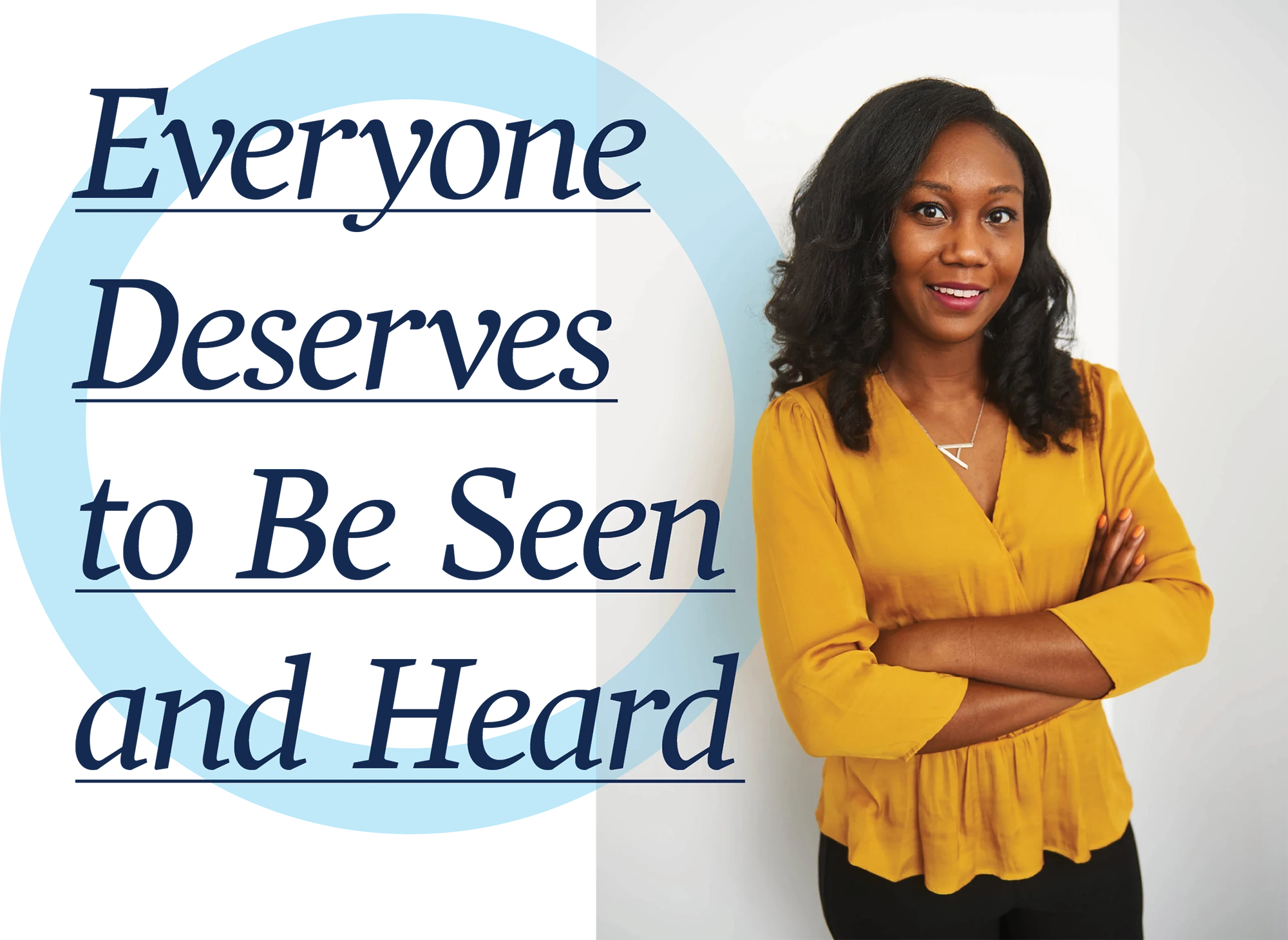
When Alexis Davis thinks about how it all began—her work in advocacy, her gift for building community—she starts with a bus ride to Springfield, Illinois.
“I was about 12 or 13, and my mom got me on a bus with her union, AFSCME Local 131,” she remembered. “We were fighting for wage rights for state employees. That was my first real experience with advocacy.”
Raised in the south suburbs of Chicago by her mother, Fredrika, Alexis grew up with daily examples of hard work, purpose, and no excuses. Her mother worked for the state of Illinois for 43 years as a mental health technician. Her father joined the police force when Alexis was three, deciding he wanted to serve and protect for her sake.
“They always told me, ‘We didn’t do well in school, but you will. You have no other choice.’ So I did drama, scholastic bowl, mathletes—I was an overachiever,” she said with a laugh.
She discovered Drake somewhat by accident. “I thought the recruiter was from Duke because of the blue,” she said. “But he was so warm and inviting. I ended up being the only one from my high school who got accepted to Drake.”
Once in Des Moines, Alexis started as a business major. “I failed Econ 101. I did not do well in Accounting,” she said. “Randy Blum, the associate dean at the time, kindly walked me over to David Wright in the journalism school and said, ‘You can have her now.’”
That moment changed everything.
Alexis flourished in the School of Journalism and Mass Communication, mentored by Wright, Dr. Kelly Bruhn, and others. “Dr. Bruhn literally bullied me into grad school, in the best way,” she said. “I came to her in this weird in-between time, not sure what I wanted. She said, ‘You’re applying to the MCL program. You’re taking your GMAT this weekend.’ And I did.”
As a Drake student, Alexis threw herself into campus life. She was a host for Young Legendz Radio—a student-run show on 94.1 The Dog that filled a major gap in Des Moines’ R&B and hip-hop offerings.
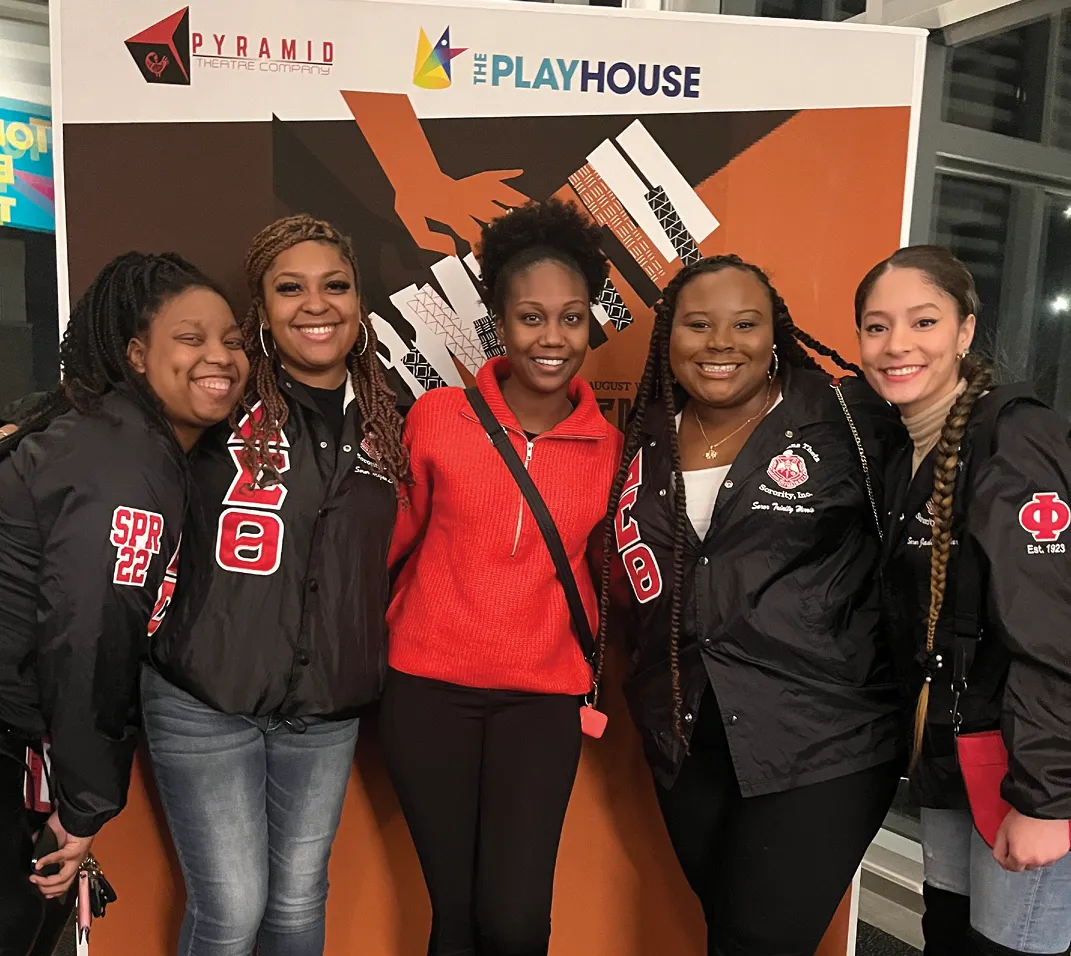
She also served as a leader in the Coalition of Black Students, where she helped launch a powerful new tradition: Black on Black, an annual formal created to recognize and celebrate Black excellence on campus.
“We weren’t being invited into other formal spaces,” she said. “So we made our own. We honored each other. We honored staff and administrators who advocated for us. Now, 15 years later, Black on Black is still going strong. That’s something I’m incredibly proud of.”
As she was earning her master’s, Alexis co-founded Pyramid Theatre Company, the first and only Black theater company in Iowa. “We didn’t start with a ton of theater experience,” she said. “I was doing project management, reading stage directions, and somehow I ended up as the managing director.”
Devoted to the Arts
Today, Alexis serves as the Director of Marketing for the League of Chicago Theatres, where she advocates for theater companies across the region and organizes programming that supports artists and reflects diverse voices.
“I really advocate for folks to have a voice in spaces in which it’s not created for them to have a voice,” Alexis said. “With Pyramid, we wanted Black artists in Iowa to know they could stay, grow, and be seen right here in the Midwest. Not just in New York or Atlanta.”
Alexis still finds time to give back to Drake. She serves as a Black Alumni Association Board Member, and the secondary advisor to the Phi Chapter of Delta Sigma Theta Sorority, supporting students virtually from Chicago and making trips back for special events.
Through every role she’s taken on, Alexis has been driven by the belief that every person deserves to be seen and heard.
“I like helping,” she said. “But more than that, I like helping others figure out how to speak up, tell their stories, and stand in their light.”
From Survival to Service

When Dani Mincks transferred to Drake University in 2021, she wasn’t a typical college student. She was in her 30s, had already managed over 100 people as an operations leader in a Philippine call center, and had recently left everything behind to start over in the United States.
“I was an international student, and I only spent two years at Drake,” Dani said. “So, I didn’t have the traditional experience. But Drake and Des Moines together helped me find work that aligns with my mission and values, which is to help people out of poverty.”
A Childhood Shaped by Change
Dani grew up in Metro Manila, a city of 20 million people, where her mother and grandmother ran a small clothing business supplying uniforms to schools and retail stores. But when her grandfather suffered a stroke, everything changed.
“All of our resources just went away,” she said. “His care became the priority, and there was no health insurance at that time. My parents separated, and that affected the business even more.”
Dani was attending the state university when the business collapsed, but she left school to help support her family.
“Looking back, the price of a venti coffee at Starbucks was the same amount of money that fed our family for a week,” she said. “I hated it. I hated getting handouts and relying on others for food. I wanted to be independent, so I started working.”
She entered the financial world through collections and banking, learning how money really worked. But eventually, she realized she wasn’t using that knowledge to help people like herself—she was using it to help people who already had enough.
Finding Her Purpose
Dani moved to the U.S. in 2018, initially attending a small community college in Austin, Minnesota, a town with a population under 25,000. The culture shock was real. The nearest Starbucks was 45 minutes away. After growing up in a metropolis, Dani wondered what she was doing in rural Minnesota.
But doors kept opening. During the pandemic, Dani transferred to Drake to complete her business degree. It wasn’t easy.
“I felt so lost,” she said. “It’s hard to make friends as an adult, and especially as an international student. But I’ve learned that we’re not meant to go through our problems alone.”
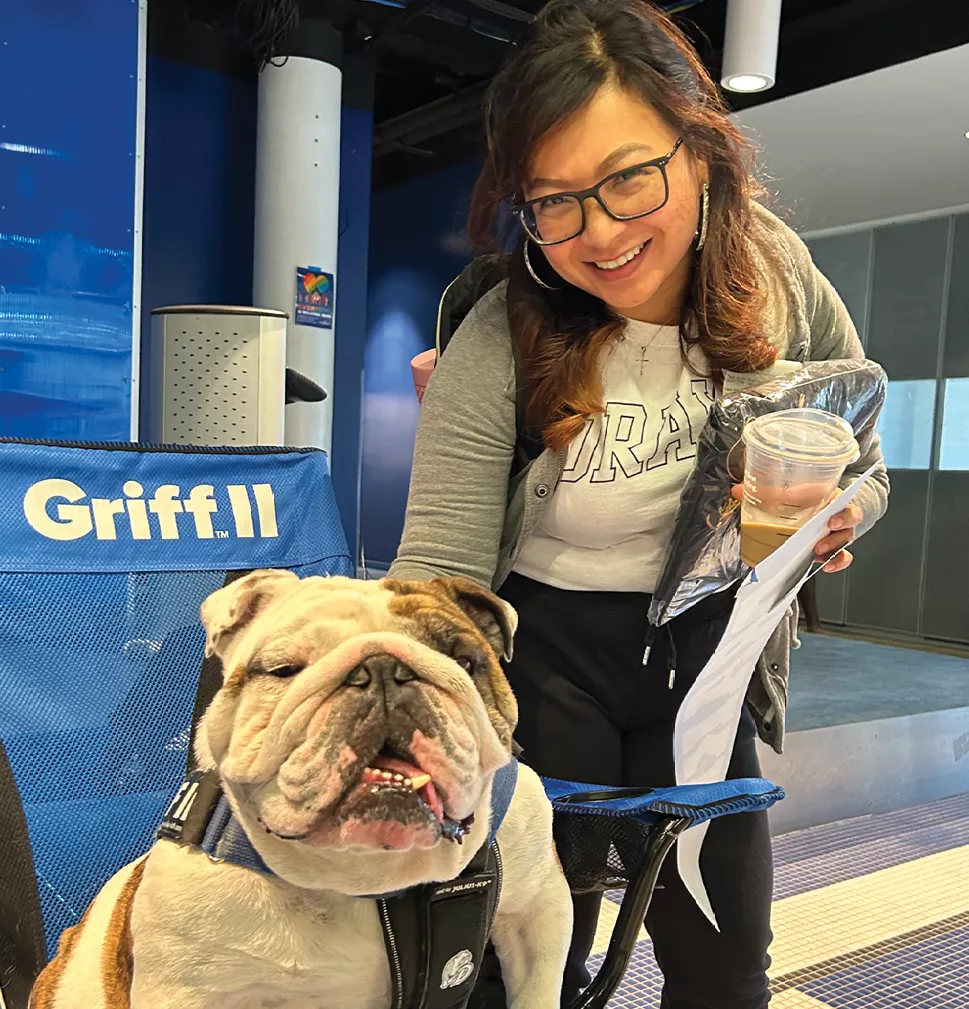
In 2022, she found her next step. Dani was introduced to Change Course, a nonprofit career development program in Des Moines focused on helping people break free from poverty—not just financially, but emotionally, spiritually, and relationally.
“It’s a five-month program that surrounds participants with community,” she said. “We teach coping skills, career tools, but the heart of it is relationships. It’s about helping people see they are worthy, that they are not alone, and that they can do hard things.”
She joined the team as a career coach and now serves as the Director of Community Engagement and Lead Career Coach.
A Recent Success Story
Not every participant’s journey ends in success, but one recent story reminded Dani what’s possible when someone is truly ready for change.
She met a young man who had moved from Florida to Iowa after learning the state had one of the lowest homelessness rates in the country. A Florida church assisted him in relocating, and a Change Course volunteer connected him to the program. He embraced the curriculum, found a full-time job, secured his apartment through YSS, and is now training to become a registered nurse through the Iowa National Guard.
“It’s amazing,” Dani said. “Those are the stories that keep us going. But 90 percent of the time, it’s hard. Lots of heartbreak and tears. But this city has all these organizations that work together, lots of youth programs, too. That’s what I love about Des Moines: the agencies here are willing to help each other to help others.”
Walking With Others
Change Course is always looking for professionals who want to support others through mentorship, mock interviews, resume reviews, or second-chance employment opportunities.
Dani knows what it means to start over. She’s done it more than once. And she believes that lived experience helps her serve others with empathy, accountability, and honesty.
“I always go back to those moments as a kid,” she said. “Not having enough. Not knowing what came next. That’s why I care so much. Because I know what it’s like.”
She tells her participants they don’t need to have it all figured out.
“You just need someone to walk with you,” she said. “That’s what Change Course does. That’s what I get to do every day.”
A New Way to Serve
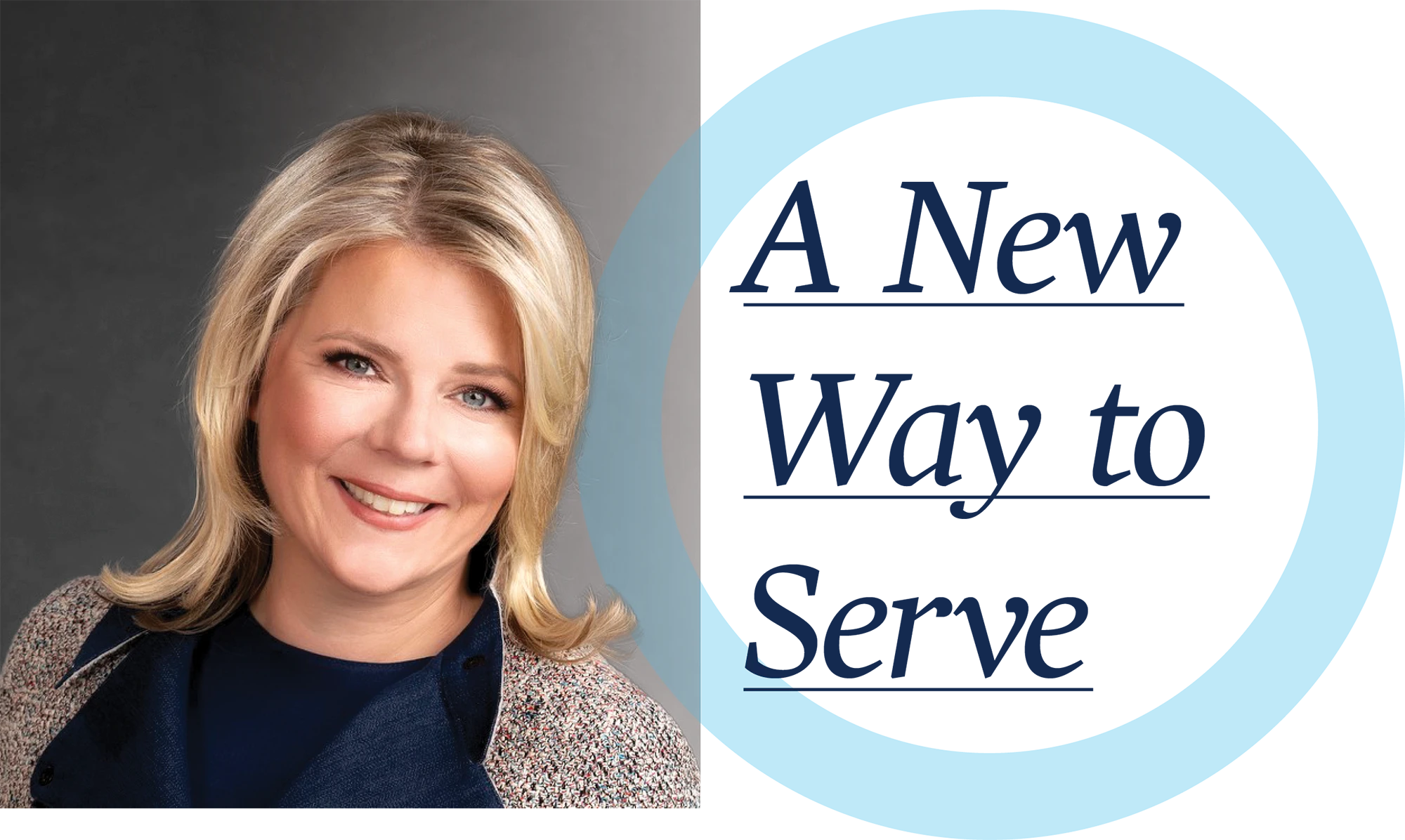
When Elizabeth “Buffy” Higgins-Beard, AS’98, walks into her Milton Township office, she passes the original decor—framed images of the Constitution and the Bill of Rights, as well as her recent additions: portraits of trailblazing women, such as Maya Angelou and Ruth Bader Ginsburg. Being an elected official is not where Buffy imagined she’d end up.
After 25 years in nonprofit leadership, including her most recent job as CEO of The Duke of Edinburgh’s International Award USA, Buffy is now an elected Milton Township Supervisor in her longtime Illinois community.
“None of it sounds sexy compared to working with the Royal family,” she said, laughing. “But I’m excited that we’re establishing more services and making plans to expand services judiciously to respond to all the changes that are coming out of DC. As need rises, the township will be there to help.”
Buffy’s entire career has been rooted in public service. She led local and regional nonprofits in the Chicago area before taking on national leadership roles. At The Duke of Edinburgh’s International Award USA, she helped teens of all backgrounds discover their purpose, passion, and place in the world.
“It was a dream job,” she said. “I got to use everything I’d learned—fundraising, partnership building, and program design to open the US office. And I got to make sure it wasn’t just for the kids in the best schools. It had to be for everyone.”
But, as her children grew up and left home, Buffy decided she needed a change. She took a deliberate sabbatical to reflect on what the next chapter of her career might look like. “There’s something about 25 years,” she said. “It felt like time to pause and ask what comes next. So I listened. And the answers emerged.”
Those answers led her to campaign for local office, and she won. She made state history, becoming the first Democrat to be elected in 175 years, as well as the first woman to serve as township supervisor.
This new role continues a common thread in her career: Buffy is a bridge builder. Whether helping Chicago teens become the first in their families to attend college or connecting under-resourced communities to research partners and grant funding, she sees her role as one of connection.
“Communities have strengths,” she said. “They just need a bridge to the resources. My job has always been to enter those spaces with humility and help build that bridge.”
It Started at Drake
Buffy credits two moments at Drake University for setting her career path in motion. First, it was Dr. Dan Spencer’s religion and philosophy classes, which required students to serve and worship in communities different from their own.
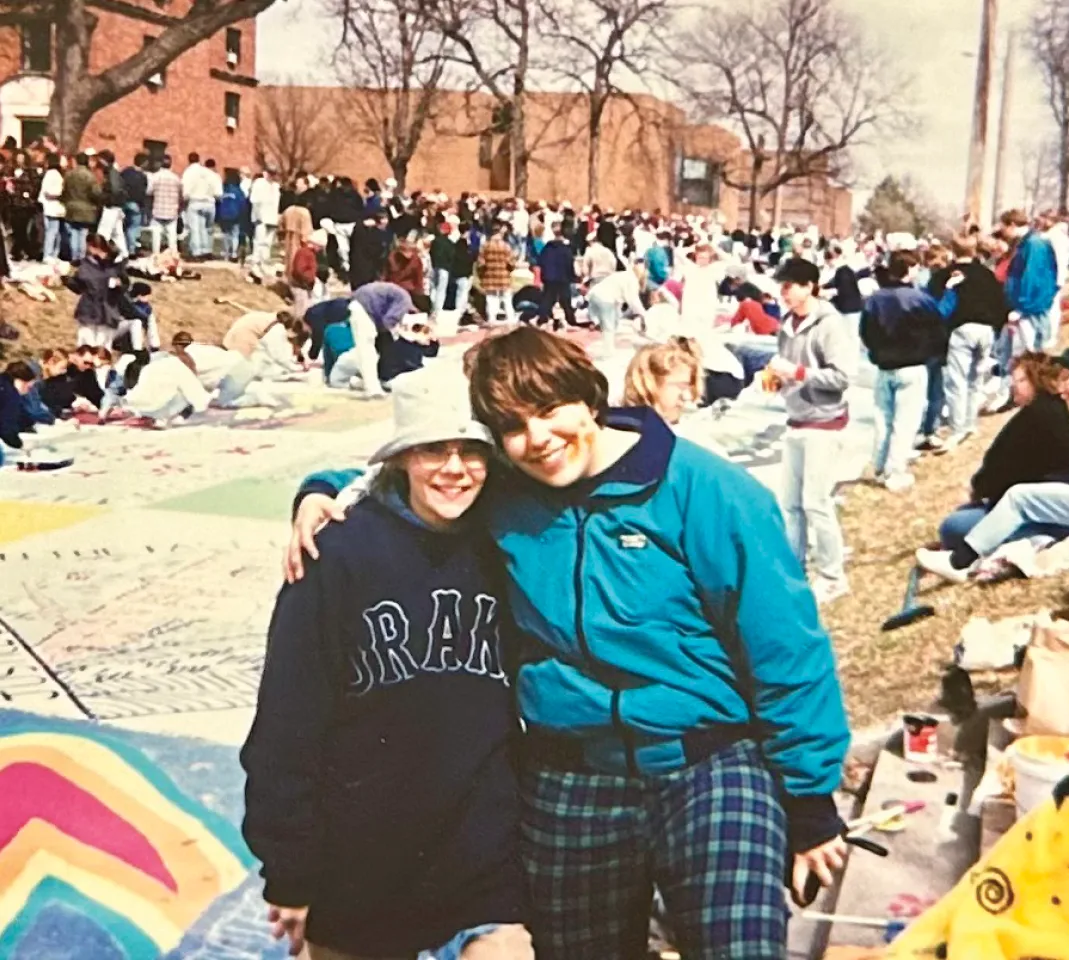
The second turning point came during a Drake summer study abroad public health seminar in the Dominican Republic. There, she saw babies dying from preventable illnesses, and patients suffering from diseases that would be treatable in the U.S.
“It stuck with me,” she said. “I realized I didn’t want to be a doctor. I wanted to earn a Master’s and to work in public health—to help communities gain access to the knowledge and infrastructure they needed to thrive.”
Her time as a Residence Hall Advisor in Goodwin Kirk Hall at Drake was formative, too. “That was my first management job,” she said. “It taught me how to work with others, lead a team, and create a welcoming space. We even had dance-offs on move-in day. We made it joyful.”
Family Legacy of Service
Buffy grew up in Naperville, Illinois, and now lives just nine miles from her childhood home. Her family modeled service in many ways. Her grandfather taught literature and languages in small towns and youth prisons. Her grandmother ensured that every child who wanted to be in Girl Scouts could afford to participate, while managing a local women’s clothing store. Her mother volunteered in the community, while building a career in horticulture industry sales. Her father worked in the city government for his entire professional life, ending his career as a longtime City Manager and professor.
“Growing up, I didn’t realize that all of my family was connected to public service,” she said. “But they were. And that mindset was all around me.”
Advice for Fellow Bulldogs
Buffy suggests starting with your passion. “Whatever it is—bicycles, finance, logistics—there’s a nonprofit that needs that skill set,” she said. “For me, it was youth. And there’s always a young person or a family looking for new ways to grow and learn.”
Buffy’s public service role isn’t the only new thing in her life. This fall, she’s heading back to school as a Fellow in the University of Chicago’s Leadership and Society Initiative, reflecting on what she wants the last third of her career to look like.
“It’s a good balance,” she said. “I have a role that matters. And I have the chance to explore what comes next.”
That One Teacher
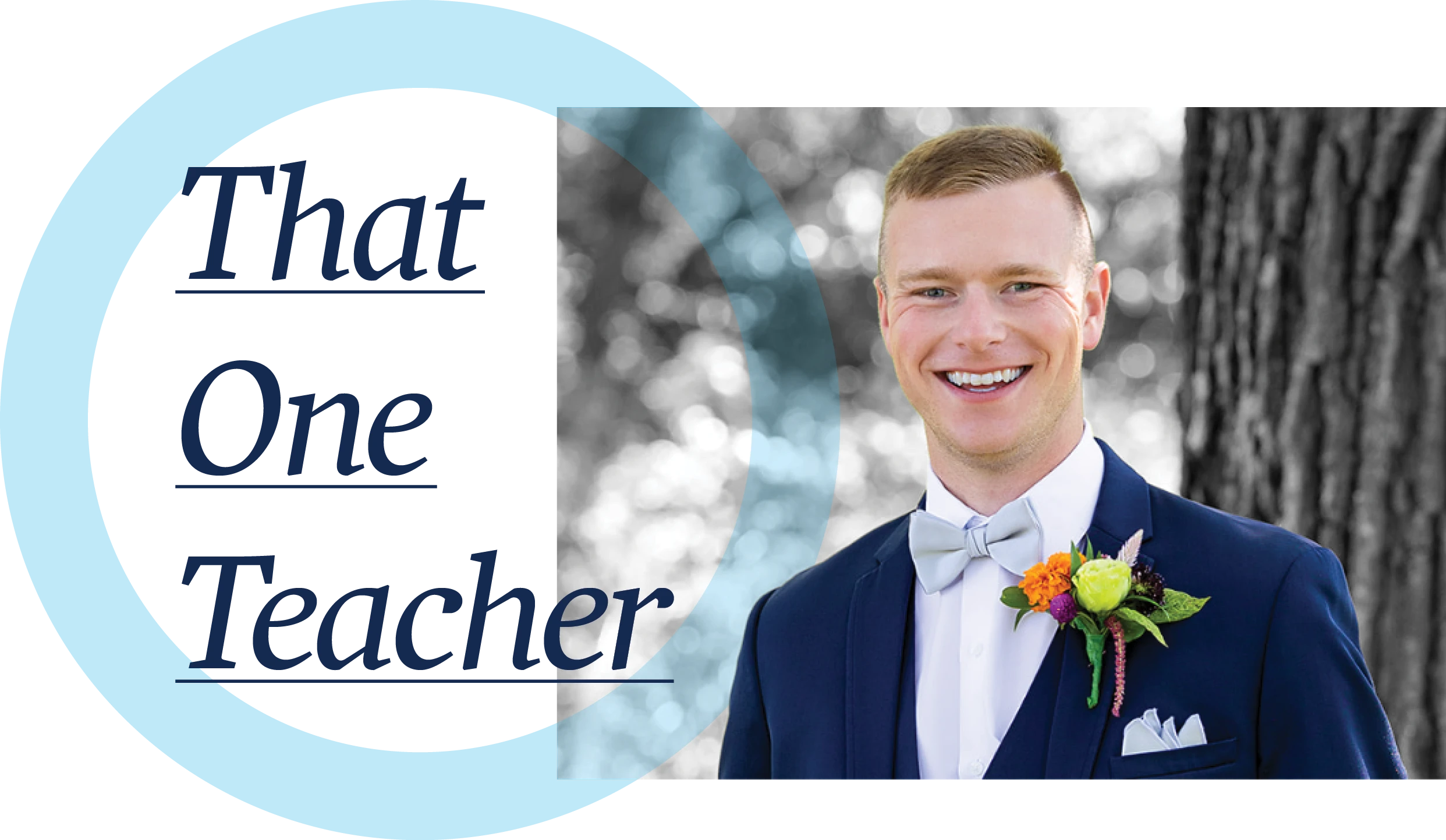
When Mitchell Schank started his first year of teaching, his grandfather, Grandpa John, a retired math teacher from rural Wisconsin, sent him a list of ten things to remember as a teacher.
“It’s all good advice,” Mitchell said. “But the one that’s been my favorite, the most impactful in my life right now is this: ‘Find those people who don’t have the titles who are in charge.’”
Mitchell laughs when he explains it, but he’s serious about the lesson. “My examples are the secretaries, administrative assistants, and our print shop. You need to become friends with those people because they are the real ones who run a school.”
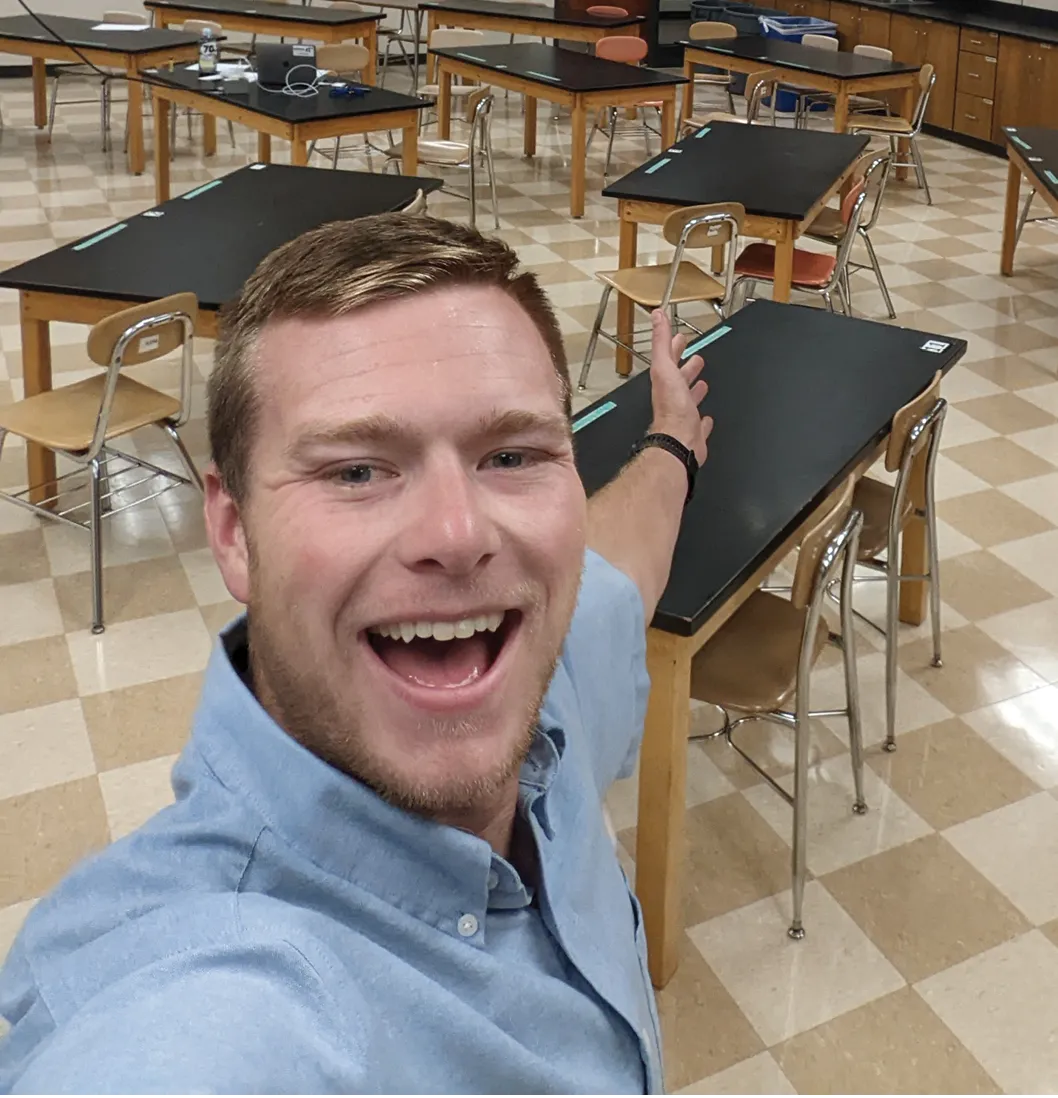
Now a science teacher, assistant co-ed cross country coach, and head girls’ track coach at Hopkins High School in Minnetonka, Minnesota, Mitchell passes that wisdom on to student teachers. He tells them, “If you take one thing from me, find those people and become best friends. Bribe them if you have to, like I do.”
That mix of humor and respect for the people around him has shaped Mitchell’s career—and helped him receive a nomination for the 2025 Minnesota Teacher of the Year Award.
Swim Lessons at the Y
Mitchell’s first job was as a swim instructor at the local YMCA. “I wasn’t even on the swim team,” he said. “It just sounded like a fun job. I really enjoyed helping the kids learn and watching their progress.”
That early exposure to teaching stuck. His summers as a camp counselor evolved into roles as lead and assistant camp director. “That was really where I fell in love with working with kids and seeing them grow,” he said.
But teaching wasn’t on his radar as a career. At least not yet. He began college at Drake as a pharmacy major, as he liked science and people, but after a short job-shadowing experience, he quickly knew it wasn’t for him. “I went back to what I’d always enjoyed doing—being around kids and teaching them,” he said.
Even before officially declaring the education major, Mitchell found his community. Friends in the School of Education helped him map out classes. Faculty members like Dr. Jerrid Kruse became mentors.
Soon, those college summers at camp revealed his true calling: to become a high school principal. As assistant camp director, he helped manage schedules, policies, behaviors, and parent communication, building a foundation for school leadership. “It showed me I could help remove barriers for kids at a really large scale.”
A Culture of Belonging
At Hopkins High School, Mitchell brings that big-picture mindset into his daily work as a teacher, coach, and mentor.
“It’s really fun to get a kid as a ninth grader and have four years of working with them to become a track athlete,” he said. “It’s great to see them mentally, physically, and emotionally grow as a person.”
One of the most meaningful parts of his work has been his involvement with Link Crew, a yearlong national program that pairs upperclassmen mentors with ninth graders to help ease the transition to high school.
“Ninth graders are on this journey; they want to learn how to act in the new world of high school,” he said. “So this program is about role modeling good behaviors.”
Mitchell helps select and train student mentors, plan events, and ensure that every ninth grader has someone looking out for them. It’s all about building community and confidence.
What’s Next
As much as he loves the classroom, Mitchell recently completed his doctorate in educational leadership at Winona State and is actively looking for an administrative role.
He credits Drake for preparing him for this next chapter. “The professors in the School of Education introduced me to so much, including standards-based grading, which is more about the learning, and not just the point chasing,” he said. “Seeing them in their roles as educators and researchers was really impactful.”
He also attended Drake for his master’s degree in Educational Leadership with principal licensure. He acknowledged Dr. Doug Stilwell and Dr. Randy Peters for preparing him to be systems-focused. “It was more like analyzing the problem and doing something about it,” Mitchell said. “It was how to make systems and logistics better, and I use that all the time in my classroom.”
As he moves toward school leadership, Mitchell expects to rely on his grandfathe’s advice as well as his own teaching experiences to help him succeed and stay focused on his mission. “It can be easy to get away from what’s best for kids when you’re deep into the research, data, or policies,” he said. “But I’m just going to remind myself of my purpose.”
Solving Impossible Problems

When you read Nawi Ukabiala’s resume, it is intimidating. A senior associate in the International Dispute Resolution Group at Debevoise & Plimpton LLP in New York City. He’s worked on high-stakes human rights cases, authored briefs on crimes against humanity and LGBTQ+ rights, and contributed to global legal inquiries that shape how justice is understood around the world. He leads trainings for governments and practitioners. He’s a published scholar. And he still finds time for pro bono work with organizations like Her Justice and the Visualizing Justice Project.
In short, he’s someone people turn to when they have impossible legal problems.
But when Nawi (pronounced NOW-ee) logs in for the interview from his Brooklyn apartment, he appears in a crisp white T-shirt, earbuds in, framed by a wall of obviously well-read books. He is not intimidating. He is gracious, calm, and thoughtful. He apologizes for being a few minutes late due to a calendar glitch, and jokes about how hard it is to rely on his actual memory with today’s tech aids.
This is what makes Nawi so interesting. The work he does is high-level, complex, and happens on a global stage. But he shows up as warm, curious, and effortlessly wise. You want to learn from him and believe with him that the law, even in this imperfect world, can be a force for peace.
From Nigeria to Urbandale
Nawi was born in Nigeria, spent a few early years in England, and grew up mostly in Urbandale, Iowa. His parents, both immigrants, set a powerful example of being in service to others. His mother was a lawyer, trained as a barrister in England (complete with the long black robe and white wig). “There are pictures of me as a kid dressed up in that,” Nawi said, smiling. “Pretending to do arguments.” His father was a pediatric surgeon with a passion for international relations that sparked something early in his son.
“I remember him talking to me about the Rwandan genocide,” Nawi said. “He said the UN—or the international community—should have intervened sooner. And that really registered for me: there are mechanisms that are supposed to prevent human rights atrocities. If they work properly, maybe that’s something humanity can achieve.”
Other moments followed. He remembers asking his father who Osama bin Laden was after 9/11. He was captivated by the legal and moral arguments made in response to the Iraq War. “Those were the kinds of questions that drew me in,” he said. “I was just really drawn to that discourse.”
A Belief That Nothing Is Too Big
With two high-achieving parents, Nawi was raised with equally high expectations, but also a deep sense of possibility. “It conditions you to believe you’re capable of anything,” he said. “Nothing ever seemed too big. I understood that if I worked hard, I could shoot for the stars.”
He studied international relations at George Washington University, then, after debating between graduate programs in economics and law, chose Drake Law School, encouraged by his mother. It turned out to be one of the most formative experiences of his life.
“I had no bad professors,” he said. “It was just such a rich learning environment.”
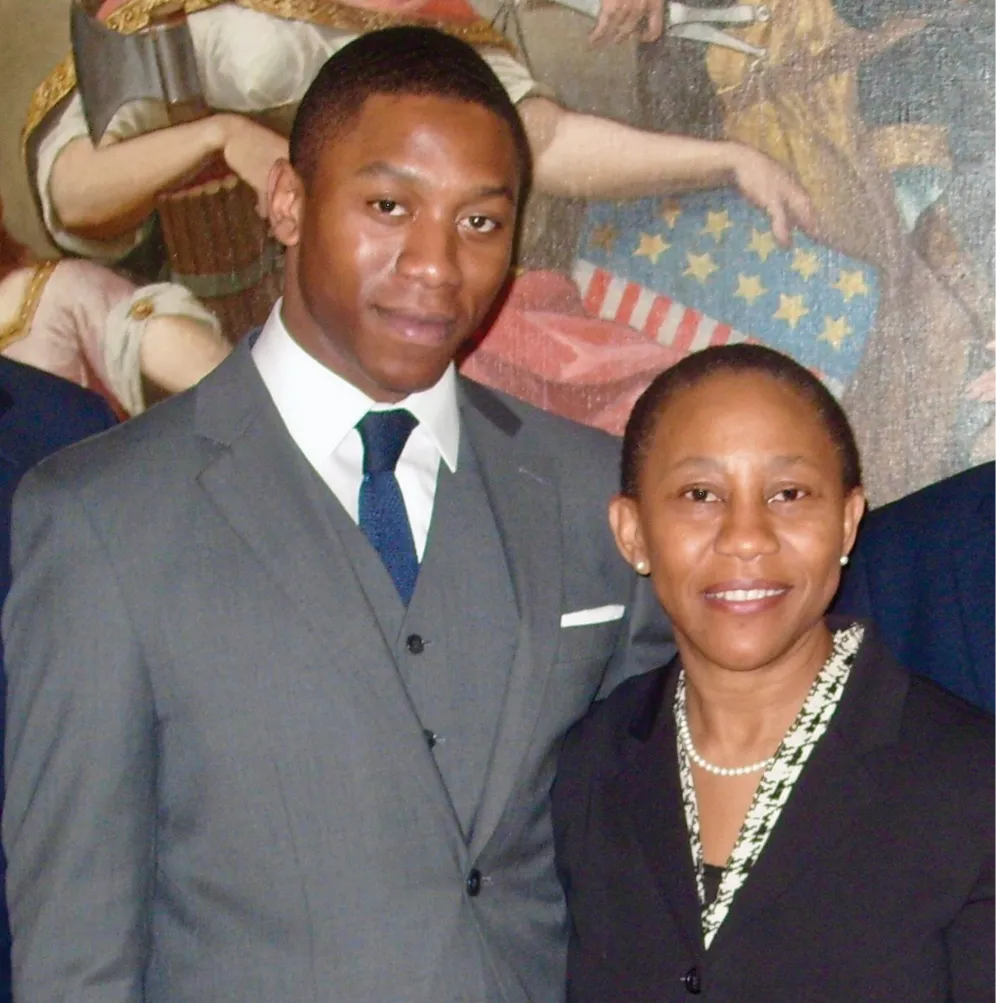
Most of all, Nawi remembers the Appellate Advocacy Clinic, where he argued before the Iowa Supreme Court and Court of Appeals. “That experience was so practical—and really special,” he said. “It stands out among a lot of excellent memories.”
Still Believing in Law
Today, Nawi works on legal issues that most of us don’t have to think about, including international arbitration, transnational litigation, and public international law. But his beliefs are rooted in something very human.
“I still believe in international law,” he said. “It’s not as naive a belief as when I first learned about it, but I still believe that when we have the right leaders and the political will to put our stock in law over war or violence, it benefits all of humanity.”
He acknowledges the limitations. “A lot of times it doesn’t work. A lot of times, it gets subverted. But I still believe in its potential for peace and prosperity.”
Nawi wishes more Americans understood that human rights law applies to everyone, including the U.S.
“It was staggering to me, realizing how deeply American exceptionalism is embedded,” he said. “It’s not just foreign policy hawks; many in American civil society don’t think of human rights as something America should be held accountable for. But it’s universal. That’s the whole point.”
Looking Ahead
What’s next? Nawi paused for a moment and then answered with crystal-clear intention: “I want to get to the top of my profession. To be one of the leading minds and practitioners, someone people turn to when they have the impossible problems.”
For anyone inspired to follow his journey, Nawi invites readers to visit his LinkedIn page, where he shares his writing, legal briefs, and advocacy work, including a powerful video series called Visualizing Justice, which explores major civil rights issues in the United States.
His Mission Didn’t End in Kabul
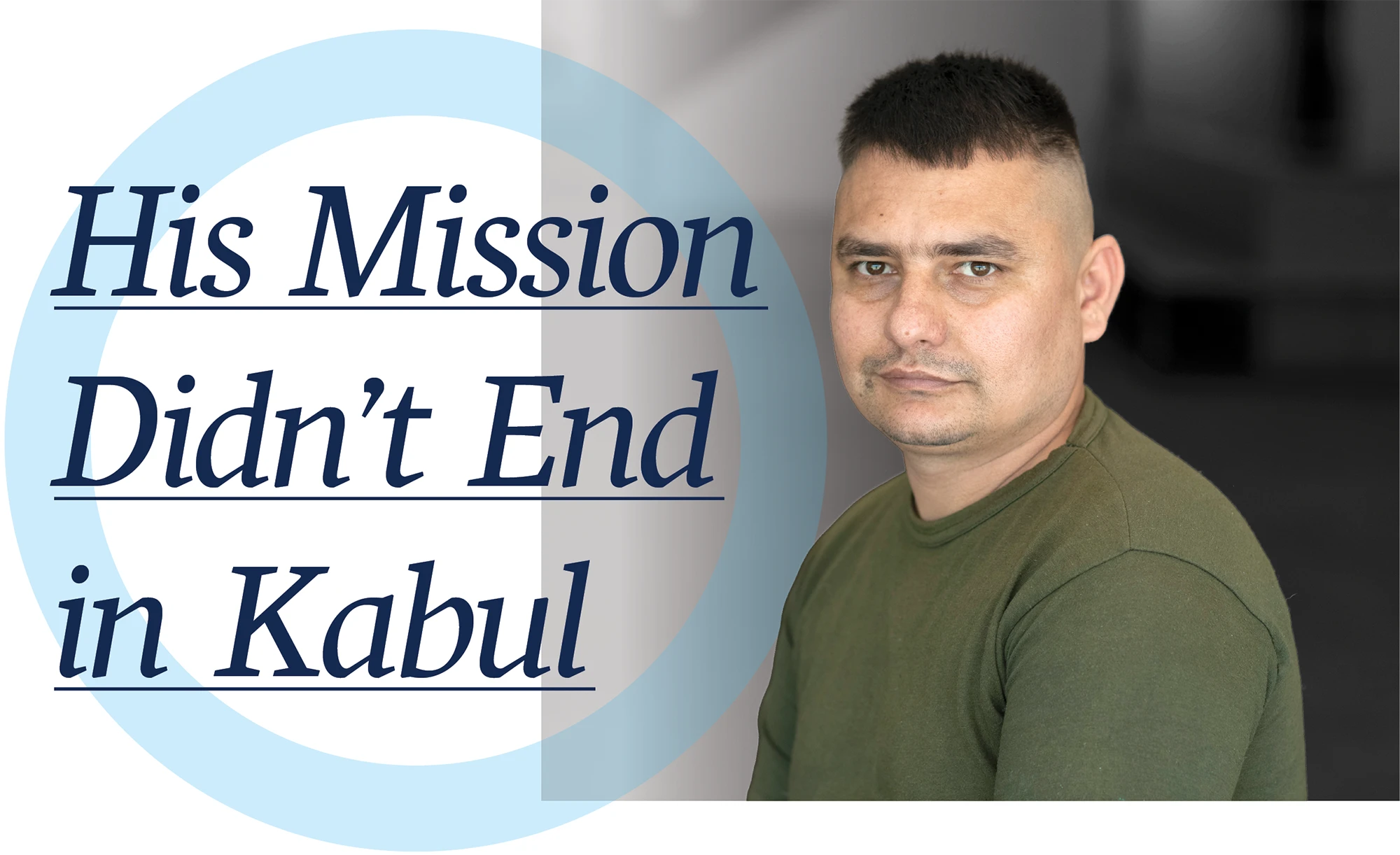
When Shir Agha Safi was a boy in rural Afghanistan, going to school was a daily test of endurance and courage.
Safi—a nickname given to him by his grandfather when he was a boy—walked three and a half miles to school each way, often in freezing temperatures. Additionally, he had to cross the fast-moving and treacherous Kunar River on an inflated inner tube, as no bridge existed near his home.
As he walked along the narrow road, flanked by steep mountains and the river, Safi often met another challenge: gunfire from Taliban fighters on the cliffs above, firing down on American troops who were traveling the same road.
Safi, just nine years old, would have to choose between diving into the frigid river for cover or hiding behind a tank.
He chose the tanks.
“The American soldiers felt like protectors to me,” he said. “That inspired me to be someone like them—to protect people.”
From Soldier to Survivor
His childhood encounters led Safi into a 12-year career as a major in the Afghan National Army, where he worked alongside U.S. forces in counter-terrorism and peacekeeping operations. He fought against various terrorist groups and suffered injuries several times in the line of duty. Despite the risks, he remained steadfast in his mission to serve his country.
Then came August 2021, when the U.S. announced plans to begin withdrawing its troops from Afghanistan after nearly 20 years. Within a matter of hours, the capital city of Kabul was captured by the Taliban, and Safi was suddenly in great danger.
On August 25, Safi was injured during the attack, but narrowly escaped from Kabul, thanks to the help of U.S. service members who risked their lives to get him on a plane.
The very next day, a suicide bombing at the Kabul International Airport killed 13 U.S. service members—the same Marines who had helped Safi escape. Many were his friends, who’d he’d worked alongside.
Safi wears a bracelet with all of their names to honor them. “They saved my life, and then lost theirs,” Safi said. “I live with that trauma every day and have nightmares about it still.”
A New Life, A New Purpose
Wounded and in shock, Safi arrived at Camp Quantico near Triangle, Virginia, on August 31, 2021, as a refugee with no hope of returning to his home and family. Fortunately, he had friends who escaped with him and introduced him to service people who helped him learn American culture and find opportunities.
One of those connections led him to Iowa, where he now resides with his wife and two sons and serves as the executive director of Afghan Partners in Iowa. Safi continues to live a life of deep service to the people of Afghanistan.
His new mission started just a few days after Safi arrived in Iowa in the fall of 2021. He was introduced to fellow Afghan refugee Najib, who did not speak English and was struggling to understand his new home.
The very next day, police showed up at Safi’s door because someone knew he was bilingual and could speak to both the Iowa locals and the Afghan refugee community. The officers told him that Najib had been hit and killed by a car while trying to cross the street, and they were looking for his next of kin.
“That was the moment I knew,” Safi said. “Najib had escaped a terrible war and extreme dangers in Afghanistan, only to make it to Iowa, where he died because he couldn’t understand the traffic signs as he crossed the street. I knew that Afghans needed me here, even more than they did in Afghanistan.”
Assisting a Community
Afghan Partners in Iowa opened its doors in 2022 and now operates out of offices in Des Moines and Cedar Rapids, supporting an estimated 1,250 Afghan families across the state. The nonprofit assists with food, housing, job training, legal support, immigration paperwork, and more. Safi and his team work to help families transition out of shelters, connect with community services, and build independent lives.
Since founding the nonprofit Afghan Partners in Iowa, Safi has become the first point of contact when someone in the Afghan community needs help, whether it’s finding housing, navigating the school system, or understanding the basics of American life. “I’ve taught people to use the elevator, how to use a shower, how to cross the street,” he said. “Everything.”
Just a few days before his Blue magazine interview, Safi and his wife opened their home to three Afghan children whose parents were temporarily unable to care for them. Their family of four suddenly became a family of seven. “That’s just what we do,” he said.
Finding His Place at Drake
When Safi first arrived in Des Moines, he moved into an apartment across the street from Drake University. He was determined to continue his education, but everyone told him to attend the local community college. Safi had other ideas. “I dreamed of going to Drake,” he said. “I would just stand across the street and watch students walking to class. It’s where I wanted to go.”
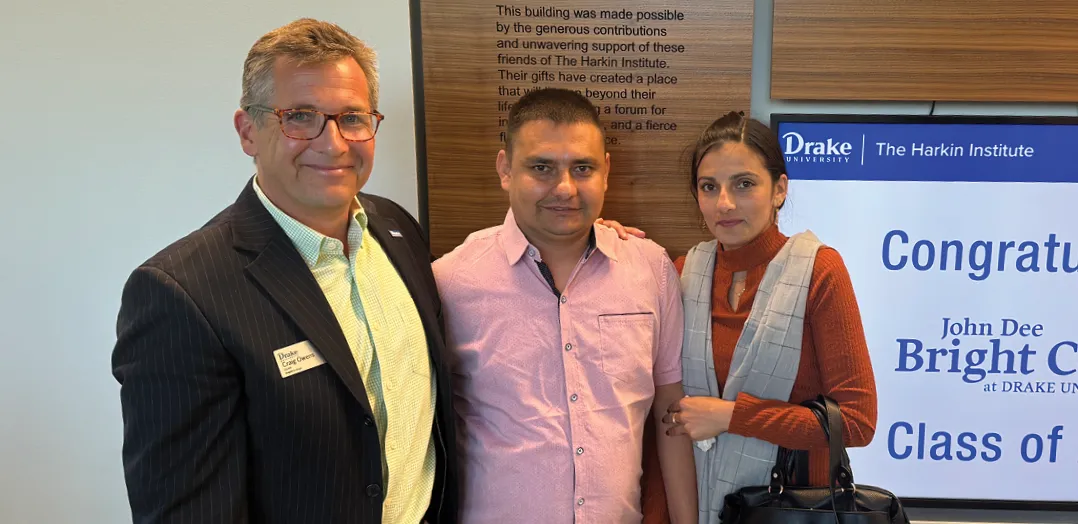
Eventually, with help from a Drake staff member, he enrolled at the John Dee Bright College. “My time at Drake gave me the tools to think critically, communicate clearly, and work with diverse people,” he said. “It helped me understand complex social systems and come up with real solutions to community challenges.”
Now pursuing his bachelor’s at Drake, Safi credits his professors and mentors for shaping the person he is today. “Whatever I am now,” he said, “it’s because of them. They made me into the Safi I am today.”
Safi is helping the refugee community address their biggest barriers—immigration status, employment, and housing—one family at a time. His mission is to help fellow refugees find jobs that match their skills, affordable places to live, and conquer the overwhelming amount of paperwork they face.
“I thought my mission was in Afghanistan,” he said. “But it’s here in Iowa now.”
You can learn more about Afghan Partners in Iowa and sign up to volunteer on their website.